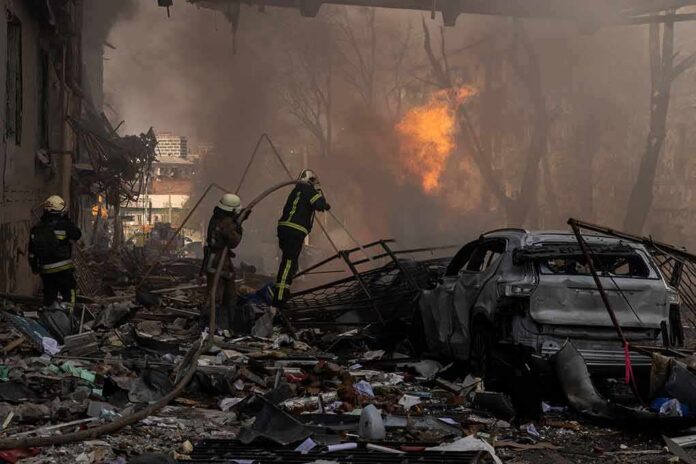
Kyiv’s mayor says two people were killed as Russian strikes set buildings ablaze across the capital, underscoring how civilians keep paying the price of a grinding air war.
Story Snapshot
- Kyiv officials report two dead and dozens injured after fresh Russian strikes.
- Warehouses, fuel sites, rail facilities, and a market were among damaged locations.
- Attacks fit a pattern of frequent urban strikes with shifting casualty counts as rescues continue.
- United Nations data show civilian harm has surged amid more drone and missile use.
What Kyiv Officials Reported Today
Kyiv Mayor Vitali Klitschko said two people were killed after Russian strikes hit parts of the capital. City messages described damage to a nine‑story non‑residential building, a business center, warehouses, and fuel or rail facilities. Local outlets said the toll rose during the morning as rescuers pulled people from wreckage and treated burns and blast wounds. Officials warned residents to stay in shelters and avoid debris sites while emergency crews fought fires and checked gas leaks.
Kyiv news outlets reported that one victim died at the scene, while another died at a hospital after surgery. Photos shared by city services showed scorched walls, twisted metal, and broken windows near logistics hubs and a market area. Firefighters worked through smoke to control flare‑ups in storage yards. Rail administrators paused service on nearby tracks while crews inspected blast damage and power lines. The city said many injured suffered shrapnel cuts and concussion symptoms.
How This Fits the Broader Pattern of the Air War
Reports like this follow a familiar cycle in Ukraine’s cities. First numbers come fast from local leaders as rescue work begins. Totals often change later as crews search damaged sites and hospitals update patient status. International monitors have tracked a sharp jump in civilian deaths tied to drones and missiles hitting populated areas and infrastructure. The United Nations reported 437 civilians killed in July alone, the highest monthly toll since early in the invasion.
Russian forces have leaned on waves of drones and a growing mix of ballistic weapons to pressure Ukraine’s air defenses. Investigations have described how Russia repurposed certain training missiles to expand supply for strikes, adding volume at lower cost. Analysts linked these systems to a rise in the number and reach of attacks across cities. That shift forced Ukraine to spread interceptors and repair teams thinner across many regions at once.
Why This Matters Beyond the Battlefield
Daily strikes on cities erode public safety, strain hospitals, and slow local business. Hitting warehouses and rail yards disrupts food and fuel flows, which raises costs for families already under stress. Those effects echo far beyond Kyiv. When a major European capital scrambles ambulances due to routine air alerts, it reminds many Americans that basic government duties—like securing borders, protecting power grids, and keeping prices stable—can fail when conflicts drag on and budgets bloat.
Kyiv Mayor Vitali Klitschko said a Russian airstrike damaged the Northern Bridge over the Dnipro River on October 3. Traffic was suspended after the strike damaged the road surface and trolleybus cables. No casualties were reported.
— WITNESS Global (@witnessanalysis) October 3, 2026
Leaders on the left and right in the United States argue over how to respond, but most people agree on one thing: civilians stuck between missiles and politics always lose. Kyiv’s death toll today is small next to major battles, yet every strike chips away at trust in institutions meant to prevent this kind of harm. Clear goals, honest accounting, and careful spending matter. Vague plans and endless emergency funding cycles do not protect families in Kyiv—or in American towns watching from afar.
What To Watch Next
City officials will likely revise casualty numbers as search work ends. Investigators will map fragments to identify the weapons used and routes taken. Rail and warehouse operators will post repair timelines that can hint at supply delays. Ukraine’s partners may face new calls for more air defense missiles and spare parts. If Russia keeps the pace of mixed drone and missile barrages, Kyiv could see more daytime strikes that raise risks for commuters and first responders.
Sources:
facebook.com, reuters.com, kyivindependent.com, euronews.com