A hurricane-tossed tree burst through a Gulf Coast home and killed a woman as widespread power failures and downed lines left whole neighborhoods in the dark.
Story Highlights
- Hundreds of thousands lost power across Florida, Alabama, and Georgia after landfall.
- Downed trees, snapped lines, and flooded roads marked the storm’s path.
- Federal teams staged rescue assets and supplies ahead of impact.
- Officials urged patience as crews cleared debris and restored service.
Severe Impacts: Trees Down, Lines Snapped, Roads Flooded
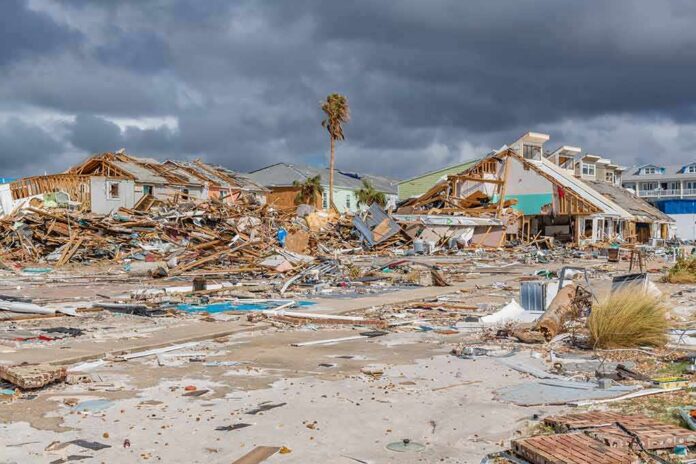
Local officials and news crews reported flooded roads, fallen trees, and damaged power lines across parts of the Gulf Coast after the storm came ashore. Reporters described blocked streets and neighborhoods cut off by debris. Utility workers faced hazards from live wires and unstable limbs. Emergency managers warned drivers to avoid standing water and treat dark traffic signals as four-way stops. The damage pattern matched strong wind impacts tied to landfall along the coast, with the worst in low-lying and wooded areas.
Residents shared accounts of close calls as trees crashed onto homes. One family said a large tree split during a gust and punched through their roof, killing a wife and mother as she sheltered inside. Neighbors tried to help before first responders arrived, but debris and water slowed access. Crews later used chainsaws and heavy equipment to secure the scene. These kinds of tragic, personal losses are the human cost behind the wide outage maps and storm totals often shown on television.
Power Outages: Scale, Timing, and Restoration Challenges
Utilities reported massive service loss across the region. One national outlet counted about 834,000 customers out at 5 a.m., with the largest numbers in Florida and Alabama. Another outlet tallied roughly 668,000 customers across three states near landfall, underscoring how totals changed with time and coverage area. Florida alone was reported above 400,000 outages at points during the night. These numbers shifted quickly as winds moved inland and crews began early triage.
Restoration hinged on clearing trees, replacing broken poles, and inspecting transformers. Utilities warned that backyards with heavy treefall and rural feeders could take longer. Local law enforcement asked people to keep streets clear for bucket trucks and search teams. State leaders briefed the public on priorities: hospitals, water plants, and major intersections first, then residential blocks. They also reminded people to run generators outside to prevent carbon monoxide poisoning, a common post-storm danger.
Federal and State Response: Assets Pre-Positioned
Federal officials activated national and regional coordination centers before landfall. Search and rescue teams and incident support staff were staged near likely impact zones. This early posture aimed to speed debris removal, shelter support, and power restoration once winds dropped. The approach followed a now-standard playbook that moves people and supplies ahead of time so field teams can hit the ground quickly when local agencies call for help.
Florida’s governor provided updates on debris clearance, grid repairs, and sheltering for displaced families. The state directed extra crews to hard-hit counties and pushed for rapid reopening of key roads. Leaders urged residents to document damage for insurance and to use official channels for aid. They also highlighted mutual-aid agreements that bring in lineworkers from other states during major storm events, which helps shrink outage times and spread costs across many utilities.
Why Outage Numbers Differ — And Why It Matters
Different outage totals reflected changing conditions, reporting times, and the way companies count “customers.” A single “customer” can be a home, a small business, or a large facility with many people inside. Aggregators also pull updates at different moments, creating gaps between sources. During fast-moving disasters, these factors can make the picture look uneven. The core fact holds: heavy wind and falling trees caused widespread service loss that required days of focused repair work.
Hurricane Isaias made landfall on the Gulf Coast as a Category 2 Hurricane but has since been downgraded to a Post-Tropical Cyclone. Despite the reduction in strength, the storm now holds the record for the latest start to the Atlantic season, according to the National Oceanic…
— ABC News 4 (@ABCNews4) October 11, 2026
For many families, the storm revived a familiar worry: government and big systems can feel distant when a single fallen tree changes a life forever. People on the right and the left share this fear when they watch days pass without lights, cell service, or clear answers. Clear briefings, fast debris removal, and honest timelines help rebuild trust. In the meantime, neighbors, churches, and local groups often become the first safety net when the grid and the roads go down.
Sources:
feedpress.me, nbcnews.com, bbc.com, firstcoastnews.com