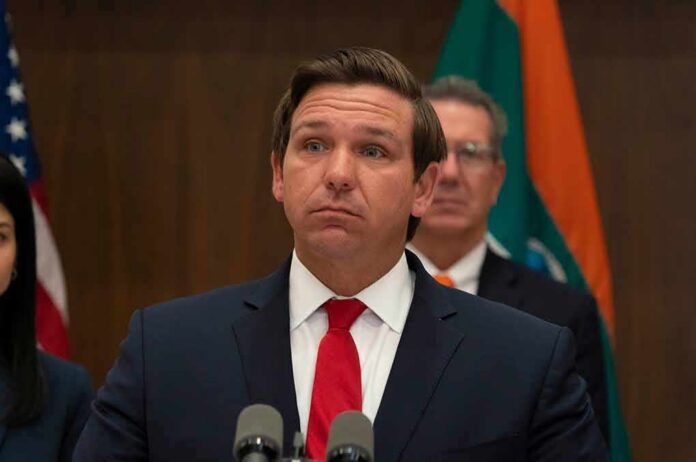
Florida’s governor abruptly canceled a scheduled execution with a one-sentence order, and officials still have not said why.
Story Snapshot
- Governor Ron DeSantis withdrew William Lee Thompson’s death warrant days before the execution date.
- The move followed a pending psychiatric review into Thompson’s mental fitness that was not yet public.
- Florida’s highest court had just denied a stay before the governor acted.
- Thompson remains on death row, and a new warrant could be issued later.
Governor’s Order Halted an Imminent Execution
Governor Ron DeSantis sent a signed letter on October 8, 2026, to Florida State Prison Warden Randall Polk. The letter withdrew the death warrant for William Lee Thompson, who had been set for execution on October 13. The action immediately stopped the execution planning. Reports state the letter did not give a reason for the withdrawal. Thompson was condemned for the 1976 kidnapping, rape, and murder of Sally Ivester, a case that has lasted decades in court.
The Florida Supreme Court had been handling expedited filings tied to the warrant. A court order in Thompson’s case set fast deadlines because of the looming execution date. The court record confirms the schedule but not the basis for the governor’s reversal. The judicial timeline shows litigation was moving quickly right before the withdrawal, underscoring how close the state came to carrying out the sentence before the executive step paused it.
Psychiatric Review Was Pending, But Findings Were Not Public
Governor DeSantis had earlier paused the execution to allow a psychiatric evaluation of Thompson’s mental state. In mid-September, he named three psychiatrists and set an October 21 evaluation date. Reporting said the results were not available when the warrant was withdrawn. Thompson’s lawyers had pointed to dementia, heart failure, and other serious health issues while arguing he could not rationally understand his punishment. Officials did not release medical records confirming those claims.
Media accounts also noted that Florida did not say whether Thompson was fit to execute during the week of the withdrawal. That left the public record without a final medical or legal finding on competency. Under United States Supreme Court standards, a person must have a rational grasp of the reason for the execution, not just know the date and place. That legal line makes the pending psychiatric evidence central, even if a diagnosis alone does not answer the legal test.
What the Decision Does and Does Not Change
The withdrawal does not end the sentence. Thompson remains on death row, and the governor can issue a new warrant later. Some reports emphasized that the action was the first time Governor DeSantis had pulled back a warrant. Others tied the timing to a broader climate of concern around executions, but Florida’s letter itself gave no explanation. The result is a procedural pause that allows more review without changing the underlying conviction or penalty.
The sequence matters for people across the political spectrum who want a system that is fair, firm, and transparent. Families of victims expect finality. Taxpayers expect competence and clear rules. Civil libertarians expect the state to meet the Constitution’s standard on mental fitness. This case shows how high-stakes choices can hinge on medical details and tight timelines. It also shows why many Americans feel leaders act behind closed doors rather than explain the hard calls out in the open.
Sources:
washingtontimes.com, wfla.com, wusf.org, acis.flcourts.gov, thehill.com, yahoo.com