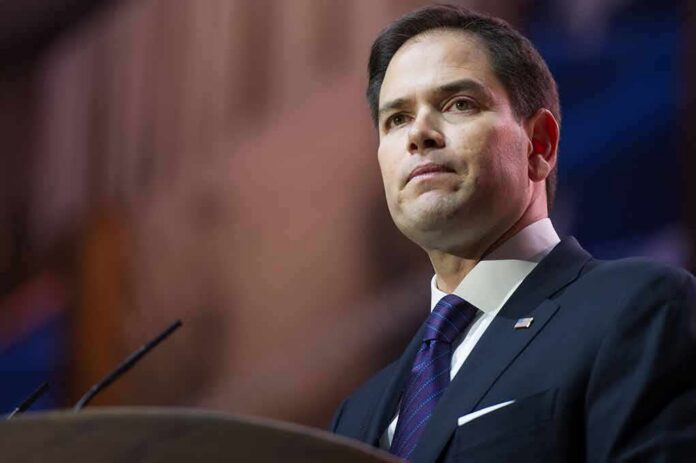
Secretary of State Marco Rubio hosted G20 foreign ministers in Atlanta as visible rifts forced the United States to cancel the traditional group photo, underscoring real strain inside a forum built for consensus.
Story Highlights
- The State Department scheduled and confirmed Rubio’s role as host on October 30–31 in Atlanta.
- Rubio chaired sessions on geopolitics, energy, and growth, and led an evening reception on October 30.
- Diplomats from Russia and China attended amid disputes over wars and security issues.
- The group photo was canceled after objections to Russia’s presence, reflecting deep divisions.
What Happened In Atlanta
The United States hosted the Group of Twenty foreign ministers in Atlanta on October 30–31. The Department of State said Secretary of State Marco Rubio would host the two-day meeting and engage partners on core security and economic issues. The agency’s public schedule placed Rubio in charge of Friday sessions on geopolitics, energy, and economic growth, as well as a welcome reception that evening. City information also noted the event and Rubio’s hosting role across both days.
Associated Press reporting placed Rubio in the chair and confirmed attendance by envoys from Russia and China. The State Department said discussions would focus on freedom of navigation, energy and food security, and stronger supply chains. These topics track long-running disruptions that have raised prices, delayed goods, and threatened shipping lanes. Hosting a group like this does not guarantee unity. But it provides a venue where the biggest economies can air disputes and try to find common ground.
Visible Divisions Shaped The Optics
Diplomatic rifts drove a rare change to the usual ceremony. United States officials canceled the standard “family photo” after several European diplomats objected to appearing alongside Russia’s foreign minister, Sergey Lavrov. The photo is usually a safe ritual that shows public unity. Skipping it signaled how far disagreements have spread. The disputes reflect wars and regional crises that split members on sanctions, military support, and the language used in official statements.
That tension fits a broader pattern inside the Group of Twenty. Minister-level meetings aim for consensus, but one holdout can block a joint text. In recent years, members have often ended with a chair’s summary rather than a full communiqué when they could not agree on wording tied to conflicts. This structure makes progress slower and less flashy. Yet it still allows practical talks on trade, food supplies, and shipping security that can matter to everyday people.
What Was On The Agenda And Why It Matters
The State Department listed several priorities. Freedom of navigation protects key sea routes for oil, gas, and food. Energy and food security affect prices at home, from gas at the pump to groceries on the table. Supply-chain resilience keeps factories running and medicines stocked. Rubio’s Friday agenda included a session on geopolitics, then a session on energy and growth, matching those priorities. These issues link global risk to family budgets, small business costs, and job stability in the United States.
For conservatives who worry about energy costs and supply shocks, talks on shipping lanes and fuel sources speak directly to price spikes and shortages. For liberals who worry about inequality and access to basics, food security and steady trade mean fewer shocks that hit lower-income families hardest. Both sides see a government that often fails to deliver clear results. Meetings like this test whether leaders can move from talk to steps that help people off camera and outside the halls.
The Difference Between Hosting And Outcomes
Hosting and chairing are confirmed by State Department notices, schedules, and local information. Those records show when, where, and who led. What they do not yet show is whether ministers reached a joint communiqué or set new commitments. That gap is common for the Group of Twenty when war and sanctions disputes are at stake. It does not erase the value of the talks, but it limits how much credit any host can claim right away.
U.S. SECRETARY OF STATE MARCO RUBIO CALLS FOR DECISIVE JOINT G20 ACTION TO DEFEND GLOBAL ECONOMIC ORDER
ATLANTA / WASHINGTON —Addressing the G20 Foreign Ministers' Meeting, U.S. Secretary of State Marco Rubio urged G20 member nations to forge a unified front against growing,… pic.twitter.com/QxC7BcSE8s
— LiberlandPress (@PressLiberland) October 30, 2026
Public attention often follows the optics, and the canceled photo created a simple, stark image of division. Yet the harder test is whether the meeting advanced work on safe sea lanes, steady energy and food supplies, and stronger supply chains. Those wins are quieter. They also matter more to households and small firms that feel squeezed by high costs and unstable markets. The coming days will show whether governments publish a summary or outline steps that back up the talk.