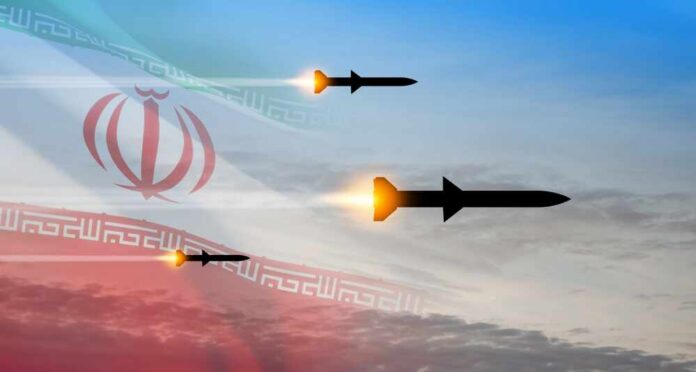
Twelve American service members were wounded in Iran’s latest strike—while Washington insists this war will be “weeks, not months,” many MAGA voters are asking how we got pulled into another open-ended Middle East fight.
Quick Take
- Iranian missiles and drones hit Prince Sultan Air Base in Saudi Arabia, injuring 12 U.S. personnel, including two reported as seriously wounded.
- The IDF says it killed Ali Shoeib, described as a Hezbollah Radwan Force intelligence operative working under cover as an Al-Manar TV journalist, in an airstrike in Jezzine, southern Lebanon.
- The same strike also killed Fatima Ftouni, reported as an Al-Mayadeen journalist; Lebanon’s president condemned the incident as a war crime, highlighting the press-protection dispute.
- Hezbollah rocket fire wounded Israeli troops as Israel expanded strikes and ground operations in southern Lebanon amid a wider U.S.-Israel conflict with Iran.
U.S. Troops Hit in Saudi Arabia as “Weeks, Not Months” Clock Starts
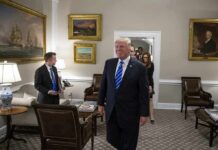
U.S. military personnel at Prince Sultan Air Base in Saudi Arabia were wounded after Iran launched missiles and drones at the facility, according to reporting that cited a U.S. official. The reported toll was 12 injured, with two seriously hurt. The strike landed as Secretary of State Marco Rubio publicly described the U.S. operation’s timeline as “weeks not months” and ruled out U.S. ground troops, tightening pressure on the administration to define endpoints.
For Trump-aligned voters who remember Iraq and Afghanistan’s shifting missions, this moment is politically combustible. The administration is trying to keep the conflict limited while supporting Israel and deterring Iran’s regional proxies. But once Americans are bleeding—especially at a base on allied soil—the debate changes from abstract strategy to concrete risk. The research provided does not include a full Pentagon account of damage or defensive performance at the base.
IDF Targets a “Journalist” It Says Was a Radwan Force Operative
In southern Lebanon, the Israeli Defense Forces confirmed an airstrike in Jezzine that killed Ali Shoeib (also reported as Ali Hassan Shaib). Israeli statements and multiple outlets described him as a Hezbollah Radwan Force intelligence operative who presented himself as an Al-Manar TV journalist and who allegedly helped Hezbollah by exposing IDF troop locations and spreading propaganda. Israel framed the strike as battlefield necessity tied to ongoing operations against Hezbollah.
The same incident also killed Fatima Ftouni, identified as a reporter for Hezbollah-affiliated Al-Mayadeen. Lebanese President Joseph Aoun condemned the strike as a “blatant crime” and argued it violated protections for journalists. The underlying dispute is not simply rhetorical: if an individual is directly participating in hostilities, legal protections typically narrow, but the research supplied offers no independent, publicly released evidence packet beyond Israel’s characterization.
Hezbollah’s Rocket Fire and Israel’s Ground Push Raise the Regional Stakes
Hezbollah attacks continued alongside Israeli strikes. Reporting in the research describes Hezbollah rocket fire that severely wounded one IDF officer and moderately wounded six soldiers in southern Lebanon, following earlier anti-tank missile incidents the prior day. Israel, for its part, continued broader strikes on Hezbollah infrastructure and supported ground operations toward the Litani River, part of what was described as “Operation Northern Arrows” in the research summary.
The wider context matters for Americans watching from home: Hezbollah is an Iran-backed organization, and its elite Radwan Force is often cited by Israel as a core cross-border threat. When Israel escalates in Lebanon while the U.S. is engaged against Iran, Tehran retains options to respond indirectly through proxies or directly, as seen with the strike on the Saudi base. The research indicates ongoing claims and counterclaims across multiple fronts, but not a single unified public timeline from U.S. commanders.
Why MAGA Is Divided: America-First Promises vs. War’s Reality
The political split inside the Trump coalition is increasingly visible in the facts on the ground. Supporters who prioritize a strong national defense see Iran’s strike on a U.S. base as a direct challenge that demands a firm response. Others point to the administration’s earlier promise to avoid new wars and argue that mission creep—protecting shipping lanes, backing allies, striking infrastructure—can harden into another long commitment with unclear congressional buy-in and uncertain constitutional accountability.
12 Americans Injured, Hezbollah Jihadi ‘Journalist’ Eliminated, and More From Iran Operationhttps://t.co/cnR6PQIdE2
— PJ Media (@PJMedia_com) March 28, 2026
Two unresolved questions hang over the situation based on the provided research: what specific U.S. objectives define “victory” in the Iran operation, and how the administration will prevent escalation after American casualties. The sources also flag uncertainties, including a headline claim of “three journalists” killed while details name two, and casualty numbers inside Iran that are difficult to independently verify from the material provided. For voters who have lived through decades of shifting justifications, those gaps fuel distrust.
Sources:
12 Americans hurt in Iranian attack in Saudi Arabia as …
Twelve US troops wounded in Iran strike on base in Saudi …
At least 15 US troops wounded in Iran strike on Saudi airbase
12 U.S. Troops Wounded in Strike on Saudi Arabia Air …