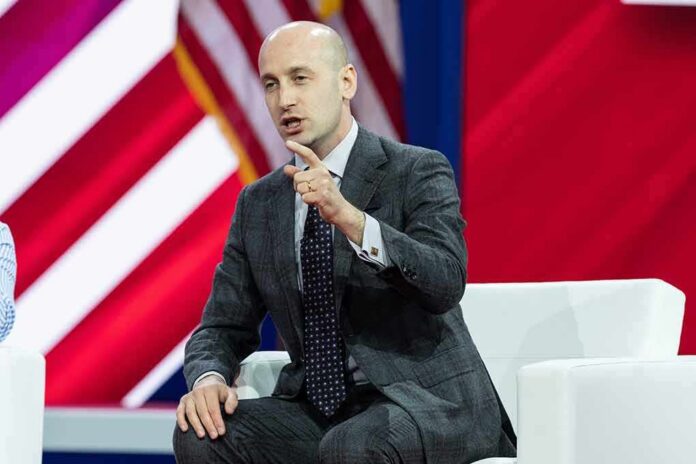
Stephen Miller is pressing a blunt claim: illegal immigration is draining taxpayer-funded food, housing, and health care programs, and it should be front and center in 2026 campaign ads.
Story Snapshot
- Miller says illegal immigration strains public services, especially housing and health care.
- Congressional Budget Office reporting shows short-term state and local costs rose faster than revenues in 2023.
- Federal projections show higher immigration can lower federal deficits over time, even as program costs rise.
- Studies find unauthorized immigrants use less health care per person than U.S.-born residents.
What Miller Said And Why It Landed
On January 23, 2026, White House Deputy Chief of Staff Stephen Miller posted that many thousands of illegal immigrant families were resettled “at taxpayer expense” for food, housing, and health care. He framed this as a core fairness issue and as a reason to enforce immigration law more strictly. The message speaks to voters who feel government spends on everyone but them. It also echoes years of debate about who pays for emergency rooms, shelters, and local schools.
In interviews and press gaggles, Miller has tied illegal immigration to public health burdens and alleged fraud, urging tougher enforcement to protect limited resources. Supporters see a simple ledger: every taxpayer dollar sent to recent arrivals is a dollar not spent on citizens in need. Critics counter that the numbers are more complex. Both points can be true at once, depending on which budget you study and over what time frame.
What The Budgets Actually Show Right Now
Congressional Budget Office analysis of 2023 state and local budgets found that the immigration surge increased sales tax and other revenues by about $10 billion but raised spending by about $19 billion, mainly for K-12 education, shelter, and related services. That left a direct net cost of about $9 billion in that year. These near-term pressures hit city and state budgets first, where schools, shelters, and hospitals must serve people immediately.
At the federal level, the numbers look different. The Congressional Budget Office projects higher immigration boosts federal revenues more than it raises spending over the next decade, reducing federal deficits on net by roughly $0.9 trillion. Taxes from work and consumption grow as the labor force expands, even as program outlays and interest costs also rise. That split view—local strain, federal relief—helps explain why this fight keeps returning every election cycle.
What Health Care Data Say About Use And Cost
Peer-reviewed research shows unauthorized immigrants use fewer health services per person than U.S.-born residents. One major study estimated average yearly spending of about $1,629 per unauthorized immigrant versus about $6,088 for U.S.-born people, reflecting lower use and higher uninsured rates. Another analysis found unauthorized immigrants’ share of total U.S. health spending is the smallest among major groups, far below U.S. natives. These per-person figures challenge broad claims that every newcomer drives huge medical bills.
But hospital accounting is still painful for local systems. Uncompensated care, including emergency treatment that hospitals must provide, adds up and often falls to public funding streams. Even older snapshots of uncompensated care show that taxpayers cover much of these shortfalls, which can squeeze other local services. The result is a confusing picture for voters: lighter use per person can still mean real cost spikes in certain places when large numbers arrive quickly.
Why This Debate Resonates Across Ideologies
Conservatives hear Miller’s warning and see a system that ignores borders while asking taxpayers to pick up the tab. Liberals see families fleeing danger and worry about harsh crackdowns that miss America’s promise. Many in both camps, however, share a bigger frustration: Washington talks past real-life tradeoffs. City shelters, school districts, and emergency rooms say they need fast help now, while federal scorekeepers point to future tax gains. People sense that elites dodge the urgent fixes.
The policy path likely runs through clear choices. Congress can speed work authorization so newcomers pay taxes sooner, send targeted funds to cities facing shelter and school crunches, and enforce immigration laws to reduce chaos. States can expand coordination between hospitals and community clinics to manage costs. Voters can demand transparent, apples-to-apples numbers: what we spend this year, what we gain later, and who is accountable when budgets break.
Sources:
twitchy.com, x.com, youtube.com, c-span.org, nytimes.com, grabien.com, americancommunitymedia.org, healthaffairs.org, cbo.gov