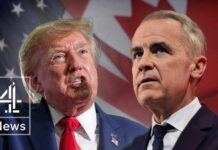
As American missiles pound Iran and tankers flee the Strait of Hormuz, President Trump’s three-word declaration that the ceasefire is “over” has pushed an already fragile peace into a dangerous new phase that threatens global oil, regional stability, and Americans’ trust in their own government’s judgment.
Story Snapshot
- Trump said the U.S.-Iran ceasefire is “over” after attacks on three commercial ships in the Strait of Hormuz.
- U.S. Central Command hit more than 80 Iranian targets and then about 90 more, while Iran fired missiles and drones at bases in Gulf states.
- Sanctions on Iranian oil were reimposed, tanker traffic dropped, and oil prices jumped, raising fears of economic pain for ordinary people.
- The legal ceasefire deal and its rules remain murky, feeding worries that elite leaders on all sides are playing with fire without clear limits.
Trump’s “Ceasefire Over” Moment and What Triggered It
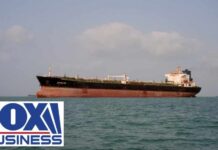
President Donald Trump told reporters at the NATO summit in Ankara, Turkey, that the interim ceasefire with Iran was “over” after fresh attacks on ships in the Strait of Hormuz. He linked his declaration to Iran’s strikes on three commercial tankers moving through the strait earlier that week. Those vessels, flagged to Marshall Islands, Saudi Arabia, and Liberia, were reportedly hit in or near Omani waters, turning a narrow shipping lane into a war zone. For many Americans, this feels like one more example of leaders using crisis language instead of careful rules.
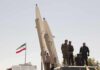
The U.S. military’s Central Command responded by launching major air and missile strikes across southern Iran. On July 7, U.S. forces hit about 80 Iranian military targets, including air defenses, coastal radar sites, missile and drone storage, and more than 60 fast attack boats used by the Islamic Revolutionary Guard Corps. The next night, Central Command said it struck roughly 90 additional targets up and down Iran’s coastline to further limit Iran’s ability to threaten shipping. These numbers show a large campaign, not a light warning shot.
Iran’s Retaliation and the Ceasefire Deal No One Can See Clearly
Iran answered the U.S. attacks by firing missiles and drones at sites in Kuwait, Bahrain, and Qatar, which host American military bases. State media in Iran also reported strikes near the Bushehr nuclear plant and damage to railway bridges, adding to fear among civilians. At least 14 people were reported killed and 78 wounded in Iran over two days of strikes. This tit-for-tat pattern looks less like controlled deterrence and more like a cycle that can easily spin beyond what ordinary people in the region or in the United States can afford.
The fighting comes after a ceasefire and memorandum of understanding meant to pause a wider war between the United States and Iran. That deal reopened the Strait of Hormuz and promised economic relief, including waivers on some oil sanctions. However, the full text of the June 17 memorandum, including exact rules on ship traffic and violations, has not been made fully public. Without clear details, Americans are asked to trust leaders’ verbal claims about who broke the deal, even as both sides trade bombs.
Competing Stories: Who Broke the Ceasefire?
U.S. Central Command says Iran violated the ceasefire by attacking three commercial ships that were simply navigating the Strait of Hormuz. Officials describe the U.S. strikes as retaliation meant to “impose heavy costs” and protect international shipping. NATO Secretary-General Jens Stoltenberg and other Western leaders have echoed that line, saying Iran is “basically violating the cease-fire.” This framing paints Iran as the clear aggressor and makes Trump’s tough response sound necessary to defend global trade.
Iran’s leaders tell a different story. Iranian state media claim some tankers ignored warnings and entered areas where Iran says it was clearing mines. A Tehran-based analyst suggested the ships may have strayed into zones where Iranian teams were working, which Iran views as under its control. Iranian parliament speaker Mohammad Bagher Ghalibaf called U.S. actions “bullying and extortion” and said Iran would not fold. Yet Iran has not released hard data like radar logs or debris analysis to firmly support its case. That leaves citizens worldwide stuck between clashing narratives and very little verified evidence.
Economic Shock and Growing Distrust in Elites
The strikes and tanker attacks have already shaken the global economy. Oil prices jumped after Washington revoked a key sanctions waiver for Iranian oil that had been part of the ceasefire deal. Tanker traffic through the Strait of Hormuz fell sharply as shipping companies feared more attacks and possible crew casualties. When fewer ships move, fuel and goods cost more, and working families on both the right and the left feel the squeeze while political and corporate elites largely shield themselves from the fallout.
The US-Iran ceasefire has collapsed. President Trump said the ceasefire between the United States and Iran is over, as mediators work to de-escalate tensions and revive talks.(CNN) It follows a week of strikes after Tehran targeted multiple vessels in the Strait of Hormuz.@CNN pic.twitter.com/8BfiXS95gC
— Clark salvatore (@Salavtoredamm) July 11, 2026
The way this ceasefire appears to be ending fits a broader pattern in U.S.-Iran clashes. Experts note that deals between the two countries are often fragile, loosely written, and then overturned by loud presidential statements instead of clear legal steps. Critics across the spectrum worry that decisions about war, peace, and oil are being made by a small circle of powerful insiders, not by open debate or transparent law. Whether one blames Trump, Iranian hardliners, or globalist institutions, many Americans see this moment as more proof that the system serves the deep state first and the people last.
Sources:
youtube.com, npr.org, foxnews.com, en.wikipedia.org, axios.com, politico.com, cnbc.com, facebook.com, apnews.com