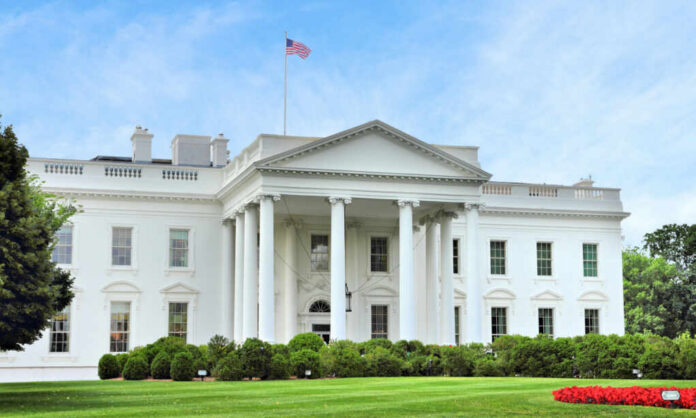
The White House is weighing permanent fencing on Pennsylvania Avenue, a move that would tighten security and limit access in one of the city’s most visible public spaces.
Story Snapshot
- The plan would place new fencing near 15th and 17th streets NW along Pennsylvania Avenue.
- Reports say the White House and the United States Secret Service could close the fences during threats.
- Rep. Eleanor Holmes Norton plans a bill to block the fencing.
- The fight centers on a basic clash: security control versus public access.
What the Plan Would Change
Reports say the proposed fence would sit where Pennsylvania Avenue meets 15th and 17th streets NW. CBS News said the goal is to “bolster security,” and the Washington Post reported that the White House and the United States Secret Service could close the new fences during threats. That detail matters because it shows the fence is being framed as a controlled security tool, not just a permanent wall.
Officials have not released a public threat study or a cost estimate for the project. The available reporting also describes the plan as being under discussion, not finished. That leaves a key question unanswered: what specific risk would permanent fencing solve that temporary barriers and the existing security zone do not already address? The sources do show that the area around the White House has long operated as a controlled security space.
Why the Proposal Is Drawing Pushback
Opponents say the fence would go too far and would turn a public place into a harder, more closed-off zone. Norton said public property should stay open to the public, and her office announced a bill to prohibit new fencing at the White House. That criticism taps into a wider concern that security changes at the executive mansion often shrink public space without clear proof that the extra barriers are needed.
That concern is not new. The Committee for a Responsible Federal Budget article says temporary barriers were already installed on Pennsylvania Avenue to stop more intrusions, and it says the proposed fence would stand 11 feet, 7 inches above a stone base. The same source argues the barrier is higher than it needs to be. That does not prove the plan is wrong, but it does show why the project is likely to draw fire from both civil liberties advocates and taxpayers.
A Familiar Washington Fight Over Security and Access
The White House fence has changed many times over the years. The White House Historical Association says a taller fence concept has already been approved in past planning work, including one with anti-climb and intrusion detection features. That history shows this is part of a longer pattern in Washington, where security upgrades often return to the same tension: protect the president, but do not wall off democracy from the public that it serves.
The Trump administration is considering installing permanent security fencing along parts of Pennsylvania Avenue and around Lafayette Square near the White House, CBS News reports. The proposal is aimed at improving security while eliminating the need to repeatedly install and… pic.twitter.com/QVLH8bzbUb
— Moshe Schwartz (@YWNReporter) July 10, 2026
That tension is why the current debate is bigger than one stretch of pavement. Supporters can point to the need for a tighter security perimeter around a major federal target. Critics can point to the loss of open access near Lafayette Square and the White House grounds. The deeper issue is trust. When the government adds more fencing without a full public explanation, many Americans see another example of officials making big decisions first and answering questions later.
Sources:
cbsnews.com, cfa.gov, instagram.com, x.com, norton.house.gov