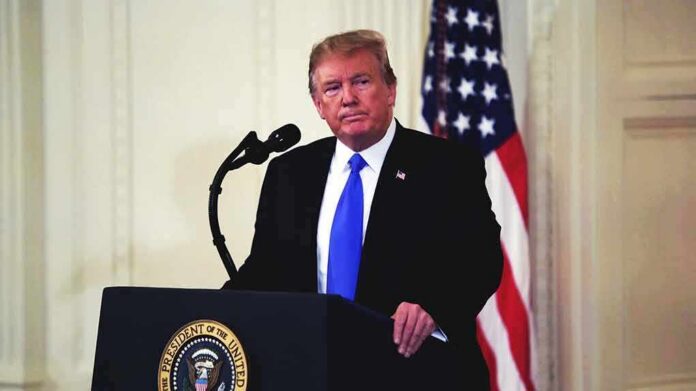
President Trump is blaming Biden-era policies for today’s high costs while claiming prices, especially energy, are now easing — a clash that spotlights how both parties spin the same numbers.
Story Highlights
- Trump says Biden policies drove up prices and energy costs, but that prices are now falling.
- Independent fact-checkers dispute Trump’s “worst in history” inflation claim and say inflation has not “stopped”.
- Biden-era statements tied price spikes to global shocks and outlined plans to lower costs, including energy bills.
- Economists say no single president caused inflation; global forces and policy lags did much of the work.
What Trump Claimed About Prices And Energy
President Trump argued that Biden-era policy sparked a “war on affordability,” raising household energy costs and overall prices. A Trump White House fact sheet said energy costs rose sharply under Biden and put a dollar figure on family burdens. Trump has repeated that he “inherited” the worst inflation and now sees prices, especially energy, coming down. He and allies also point to some recent declines in specific items and a modest drop in overall energy prices.
Trump’s framing links energy policy to the grocery bill and monthly utilities. The message resonates with families who watch paychecks get squeezed. The White House document claims gasoline and home energy prices surged under Biden, adding about $1,200 a year to the typical household’s energy costs. The political takeaway is simple: reverse Biden’s rules, boost supply, and bills fall. That argument sets up a clear contrast with clean-energy goals favored by Democrats.
What The Fact-Checkers And Data Say
Independent reviews agree inflation surged in 2021 and 2022, but they reject Trump’s claim that it was the “worst in history” or that inflation has “stopped.” Annual inflation rates fell from their peak, but remained positive in recent readings. Fact checks also flag overstatements about how far prices have dropped. Some categories, like eggs or gasoline at times, eased, while other costs, including housing and electricity, stayed high or rose further from year-ago levels.
Context matters. Prices rose fast after the pandemic and the start of the war in Ukraine. Supply chains jammed, demand snapped back, and energy markets whipsawed. Those forces do not turn on a dime. When Trump points to recent declines in specific prices or energy indexes, those are real snapshots, but they sit on top of a higher overall price level. That is why many families still feel squeezed, even when monthly inflation cools.
How Biden Framed The Spike — And The Policy Responses
President Biden’s team linked much of the surge to “Putin’s price hike” and global shocks. The administration highlighted releases from the Strategic Petroleum Reserve, clean-energy and vehicle tax credits, and fuel economy rules as tools to lower bills over time. Biden also noted periods when monthly inflation was flat and when gas prices fell from prior highs. The message was: prices are still too high, but inflation has eased from its peak and policy is helping.
Trump blames Biden for price rise, says oil will 'drop like a rock' after Iran war ends
Trump blamed the Biden administration for price increases across America, saying inflation was not caused by his policies.
In a TruthSocial post, he wrote, 'I hope everyone realizes that… https://t.co/glceutI7ko pic.twitter.com/MITY9wajMX
— Yashika Suri (@Yashika10614068) September 14, 2026
This approach stresses long-term energy independence and steady disinflation. It also accepts that progress is uneven. The administration cited falling measures of inflation, like the personal consumption expenditures index in mid-2024, while acknowledging that many families still cannot catch up. That nuance explains the gap voters feel: the rate of increase can slow, but the level of prices remains elevated compared with before the shocks.
What Most Economists Agree On
Economists across outlets say no single president caused the inflation burst. They point to the pandemic’s supply shocks, the war in Ukraine, and the timing of Federal Reserve actions. Fiscal aid and strong demand played roles, too. The consensus is that leaders can influence prices at the margin, but they do not control global oil markets or shipping lanes. That is why blame-and-credit claims from both parties often oversimplify a complex story.
For readers on the right and the left, the shared concern is trust. People see big bills, finger-pointing, and slow relief. They hear sweeping claims from Washington, then face rent, car insurance, and utility payments that say otherwise. The deeper lesson is to track the hard numbers and the sources behind them. Use White House releases, agency data, and careful fact checks to test the spin — and demand clear plans that match outcomes, not slogans.
Sources:
facebook.com, whitehouse.gov, factcheck.org, democrats.senate.gov, pbs.org, nytimes.com, oversight.house.gov, bidenwhitehouse.archives.gov, presidency.ucsb.edu, finance.yahoo.com, cnbc.com