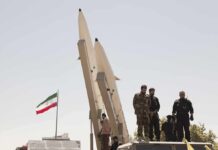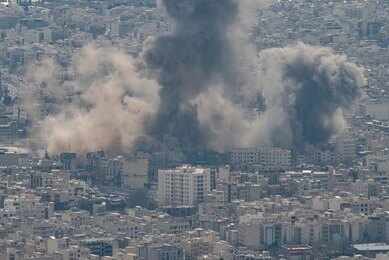
Missiles and drones from Iran are now slamming into US-linked sites in Bahrain, Kuwait and Qatar, turning other people’s countries into the battlefield for a war most Gulf civilians never chose.
Story Snapshot
- Iran says its strikes on Bahrain, Kuwait and Qatar are “defensive” attacks aimed at U.S. military bases and systems.
- Gulf governments report damage to airports, fuel tanks and nearby homes, with at least one civilian killed and dozens injured.
- The United States responds with more airstrikes on Iran, keeping Gulf states caught between Washington and Tehran.
- These attacks deepen public anger on all sides that powerful governments and elites are gambling with ordinary people’s lives and livelihoods.
Iran’s “retaliation” hits US bases and nearby civilians
Iran’s Islamic Revolutionary Guard Corps says it launched missiles and drones at U.S. military sites in Bahrain, Kuwait and Qatar after fresh American strikes on Iranian territory. Iranian statements name the Ali Al Salem Air Base in Kuwait and the U.S. Fifth Fleet facilities at Port Salman or Bandar Salman in Bahrain among the main targets. Iranian military and state media also describe strikes on U.S. air defense systems in Kuwait and early warning and fuel facilities tied to U.S. forces in Qatar and Bahrain. Tehran insists these are “defensive” responses to U.S. attacks, not assaults on the Gulf nations themselves.
Officials in Bahrain, Kuwait and Qatar tell a more troubling story from the ground. Kuwait’s news agency reports that missiles and drones struck Kuwait International Airport, killing one person and injuring more than 60, and disrupting flights for hours. Bahrain says Iranian strikes damaged a residential building near its international airport, though no deaths were reported in that incident. Qatar, for its part, says a civilian died and another was wounded by shrapnel linked to “military operations in the area” after a vessel failed to return on time. These reports show how quickly “targeting U.S. bases” can spill over into civilian harm.
Gulf states condemn Iran and fear becoming permanent war zones
Governments in the Gulf are openly condemning Iran’s moves and warning that trust with Tehran is breaking down. In a rare joint statement, Qatar, Saudi Arabia, Bahrain, Jordan, Kuwait, the United Arab Emirates and the United States called Iran’s missile and drone attacks “indiscriminate and reckless,” saying they violated sovereign territory and damaged civilian infrastructure. Bahrain and Kuwait have separately denounced earlier attacks this month, describing sirens, emergency alerts, and live interceptions over their capitals as Iran’s barrages forced people to shelter or flee. These states host U.S. bases because their leaders once saw them as a security guarantee; now many of their citizens feel those same bases are making them targets.
Defense officials across the region are also trying to calm panic while admitting the scale of the threat. Kuwait says its air defenses intercepted multiple Iranian drones and missiles in one attack wave, limiting damage. Bahrain points out that the U.S. Navy’s Fifth Fleet headquarters on its soil is a central reason it gets swept into every U.S.–Iran clash. Regional coverage describes repeated Iranian strikes on U.S. assets across Gulf states since late February, with attacks resuming after each failed ceasefire or new round of U.S. bombing. Residents are now living under recurring alerts and the fear that any night could bring another barrage.
United States strikes back, widening the battlefield
The United States is not only defending its bases; it is also expanding strikes on Iranian territory and military networks. U.S. Central Command says American forces have hit Iranian surveillance systems, communications nodes, air defense sites, drone storage facilities and mine-laying capabilities after attacks on commercial ships in the Strait of Hormuz. Other U.S. strikes have targeted coastal areas such as Sirik, Bandar-e Lengeh and Qeshm Island, as Washington tries to stop Iran from threatening trade routes and energy flows. Each round of U.S. action then triggers a new Iranian wave against bases in Bahrain, Kuwait, Qatar and beyond, keeping the cycle of retaliation spinning.
US-Iran Conflict Escalates as Airstrikes, Missile Interceptions and Drone Attacks Intensify Across Middle East
The military confrontation between the United States and Iran intensified on Friday, with fresh airstrikes, missile interceptions, drone operations and disruptions to… pic.twitter.com/boCTCZqtPY
— Voice of Germany (@NewsVOG) July 17, 2026
For Americans watching from home, this pattern feeds a familiar frustration. The stated goal is to protect shipping and deter Iran, yet the result is another open-ended front where U.S. forces and money are deeply tied to foreign bases, while regular Gulf citizens pay the price when missiles miss by a few hundred yards. For many conservatives, this looks like more global entanglement and risk to U.S. troops with no clear endgame. For many liberals, it looks like powerful governments once again choosing military answers while ordinary workers and families in the region absorb the danger and economic fallout.
Shared worries about elites, sovereignty and the American Dream
Across the political spectrum, a growing number of Americans see this Gulf crisis as one more sign that distant elites call the shots while normal people live with the consequences. Iran’s leaders talk about “defensive” strikes that hit airports and homes. Gulf rulers host foreign bases that make their cities targets. U.S. officials promise security but keep pouring resources into a war zone where every move risks wider conflict. Meanwhile, workers in Houston, Detroit or Phoenix already struggle with high prices, unstable energy markets and a sense that Washington is more focused on foreign power games than on rebuilding the American Dream at home.
These attacks on Bahrain, Kuwait and Qatar highlight how U.S. policy ties America’s future to fragile deals with partners who feel trapped between Iran and Washington. Every missile fired across the Gulf reinforces a basic fear shared by many on the right and left: the system serves strategic plans, weapons contracts and political careers, not the daily safety and prosperity of regular people. Whether you worry most about endless wars, globalist entanglements, or human rights abuses, the picture is the same—ordinary citizens in the Gulf and in the United States are being asked to trust leaders who keep turning their neighborhoods and futures into bargaining chips in somebody else’s game.
Sources:
insiderpaper.com, nypost.com, english.elpais.com, nytimes.com, aljazeera.com, pbs.org, reuters.com, youtube.com, middleeasteye.net, npr.org, longwarjournal.org