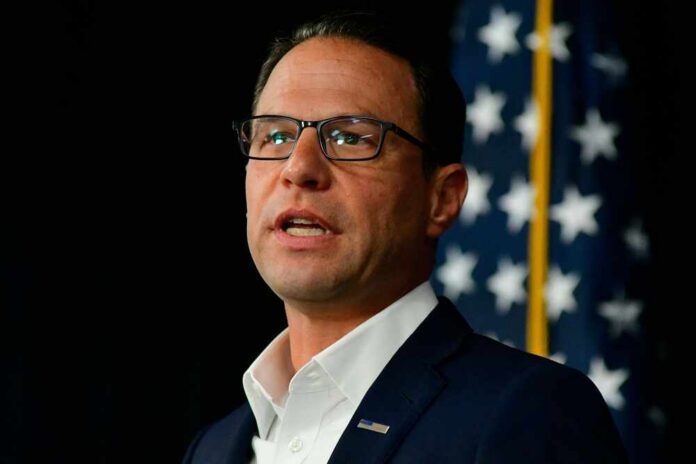
Josh Shapiro’s warning to Democratic socialists lands in a country where both parties are split by a wider fight over whether government still works.
Quick Take
- Shapiro has built his brand on results, not ideology, and that message has helped him win across party lines.
- He says trust in government comes from solving real problems like safety, schools, health care, and jobs.
- The fight over Democratic socialism is not new, but it keeps showing up in key races and raises pressure on party moderates.
- Supporters of more radical candidates argue their wins show real voter demand, which keeps the internal Democratic clash alive.
Shapiro’s Core Message Is Practical Politics
Shapiro has spent years selling himself as a governor who gets things done. CNN reported that he linked his 2022 win to concrete results, including major spending on opioid treatment and actions against corrupt officials. Pennsylvania’s own governor page says he has focused on “meaningful results” and on schools, safe communities, and an economy that works for all. That record helps explain why he still appeals to many voters outside his party.
Shapiro has also said the main job of government is to earn trust through outcomes. In a recent interview, he said trust is earned through results and argued that leaders must improve people’s daily lives. He made a similar case at the Leadership Now Summit, where he tied pragmatic leadership to America’s ability to stay competitive. That message is aimed squarely at voters tired of slogans, stalled agencies, and constant partisan theater.
The Warning Hits a Party Already Split Over Direction
The larger political fight is not just about one governor. It is about the Democratic Party’s long-running split between pragmatists and the left wing. Research and recent commentary show that ideological tension inside the party has intensified, with moderates trying to frame socialism as a liability while progressives argue the old center has failed to meet the moment. Shapiro’s warning fits that pattern exactly.
That split matters because it affects who gets treated as electable. The Conversation said Shapiro has a reputation for getting things done in Pennsylvania, “but not necessarily things all Democrats like.” That is a strength in a swing state and a weakness inside a party where activists often want sharper ideological fights. When a leader tries to stand in the middle, he can look like a realist to one group and a brake pedal to another.
The Socialist Counter-Case Still Has Real Fuel
Still, the left is not making a fake case. Darializa Avila Chevalier said in a direct interview that she opposes all deportations and views them as cruel. Newsweek also reported that she won her primary with about 49 percent of the vote, showing that a hard-left platform can still win real support in some districts. That makes the Democratic debate more than a messaging fight. It is a contest over what kind of coalition can actually hold.
At the same time, the most extreme parts of the debate keep widening the gap between factions. Reporting says Chevalier’s deleted posts called for abolishing police, borders, and prisons, while other coverage noted earlier statements about nationalizing industries and seizing private property. Those details give moderates a ready-made warning sign, while progressives say such attacks are meant to scare voters. Either way, the fight reinforces how deeply the party’s identity battle has taken root.
Why This Matters Beyond One Race
The real significance of Shapiro’s warning is that it reflects a wider public mood. Many voters on both the left and the right believe government is too slow, too self-protective, and too disconnected from daily life. Shapiro is betting that practical delivery can still cut through that distrust. His critics on the left think that is too cautious, while his critics on the right see it as too little, too late. The clash shows a system under strain.
That strain also gives each side a political incentive to keep escalating. Moderates use socialist nominees to argue for stability and order. Socialists use moderates to argue that the status quo has failed and needs a harder break. In that sense, Shapiro’s warning is bigger than one quote. It is a sign that the argument over the Democratic Party’s future is now tied to the public’s deeper frustration with institutions that keep promising relief and keep delivering less than voters expect.
Sources:
redstate.com, thephiladelphiacitizen.org, youtube.com, leadershipnowproject.org, instagram.com, facebook.com, theconversation.com, nypost.com, nyeditorialboard.substack.com, reddit.com, pmc.ncbi.nlm.nih.gov