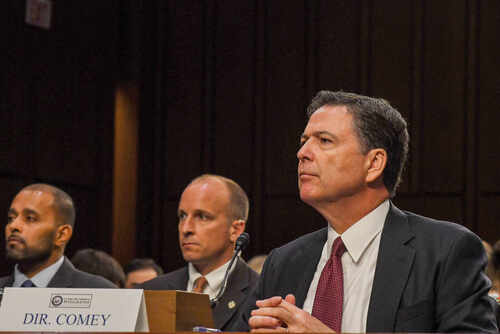
A federal judge just tossed high-profile indictments because the Justice Department’s own prosecutor appointment didn’t pass basic constitutional and statutory tests.
Quick Take
- U.S. District Judge Cameron Currie dismissed the indictments of former FBI Director James Comey and New York Attorney General Letitia James without prejudice on Nov. 24, 2025.
- The court ruled the acting U.S. attorney who brought the cases, Lindsey Halligan, lacked lawful authority under federal vacancy rules and the Appointments Clause.
- Comey’s case appears effectively over because the statute of limitations expired days after the indictment, limiting any practical path to refile.
- The ruling intensifies a broader public concern—shared across left and right—that Washington’s justice system is vulnerable to political incentives and procedural gamesmanship.
A dismissal that turns on who had the power to prosecute
Judge Cameron Currie’s decision did not hinge on whether James Comey or Letitia James actually committed the crimes alleged. The dismissal centered on a threshold issue: whether Lindsey Halligan, installed as acting U.S. attorney in the Eastern District of Virginia, had legal authority to bring federal charges when the indictments were returned. The court concluded the appointment ran past the time limits Congress set for interim prosecutors and conflicted with constitutional appointment requirements.
The timeline mattered. Under federal vacancy law governing interim U.S. attorneys, DOJ’s authority to keep an “acting” prosecutor in place is time-limited unless the Senate confirms a nominee. The research indicates the relevant interim clock started in January 2025 and expired in May 2025, yet Halligan was appointed in late September and indictments followed days later. Those dates became the core of the court’s finding that the prosecutor’s actions were unauthorized.
Grand jury irregularities added to the procedural breakdown
Beyond the appointment question, the case record described additional problems that would worry any citizen who expects basic due process—especially when political tensions are already high. Defense filings and reporting referenced grand jury irregularities, including an account that Halligan signed indictments without a full final presentation or vote by jurors. DOJ reportedly acknowledged flaws in the grand jury process. Even if prosecutors believed the charges were justified, shortcuts of this kind make convictions harder to sustain and feed public mistrust.
That mistrust cuts both ways. Conservatives who spent years warning about “two-tier” justice see proof that process can be weaponized and then defended as a mere technicality when it collapses in court. Liberals who fear politically motivated prosecutions see a judge enforcing guardrails against executive overreach. In practice, the same ruling validates a deeper, bipartisan frustration: the federal government often looks more focused on power plays than on building cases that can survive neutral scrutiny.
Why the Comey case may be beyond repair
Although the dismissals were “without prejudice,” meaning prosecutors can sometimes try again, Comey’s situation appears unique. The research notes the statute of limitations expired on Sept. 30, 2025—just days after the indictment. That timing is critical because, when a case gets thrown out for procedural defects, prosecutors typically need a valid window to re-indict. If the limitations period has run, a refile becomes far more difficult and may be impossible absent a specific legal mechanism.
Letitia James’s case is different, at least structurally. The research suggests her matter could be refiled, even if the politics surrounding it make the decision costly. That means the practical impact of Currie’s ruling may split: one case likely ends, while the other could return with a properly appointed prosecutor and a cleaner grand jury process. The decision creates a clear incentive for DOJ to tighten procedure if it wants any future case to stick.
A rule-of-law stress test for a polarized DOJ
The White House characterized the dismissal as an “unprecedented” technicality, while Comey and James framed the ruling as a check on a government targeting opponents. Those competing narratives will keep fueling partisan media, but the legal takeaway is simpler: constitutional structure matters most when politics are hottest. Congress built time limits and Senate confirmation into the U.S. attorney system to prevent end-runs around accountability. When an administration bypasses those limits, courts can—and did—intervene.
The broader question for 2026 is whether leaders in Washington absorb the lesson. Voters on the right want equal enforcement and protection from ideological lawfare. Voters on the left want safeguards against politically directed prosecutions. Both sides, increasingly, want a federal government that follows its own rules and prioritizes competence over theatrics. Currie’s ruling is not a final verdict on guilt or innocence; it is a reminder that process is the guardrail that protects everyone when power shifts hands.
Sources:
Judge Dismisses Trump Justice Department James Comey, Letitia James Cases
Federal judge dismisses DOJ’s cases against Comey and Letitia James