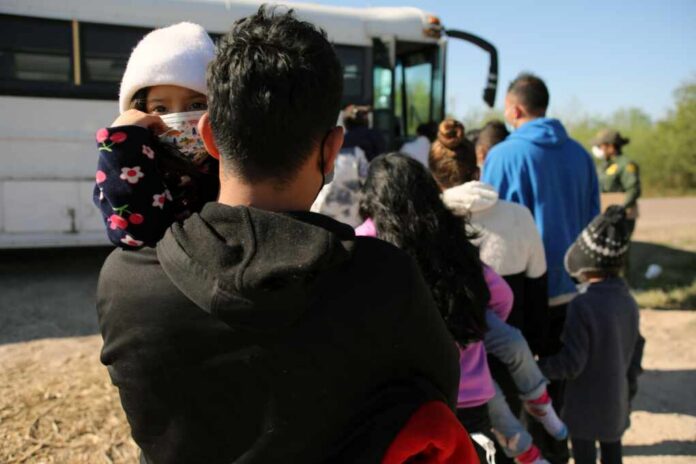
A Venezuelan family who followed every legal step to enter the United States is abandoning their American dream after being detained for a month in conditions so harsh their teenage daughter became physically ill, exposing how policy whiplash between administrations has turned the immigration system into a nightmare even for those playing by the rules.
Story Snapshot
- Family entered legally via Biden’s CBP One app in 2024, received asylum parole, lived lawfully in New Mexico for over a year
- Trump administration terminated their status in flawed mass dismissal, leading to immediate ICE arrest and month-long detention at CoreCivic facility
- 14-year-old daughter suffered depression and vomiting during detention; family released only after lawyer invoked child detention limits
- Despite having a 2027 court date, family voluntarily returned to crisis-torn Venezuela in April 2026, disillusioned and fearful of further targeting
From Legal Entry to Detention Nightmare
José, 40, his wife Carolina, and their 14-year-old daughter fled Venezuela’s collapsing economy and political turmoil in 2024, using the Biden administration’s CBP One mobile app to schedule an official port-of-entry appointment. They met with Customs and Border Protection agents, formally requested asylum, and received humanitarian parole allowing them to live and work in the United States while their case proceeded through immigration courts. The family settled in Las Cruces, New Mexico, building a life for eight months before their first scheduled hearing in El Paso in June 2025, believing their legal approach would be rewarded.
A Venezuelan family followed the rules to enter the U.S. After being arrested and detained for a month, they’re leaving. https://t.co/sxng7m6BC2
— Texas Tribune (@TexasTribune) April 17, 2026
Their faith in the system shattered when they arrived at court. The Trump administration had implemented a policy directing immigration judges to dismiss cases en masse for CBP One parolees without hearing testimony, a directive the Department of Justice later admitted was erroneous. Despite following every instruction, the family’s case was dismissed instantly, and ICE agents arrested them immediately outside the courtroom, transporting them to the South Texas Family Residential Center in Dilley, a CoreCivic-operated detention facility that advocacy groups have long criticized for inhumane conditions and due process violations.
Child Detention and the Flores Intervention
The family spent approximately one month detained at Dilley, where their daughter’s mental and physical health deteriorated rapidly. She experienced severe depression and repeated vomiting episodes in the facility, illustrating the toll such confinement takes on minors caught in immigration enforcement. The family’s release came only after their attorney invoked the 1997 Flores settlement, a legal precedent limiting child detention to 20 days in most circumstances. On July 5, 2025, they were bused to Laredo and eventually returned to Las Cruces with a new court date scheduled for June 2027 and mandatory quarterly ICE check-ins.
The detention experience left deep scars. José questioned the fairness of a system that punished compliance, asking, “How can someone do everything right and still get treated like this?” Carolina declared simply, “We’re leaving this country.” The family’s ordeal mirrors cases reported nationwide, including another Venezuelan family detained in January 2025 who lost their home and jobs after their parole was terminated, demonstrating a pattern affecting thousands who entered through the CBP One program established under the previous administration.
Policy Reversal Leaves Families in Limbo
The family’s case sits at the intersection of two starkly different immigration philosophies. The Biden administration’s CBP One program granted parole to over 900,000 migrants between 2023 and 2025, offering temporary legal status and two-year work authorization while asylum claims processed. In April 2025, shortly after taking office, the Trump administration terminated this status entirely, notifying parolees to self-deport or face arrest. A federal judge later ordered reversals for those who entered between May 2023 and January 2025, but enforcement actions continued regardless, creating legal chaos.
This whiplash exposes a fundamental problem: Americans across the political spectrum increasingly recognize that government dysfunction punishes ordinary people caught between shifting agendas. Conservatives frustrated with what they view as Biden-era border chaos have valid concerns about unvetted entries, while those troubled by harsh enforcement see families who followed explicit government instructions being detained and traumatized. The real failure lies not with any single policy preference but with a system so erratic that legal compliance offers no protection, breeding cynicism among citizens and migrants alike about whether anyone in power prioritizes workable solutions over political theater.
Voluntary Return to Uncertainty
Earlier in April 2026, the family flew from New Mexico to Miami, then boarded a one-way flight to Venezuela on a Wednesday, abandoning their pending asylum case despite having until 2027 to present their claims. José expressed nervousness about Venezuelan immigration authorities, knowing returnees often face suspicion or worse from the regime they fled. Their decision reflects not just disillusionment but genuine fear—having been ensnared once by bureaucratic errors and policy reversals, they saw no reason to believe the government wouldn’t target them again before their distant court date.
The family’s departure underscores broader implications for immigration policy credibility. When legal pathways become traps rather than solutions, trust evaporates. Other CBP One parolees now face similar uncertainty, wondering whether quarterly ICE check-ins will end in sudden detention despite court dates years away. For Americans tired of watching elected officials prioritize reelection over solving problems, this story confirms suspicions that the so-called deep state bureaucracy serves its own interests—policy shifts benefit political talking points while families like José’s suffer the consequences of incompetence admitted too late to matter.
Sources:
Venezuelan family lost home, jobs after being detained
Venezuelan family migrants flee Trump