When a new federal voting bill promises to “save” American elections, but experts warn it could lock millions of legal voters out, it hits directly at the growing fear that the system now serves the powerful more than the people.
Story Snapshot
- The House passed the SAVE America Act, tying voter photo ID and proof of citizenship to federal elections.
- Rep. Randy Fine says these rules are needed because noncitizens are registering and voting, eroding trust.
- Research shows proven voter fraud is very rare, while strict ID rules can make voting harder for poor and minority citizens.
- Most states already have some ID rules, so this fight is about how strict they should be and who gets hurt.
New Federal Push To Tighten Voting Rules
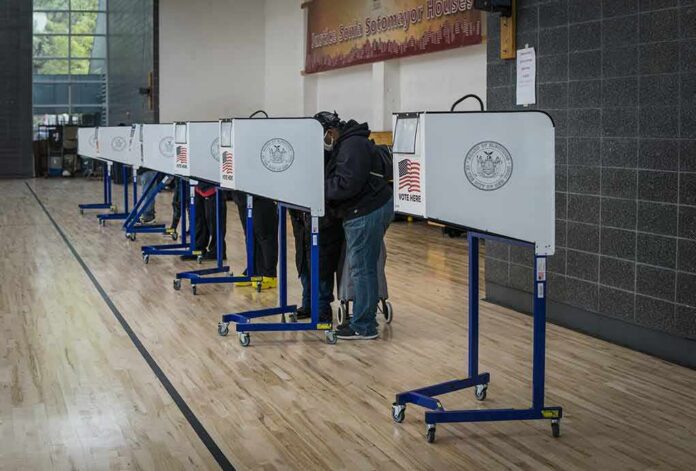
House Republicans passed the Safeguard American Voter Eligibility Act and the SAVE America Act as part of a wider election integrity push. These bills would change federal election rules so that every voter must show a photo ID at the polls and provide documents proving United States citizenship when registering to vote. Supporters say this closes loopholes and replaces what they call an “honor system,” where voters now mainly attest to being citizens by checking a box on a form.
Representative Randy Fine, a Florida Republican, has become one of the loudest voices for these changes. He co-sponsored the SAVE Act and argues that noncitizens are already on the voter rolls and may be casting ballots in federal races. Fine claims this puts democracy itself at risk because elections could be decided by people who have no legal right to vote. He frames the new requirements as “minimum national standards” that every state should follow to restore trust in the system.
Why Many Americans Cheer These Laws
Supporters of stricter ID rules often feel that elites and bureaucrats no longer protect ordinary citizens. They see simple guardrails, like showing a photo ID and a passport or birth certificate, as common-sense steps used in everyday life for banking, travel, and work. Polls show strong backing for voter ID across party lines, suggesting many voters on both the right and left want clearer proof that elections are honest and controlled by citizens only.
For conservatives angry about illegal immigration, rising costs, and a government they view as detached from reality, these bills look like overdue action. For some older liberals who also doubt government competence and fairness, the idea of clean, verifiable voter rolls has appeal too. Both groups share a basic worry: if elections are not secure, then those in power can ignore everyone else. In that sense, the SAVE America Act taps a broad frustration with a system many believe is rigged.
Evidence: Fraud Is Rare, But Barriers Are Real
Academic and policy research paints a more complex picture than the political debate. Studies summarized by the Massachusetts Institute of Technology Election Lab report that proven voter fraud, including noncitizen voting, is extremely rare nationwide. At the same time, all fifty states already require some form of identification to vote, from simply giving a name to showing a government photo ID. This means the SAVE America Act does not invent ID rules; it pushes them to their strictest level for federal elections.
Several peer-reviewed studies find that strict photo ID rules can lower turnout, especially among minority and low-income voters who are less likely to have passports, birth certificates, or driver’s licenses ready. One major study reports larger drops in turnout in heavily minority counties after new strict ID laws take effect. Critics argue that adding proof-of-citizenship documents on top of photo ID will deepen these gaps, since many citizens must pay fees or navigate slow agencies to get their records. They see this as trading away the voices of the poor to chase a problem that barely shows up in the data.
Conflicting Research And A High-Stakes Choice
Not all experts agree that strict ID rules cut turnout. A National Bureau of Economic Research working paper found no measurable drop in voting overall or by race after states adopted strict photo ID laws. That study is often cited by right-leaning groups to argue that tighter rules can secure elections without silencing lawful voters. Other scholars have challenged the methods and say the debate is far from settled, leaving citizens to sort through clashing claims while trust keeps falling.
House Passes SAVE America Act as Part of MUST-PASS National Security Bill — Rep. Thomas Massie Votes No
—House Republicans delivered a major victory for election integrity on Wednesday after passing the National Defense Authorization Act (NDAA) with the SAVE America Act…— Sue Ellen (@SueEllenBelI) July 16, 2026
Civil rights organizations warn that layered ID and citizenship checks echo older barriers once used to keep poor and minority voters from the polls. Court cases have already struck down some photo ID laws for placing unconstitutional burdens on the right to vote. Supporters respond that failing to act invites a different kind of harm: a slow loss of faith that ballots are counted honestly and that noncitizens are not swaying tight races. Both sides point to “democracy” as the stake, but they define its main threat very differently.
Power, Trust, And The Deep State Fear
This fight over the SAVE America Act reflects a deeper mood in the country. Many Americans now suspect that powerful insiders — in both parties, in courts, and in federal agencies — use rules to protect their own positions rather than to protect voters. When new laws are sold as guarding elections but might also make it harder for certain groups to vote, it feeds the belief that the game is stacked from the start.
Representative Fine’s hard-edged style and sweeping fraud claims tap this anger but do not erase the need for solid evidence. Critics need better data on noncitizen voting, and supporters need honest answers about how many citizens will be blocked or discouraged. Until the country squares those facts, each new law will look, to many on both the left and the right, less like a fix and more like one more move in a long struggle between the people and the elites who rule them.
Sources:
feenstra.house.gov, congress.gov, heritageaction.com, electionlab.mit.edu, esra.wisc.edu, theconversation.com, vote.caltech.edu, povertyactionlab.org, en.wikipedia.org, nypl.org, olemiss.edu, supreme.justia.com