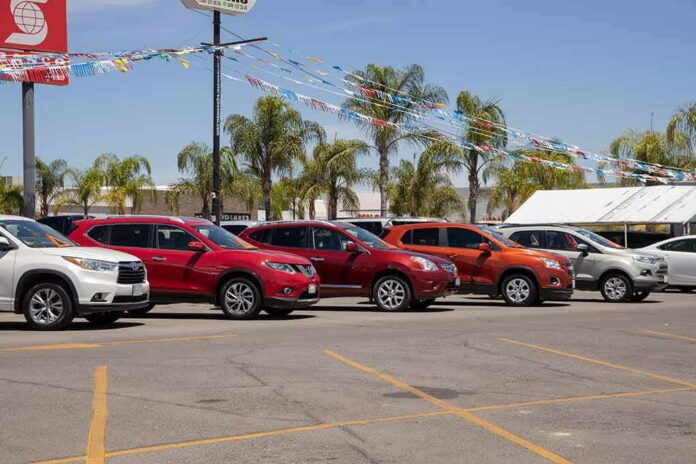
President Trump’s push to double tariffs on Canadian vehicles signals a sharper trade fight that could raise car prices in both countries.
Story Snapshot
- White House cites Canadian “discrimination” against U.S. cars, alcohol, and dairy under a 1930 law.
- New U.S. tariffs at 50% already cover about $20 billion in Canadian goods; autos could be next.
- Canada vows “dollar-for-dollar” retaliation as talks stall, risking a broader price shock.
- Experts say tariffs often hit consumers and downstream jobs even as leaders claim leverage.
What the White House Is Doing and Why It Matters
White House officials say the United States is escalating tariffs because Canada treats American products unfairly. The administration used Section 338 of the Tariff Act of 1930 to add 50 percent tariffs on selected Canadian imports. A White House fact sheet lists cars, alcohol, and dairy as areas of concern, and frames the move as a defense of U.S. workers and factories. That same authority could be used to extend penalties to Canadian vehicles if talks keep failing.
President Trump already approved 50 percent tariffs on roughly $20 billion in Canadian goods. Those duties reach into categories from building materials to consumer items, and they land after recent bargaining rounds fell apart. The White House also paused and re-aimed some steps while negotiating, but the overall stance remains firm. With this signal toward autos, the stakes grow. Cars and parts touch many towns, suppliers, and dealers across North America.
How a Vehicle Tariff Would Hit Prices and Jobs
Tariffs raise import costs first for the importer. Many businesses then pass some or all of those costs to buyers. That means higher sticker prices for certain vehicles and parts, plus pressure on repair costs. The pain does not stop at the border. Dealers, trucking firms, and parts makers that rely on cross-border supply chains can face shortages, delays, and squeezed margins. Analysts estimate current measures affect about five percent of Canadian exports to the United States, even before autos expand the list.
Supporters argue that tough tariffs force Canada to drop rules that disadvantage U.S. goods. They say leverage today can mean fairer trade tomorrow. Critics counter that the near-term costs land on families and small firms. They warn that both sides lose when a close ally answers with equal hits. Canada’s government has promised to respond “dollar for dollar,” and officials ended recent talks without a new path forward. That raises the chance of wider price shocks if the fight spreads.
The Legal Tool and the Bigger Pattern
Section 338 is an old statute that allows the president to act when a country discriminates against U.S. commerce. It empowers higher duties on targeted goods from that country. The Trump administration says Canada’s rules treat U.S. motor vehicles, alcohol, and dairy worse than others. Legal analysts note the tool is blunt and broad, which is why it has drawn attention as a forceful way to pressure partners in a dispute.
🚨 JUST IN: President Trump threatens 50% tariffs on Canadian cars, trucks, auto parts, and steel starting Jan. 1, 2027.
Auto tariffs would double from 25% as Canada prepares retaliatory levies on U.S. products. pic.twitter.com/U01yKtQxmT
— BlockNews (@blocknewsdotcom) August 24, 2026
This fight fits a pattern in U.S.-Canada trade. The two countries trade deeply and often cooperate, but they sometimes clash. Each side claims the other is breaking rules, then adds tariffs to gain leverage. Leaders can score political points by showing toughness. But the bills arrive at warehouses, factories, and checkout counters. History shows the costs are spread across many people who are not at the table when deals are made.
What to Watch Next
Watch for a formal U.S. step that lists vehicles and parts under the tariff order. That would confirm the threat is moving to action. Watch for Canada’s matching list and any relief funds Ottawa offers to hurt sectors. Watch auto price guides and dealer inventories for early signs of higher costs or fewer options. Finally, watch for a narrow deal that carves out vehicles while talks continue on alcohol and dairy, which both sides have flagged in public claims.
Sources:
cnn.com, cbc.ca, theguardian.com, wsj.com