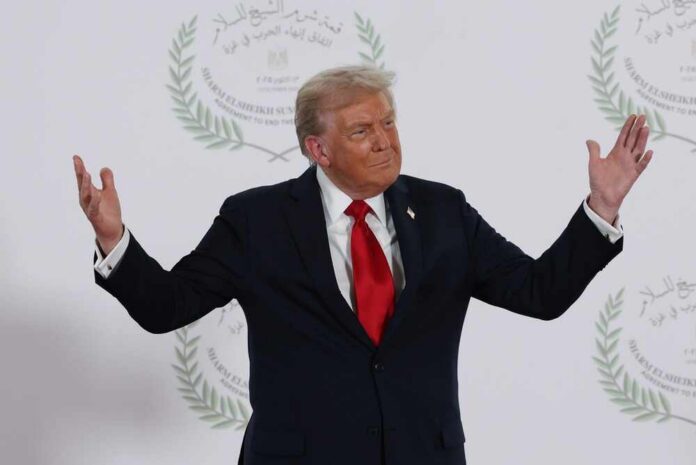
President Trump’s fiery confrontation with a reporter during the White House Easter Egg Roll exposed deep frustrations over how the media covers U.S. military operations in Iran, turning a family-friendly tradition into a battleground over foreign policy accountability.
Story Snapshot
- Reporter challenged Trump on Iran military operations during Easter Egg Roll, asking “Why are we over there?” and how bombing helps Iranian civilians
- Trump dismissed the questioner as part of a “radical leftist group of lunatics” and claimed Iranian people “want to hear bombs” to achieve freedom
- President alleged 45,000 protesters killed by Iranian regime and asserted protesters face immediate execution under written edict
- Exchange highlights growing public skepticism about humanitarian costs and strategic rationale for ongoing Iran conflict
Reporter’s Challenge Disrupts Family Event
A reporter’s direct questioning of U.S. military strategy in Iran transformed the White House Easter Egg Roll from a traditional celebration into a contentious foreign policy debate. The reporter pressed Trump on the rationale for American military involvement, specifically asking “Why are we over there?” and “How is it taking care of the Iranian people if you’re bombing them?” The blunt humanitarian challenge came during a public-facing event typically reserved for families and children, underscoring how foreign policy debates now permeate even ceremonial occasions. Trump’s visible irritation suggested the question struck a nerve about the administration’s public justification for sustained military operations.
Trump Attacks Questioner’s Credibility Instead of Defending Policy
Rather than providing substantive policy defense, Trump immediately attacked the reporter’s affiliations and credibility. He characterized the questioner as representing a “radical leftist group of lunatics” and claimed Iranian citizens actually want to hear bombs because “they want to be free.” Trump asserted that Iranian protesters face immediate execution under a written edict from the regime and alleged that 45,000 protesters have been killed “as of this morning” based on “pretty good information.” The President also criticized an unnamed group that received U.S. weapons but allegedly kept them instead of distributing as intended. This pattern of personal attacks rather than detailed strategic explanation raises legitimate questions about transparency in military decision-making.
Broader Iran Conflict Remains Unresolved
The heated exchange occurred against a backdrop of active military operations including naval blockades in the Hormuz Strait and ongoing ceasefire negotiations. Trump recently extended a ceasefire with Iran to allow time for internal Iranian factions to reach consensus between pragmatists and hardliners. White House Press Secretary Karoline Leavitt framed the extension as demonstrating U.S. strength, claiming “the cards in President Trump’s hands” with Iran in a “very weak position.” Yet Iranian state media has mocked the ceasefire extension, and humanitarian concerns about civilian access to food and water persist. The unresolved nature of the conflict and lack of clear endgame fuel legitimate concerns from Americans across the political spectrum.
Public Deserves Answers on Military Operations
The reporter’s question reflects widespread skepticism about endless military entanglements that drain American resources while producing unclear benefits for ordinary citizens. Whether one supports or opposes Iran operations, Americans deserve transparent answers about strategic objectives, humanitarian costs, and exit strategies. Trump’s defensive posture and personal attacks suggest an administration uncomfortable defending its policies on substantive grounds. This pattern mirrors frustrations with government officials across administrations who prioritize political positioning over honest accountability to the American people who bear the costs of war through tax dollars and military service. Both conservatives concerned about limited government and progressives worried about humanitarian impact share legitimate doubts when leaders attack questioners rather than answer questions.
A Reporter Asked This Question Regarding Iran…and It Set Trump Off https://t.co/Hhe2tQlLWX
— Tommy Fields (@scheister) April 24, 2026
The Easter Egg Roll clash symbolizes a broader crisis of accountability where Americans increasingly question whether elected officials serve the public interest or their own political survival. When presidents of either party respond to legitimate policy questions with personal attacks and unverified claims, it reinforces the perception that government operates for the benefit of elites rather than ordinary citizens. Until leaders provide transparent, substantive answers about military operations and their costs, public trust will continue eroding regardless of party affiliation.
Sources:
Trump’s Response to Journalist Dana Perino’s Humanitarian Questions on Iran
President Donald Trump said Monday that Iranians want to …
‘You are such a disgrace’: Trump rips reporter, says he’s …
President Donald Trump, taking reporter questions after …