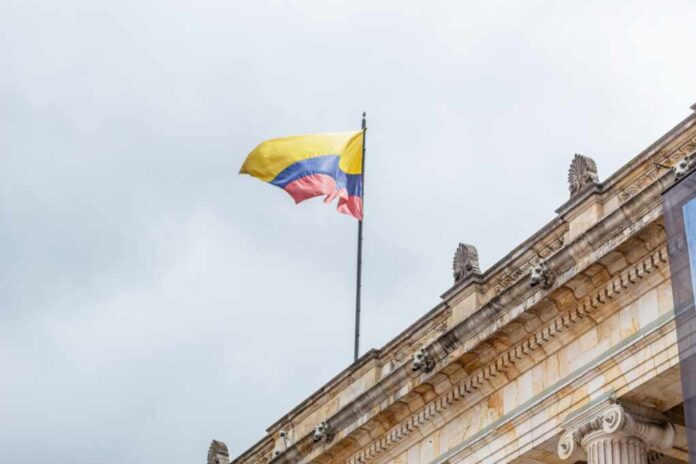
Colombia’s next president is breaking with decades of policy by planning to plant his country’s flag on a new embassy in Jerusalem, right in the middle of one of the world’s most explosive disputes.
Story Snapshot
- Colombia’s president-elect Abelardo de la Espriella has vowed to open a full embassy in Jerusalem and restore ties with Israel.
- The incoming foreign minister has told Israel that Colombia will join the small group of nations with embassies in Jerusalem.
- This move reverses outgoing President Gustavo Petro’s break with Israel over the Gaza war and will test Colombia’s place in Latin America and the United Nations.
- The plan echoes earlier decisions by the United States under Donald Trump and Argentina under President Javier Milei, deepening worries about global elites using foreign policy as a political weapon.
Colombia’s President-Elect Confirms Embassy Plan
Abelardo de la Espriella, a right-leaning lawyer and political outsider, has been elected president of Colombia in a tight race and is already signaling a sharp foreign policy turn. During his campaign, he repeatedly promised to restore relations with Israel, which Colombia cut in 2024 over the Gaza war, and to open a Colombian embassy in Jerusalem as a symbol of that reset. He told voters this would renew a strategic alliance with Israel and the United States and defend what he calls Judeo-Christian values.
De la Espriella first laid down this promise in late 2025 on his official account on the social platform X, after a long meeting with Israeli Foreign Minister Gideon Sa’ar. In that post, he said that if he reached the presidency, he would install Colombia’s embassy in Jerusalem and build a strategic alliance with Israel and the United States as the center of his foreign and security policy. That pledge was not a throwaway line; it became one of his core talking points as he courted conservative and religious voters at home.
Incoming Foreign Minister Moves Quickly With Israel
Within days of the election, Colombia’s incoming foreign minister met with Gideon Sa’ar and told him the new government will open an embassy in Jerusalem. Sa’ar’s office said Colombia will become the ninth country with an embassy in what Israel claims as its capital. This fast contact shows that the Jerusalem plan is not only campaign talk but is already being worked into early diplomatic steps, even before de la Espriella takes office and issues formal decrees.
Supporters in Israel and in pro-Israel circles abroad are celebrating the move as a major win, especially after two years during which Colombia led regional criticism of Israel over Gaza. Under outgoing President Gustavo Petro, Colombia accused Israel of “genocide,” imposed sanctions, expelled diplomats, and joined legal actions against Israel. Now the president-elect is promising the exact opposite: to call Israel an ally, restore full relations, and place Colombia’s main diplomatic office in Jerusalem, not Tel Aviv.
Break With Colombia’s Past and United Nations Rules
Colombia has never before gone this far on the Jerusalem question. Past right-leaning President Iván Duque opened a trade and innovation office in Jerusalem, but kept the main embassy in Tel Aviv and framed the office as a practical step, not a full policy shift. De la Espriella is going further by promising a complete embassy move, breaking with Colombia’s long-standing practice of staying closer to the United Nations line on the city’s disputed status.
Colombia president-elect to open Israel embassy in Jerusalem
Live updates ⤵️https://t.co/6niLDXBbdo
— Middle East Eye (@MiddleEastEye) July 16, 2026
United Nations resolutions going back decades say countries should not place embassies in Jerusalem because its final status is supposed to be settled by talks between Israelis and Palestinians. Only a small set of nations has chosen to ignore that guidance, led by the United States when President Donald Trump moved the American embassy from Tel Aviv to Jerusalem in 2018. Argentina under President Javier Milei has signaled a similar path, and de la Espriella has openly cited those examples as models for Colombia.
Regional Fallout and Shared Concerns About Elites
Latin America is already divided over Israel and Palestine, and Colombia’s plan is likely to deepen those splits. Many governments in the region either keep a neutral line or lean toward the Palestinian cause, and they may see Bogotá’s move as proof that Colombia is locking itself into a United States–Israel axis instead of acting independently. Groups like the Organization of Islamic Cooperation have begun to condemn the embassy plan, warning it violates international decisions on Jerusalem and could inflame tensions.
Inside Colombia, both left and right voters have reasons to worry about how this plays out. Conservatives who backed de la Espriella may cheer the defense of Israel and Western values but still fear the way global elites use foreign policy deals and secret talks to serve their own interests, not those of ordinary citizens. Liberals angry at Petro’s economic record may still see this embassy plan as putting Colombia’s security and budget at risk for another foreign fight while daily problems like jobs, crime, and health care remain unsolved.
Unanswered Questions: Money, Timing, and Power
Despite the bold promises, many key details remain unclear. There is no public decree yet setting a date for the embassy opening or naming a building in Jerusalem, and no budget line has been shared for buying or renting property, hiring staff, and securing the site. De la Espriella’s party holds only a small number of seats in Colombia’s Congress, which means he will need deals with other parties to fund and protect the embassy plan in law.
Those gaps matter because the embassy decision touches sensitive legal and security issues. Moving a main diplomatic mission into a disputed city could expose Colombian staff to higher terror risk and may invite court challenges in Colombia over treaty rules tied to United Nations resolutions. The plan also raises broader doubts shared by many Americans and Colombians alike: are these foreign moves serving the people who work hard and simply want safety and opportunity, or are they driven by a small layer of global players using distant conflicts to grow their own power and influence?
Sources:
insiderpaper.com, infobae.com, aljazeera.com, timesofisrael.com, easternherald.com, blogs.timesofisrael.com, youtube.com, en.wikipedia.org, unitedwithisrael.org, riotimesonline.com, tv7israelnews.com, aa.com.tr, jpost.com