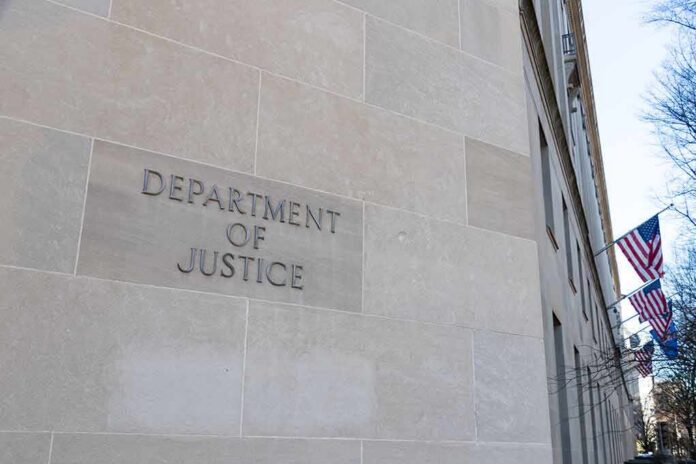
The Justice Department is launching what officials call the largest denaturalization push in modern history, aiming to strip U.S. citizenship from convicted sex offenders, fraudsters, and even a former ambassador accused of spying for Cuba.
Story Snapshot
- The Justice Department has filed cases to revoke citizenship from 17 naturalized Americans accused of serious crimes, including child sex abuse and major fraud.
- Officials say at least 384 foreign‑born citizens are now in the denaturalization pipeline, a huge jump from past decades.
- Law gives the government power to undo citizenship if it was gained by fraud, but courts require very strong proof.
- Supporters see a long‑overdue crackdown on dangerous criminals, while critics fear a quota‑driven system that puts every naturalized American on edge.
Who Is Being Targeted in This New Denaturalization Wave
The Department of Justice says it has filed civil lawsuits in federal courts to strip citizenship from 17 naturalized Americans accused of hiding serious crimes when they applied, including sexual abuse of minors, wire and bank fraud, and distributing drugs without a license. Among them are people from Haiti, Colombia, Mexico, Cuba, Jamaica, and other countries who prosecutors say would have been denied citizenship if the truth were known. Another recent round targeted 12 more people tied to war crimes, terrorism support, and child sex abuse.
These are not low‑level cases. One target is Victor Manuel Rocha, a former United States ambassador who admitted he spied for Cuba years before becoming a citizen. Another is a Colombian‑born former Catholic priest accused of grooming and sexually abusing a girl in his parish, then hiding that abuse while applying for naturalization. Others include a Haitian man accused of repeatedly abusing his own daughter and Mexican nationals charged with sexual crimes involving minors. Officials are clearly choosing shocking fact patterns that no normal American wants to defend.
The Legal Power to Undo Citizenship — And Its Built‑In Limits
Federal law under the Immigration and Nationality Act says a court can revoke naturalized citizenship if it was “illegally procured” or obtained by hiding a material fact or by willful lies. There is no time limit; the government can bring a civil denaturalization case decades after someone took the oath. But the Supreme Court has also ruled that the Constitution does not let Congress simply take citizenship away as a punishment; it can only be canceled if it was never lawfully earned in the first place.
To win, the government must clear a very high bar. Courts require “clear, unequivocal, and convincing” evidence that the person lied or concealed facts, that those facts were important to the decision, and that citizenship was granted because of that false story. That means even a terrible crime is not enough by itself. Prosecutors must tie the unlawful conduct or the lie to the naturalization process and the required period of “good moral character.” Legal experts note that, in practice, this makes denaturalization rare and often hard for the government to prove, even when the behavior is disturbing.
From Rare Tool to Systematic Campaign
For decades, denaturalization was used in only a handful of cases each year, often against Nazi war criminals or known terrorists. One study found an average of about 11 cases a year between 1990 and 2017. Under the current administration, that picture has changed fast. Internal plans call for about 2,400 referrals a year, a 57‑fold jump over historical averages, and field offices have been told to send 100 to 200 cases monthly for review. Analysts say this looks less like occasional cleanup and more like a standing program.
News reports say the Department of Justice has already identified 384 foreign‑born Americans whose citizenship it wants to revoke and has scattered those files among prosecutors nationwide. In less than two months this year, officials filed 29 denaturalization cases, almost half the total filed across the entire four years of the Biden administration. Supporters argue this simply reflects finally taking fraud seriously. Critics on both the left and right worry a number this big invites mistakes, corners cut, or even political targeting.
Why This Alarms Both Conservatives and Liberals
Many conservatives have long demanded tougher action on immigrant crime, fraud in programs like pandemic business loans, and abuse of welfare and health systems. For them, going after pedophile priests, child abusers, and con artists who lied their way into citizenship looks like basic law and order. They ask why someone who raped children or stole millions in fraud should get to keep the same passport as Americans who followed the rules, paid taxes, and protected their kids. In that sense, this campaign feels like long‑overdue accountability.
At the same time, many liberals see something darker: a “mass citizenship stripping” drive that fits into a larger hard‑line immigration agenda, from visa crackdowns to reshaping immigrant courts. They argue that once the government normalizes undoing citizenship, the door opens to broader abuse, especially when internal memos look like quotas instead of careful case‑by‑case review. Advocacy groups warn that most naturalized Americans, even those who did nothing wrong, may now feel they are citizens on probation, while native‑born citizens almost never face such threats.
Deep‑State Fears, Trust in Government, and What We Still Do Not Know
Across the political spectrum, a growing number of Americans see this as another sign that powerful insiders play by one set of rules while everyone else lives with fear and paperwork. On paper, the law targets only people who lied or hid serious crimes. In practice, the public cannot yet see the complaints or the naturalization forms for the 17 new cases or the 384 people on the larger list, which makes it impossible to judge whether each case is truly solid or just helping an office hit its numbers.
Media coverage adds to the unease. Major outlets headline “largest‑ever denaturalization effort” and “aggressive expansion,” while social media feeds churn out “MASS CITIZENSHIP STRIPPING?” videos that travel far faster than dry court documents. For a country founded on equal justice and the promise that hard work can earn you a permanent place in the American family, a program that can tear up citizenship years later hits a nerve. The real test will come when judges rule on these cases in open court and the evidence finally sees daylight.
Sources:
redstate.com, justice.gov, immpolicytracking.org, nixonpeabody.com, cnn.com, washingtonpost.com, reuters.com, npr.org, dynamisllp.com, nytimes.com, youtube.com, cbsnews.com, yalelawjournal.org, brennancenter.org, forumtogether.org, tracreports.org, asianlawcaucus.org, en.wikipedia.org, scotusblog.com