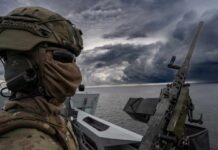
Reform UK has pledged to send the Royal Navy into the Channel and return small boat migrants to France or Belgium, turning border control into a military test with major legal risks.
Quick Take
- Reform says it would launch “Operation Fortress” if it wins power.
- The plan calls for the Royal Navy to intercept boats and send people back across the Channel.
- Party leaders say the operation would be both a border move and a humanitarian response.
- Critics say the plan depends on legal powers and French consent that are not settled.
What Reform Says It Would Do
Reform unveiled the plan at a press event on Monday, describing it as the “largest military operation” in the English Channel since World War Two. The party says a Reform government would use the Royal Navy to intercept small boats, detain the people on board, give them food, water, and medical checks, then return them under escort to France or Belgium. Party leaders also said the plan would stop crossings within a fortnight.
The proposal is not just a slogan. Reform says it would build a joint command using the Royal Navy, Royal Marines, the Royal Air Force, and the British Army, along with drones, satellites, and infrared feeds to spot boats before they reach shore. That makes the plan more detailed than many campaign pledges. It also means the party is now tied to questions about ships, crews, detention space, and how fast such a system could actually work.
Why Supporters Call It a Rescue Plan
Reform tried to frame the policy as a lifesaving move, not only a crackdown. Zia Yusuf said the operation would be a “humanitarian” response, and the party argued that intercepted migrants would be treated safely before being sent back. Nigel Farage also said the plan was backed by former senior members of the armed forces. The party says it wants to cut Channel deaths by stopping the crossings before people board flimsy boats in the first place.
That message matters because it speaks to anger on both sides of the political divide. Many voters who dislike high migration want firmer control of the border. Others who support asylum rights still want the crossings to end because the boats are dangerous and the system feels broken. Reform is trying to claim both ground at once: stronger enforcement and fewer deaths. The problem is that the public record still does not show the full legal or operational case.
The Legal and Diplomatic Hurdles
Reuters and BBC reporting both note that international sea law allows rescue at sea, but not the forced transfer of people to another country without that country’s consent. BBC reporting also says the United Nations Convention on the Law of the Sea and the Search and Rescue Convention do not give the UK a free hand to unload migrants in France. Reform says it has legal advice, but the actual opinion has not been published in the materials provided.
#Reform Royal Navy Operation Fortress Drowning English Channel nigel farage Zia Yusuf Reform UK Rupert Lowe
–
–#BrexitBoats #FarageBoats
Prior to Brexit the UK had a legal right of return to France under the Dublin Accords & small boats weren’t an issue it acted as a deterrent https://t.co/gu7HIn7CLN pic.twitter.com/u7Pe5KmwJ9— ⚡️ MR. GOLDFINGER ⚡️ (@Dr___H___Lekter) August 3, 2026
French consent is the biggest unresolved issue. Reform has spoken about returning migrants to France or Belgium, and Yusuf has suggested marines could still take people to the French coast if France refused. That is exactly where the plan risks colliding with sovereignty, maritime law, and diplomacy. Even before a court hears the case, the policy already depends on agreements that do not appear to exist in public form.
Political Stakes Go Beyond the Channel
The announcement also lands in a tense political moment for Reform. Reuters-linked coverage says the party faces falling popularity and questions about its funding. That means the plan will be judged not only on security grounds, but also as a test of whether Reform can turn hard language into workable policy. Supporters will see a bold answer to a long failure. Opponents will see a risky stunt dressed up as state power.
What happens next will depend on whether Reform can show more than forceful rhetoric. It would need written legal backing, a clear deal with France or Belgium, enough naval and air assets, and a workable system for detention and transfer. Until then, Operation Fortress remains a sharp political promise with real-world obstacles still sitting in plain view. That gap between the pitch and the proof is now the central story.
Sources:
aol.com, youtube.com, politico.eu, whtc.com, express.co.uk