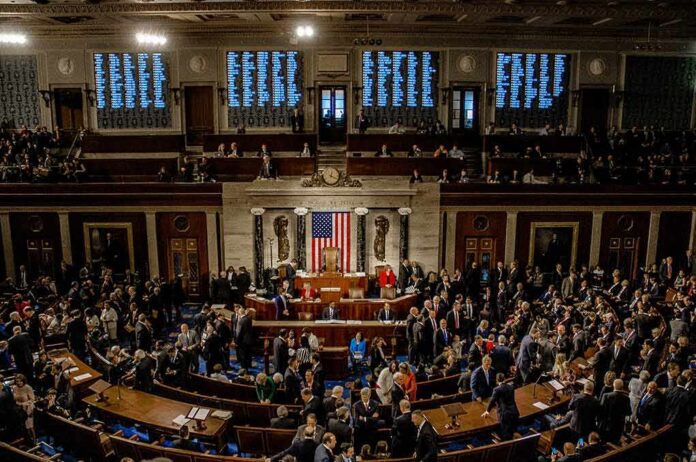
Todd Blanche’s path to the attorney general job ended with a razor-thin Senate vote after a fight over a disputed $1.8 billion settlement fund and tax immunity terms. The result shows how closely divided Washington remains over Trump’s Justice Department choices.
Quick Take
- The Senate confirmed Todd Blanche as attorney general by a 50-49 vote early Saturday.
- Republican holdouts backed him only after written assurances on the settlement fund and tax deal.
- The vote came after a 12-10 party-line committee advance earlier in the week.
- The fight reflected deep concern over Justice Department independence and Trump-linked legal deals.
How the Confirmation Broke Open
Blanche cleared the final hurdle after Senate Republicans lined up behind him just in time for the August recess. The Senate Judiciary Committee had already advanced him on a 12-10 party-line vote, and the full Senate then confirmed him early Saturday morning. The narrow margin made the outcome look less like broad agreement and more like a hard-fought political truce.
The central dispute involved a settlement tied to President Trump’s lawsuit against the Internal Revenue Service. According to reporting, Blanche issued written assurances that there was “no Fund” after critics said the arrangement could have created a $1.8 billion compensation pool for Trump allies. The same reporting said the Justice Department also narrowed the tax immunity language so it covered only claims open at the time of the settlement.
Why Republicans Split Over the Deal
Two Republican senators, John Cornyn of Texas and Thom Tillis of North Carolina, had threatened to block the nomination until Blanche put his assurances in writing. Senate reporters said the committee vote only moved forward after that deal was reached. That sequence matters because it shows the nomination was not just a routine confirmation. It was a test of whether senators would accept Blanche’s explanation of the settlement’s scope.
Supporters pointed to Blanche’s earlier Senate confirmation in 2025 as Deputy Attorney General, where he won approval by a 52-46 vote. That prior vote gave him the kind of federal experience many nominees lack. But critics argued that his close ties to President Trump, along with his role in the settlement fight, raised real doubts about whether he could run the Justice Department without political pressure shaping key decisions.
What the Narrow Vote Signals Next
The final 50-49 vote leaves Blanche in one of the most divided confirmation results for a Justice Department chief in modern memory. It also gives both sides a talking point. Backers can say the Senate approved him after scrutiny. Opponents can say the process exposed deep concerns about favoritism, legal deals for Trump, and the use of federal power in a partisan fight. Either way, the result fits a broader pattern of Americans losing trust in government institutions.
Senate Republicans narrowly confirm Todd Blanche as attorney general 👀 https://t.co/1YbjgUkq7K
— Diana Nunez (@DianaNu84941814) August 8, 2026
The episode also shows how much Senate confirmations now depend on private bargaining and late written promises. Instead of a wide public debate with clear answers, the process turned on a few swing votes and a last-minute clarification that the contested fund was dead. That may settle the immediate fight, but it does little to calm the larger worry that powerful players still shape outcomes behind closed doors.
Sources:
facebook.com, nytimes.com, apnews.com, congress.gov, abcnews.com, en.wikipedia.org, cnn.com, politico.com, npr.org, pbs.org