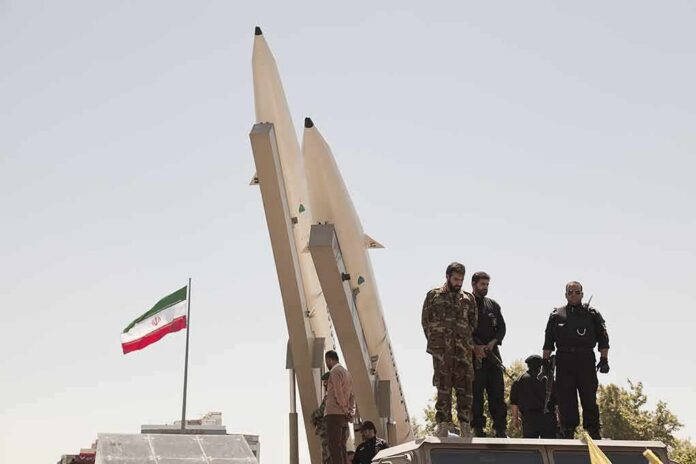
Iran’s president told state media the world has “approved” Tehran’s victory over the United States, turning battlefield stalemate into a public claim of triumph.
Story Snapshot
- Iran’s leaders say they defeated the United States and Israel and emerged stronger.
- President Trump and U.S. defense leaders also claimed success and warned force could resume if talks fail.
- Analysts describe a narrative fight more than a clear military win for either side.
- Control over the Strait of Hormuz remains a key source of leverage and risk.
Tehran’s Victory Narrative From The Top
Supreme Leader Ayatollah Ali Khamenei said Iran “triumphed” over the American “regime,” casting the endgame as proof Washington gained nothing in the war. Iranian Parliament Speaker and chief negotiator Mohammad Bagher Ghalibaf echoed that message, calling it a military and political win in public remarks carried by major outlets. President Masoud Pezeshkian went further, saying “the entire world approved our victory,” and urged an end to the conflict under the new terms being discussed.
Iranian officials linked this “win” to leverage at sea and in talks. Reporting during the ceasefire period stressed Tehran’s grip over Gulf energy routes and the Strait of Hormuz as a pressure point it could reapply if needed. State-linked media also touted a ten-point plan and the idea of co-control in the waterway, using those claims to sell the outcome to a weary public at home as a strategic success after months of strikes and disruption.
Washington’s Claim Of Strength And The Open Door To Force
President Trump said the United States “won” and cautioned against leaving too early, signaling confidence but also continued resolve. The Pentagon’s leadership framed Iran as beaten back and short on options, while making clear the United States military would restart operations if diplomacy stalls. This twin message aimed to reassure allies, deter Iran, and calm domestic critics who fear the government might trade away gains or accept a deal that leaves threats in place.
U.S. officials also tried to narrow the definition of success to concrete goals, like degrading Iran’s forces and limiting attacks on partners. Independent reviews, however, found a split picture: American and Israeli strikes caused heavy damage, yet Tehran kept enough power to disrupt shipping and fire missiles, which lets both sides claim they met core aims while blaming the other for wider costs. That ambiguity feeds a public relations battle that now shapes the terms of any deal.
Why Both Sides Say They Won — And What That Means For Americans
Analysts say this is a classic information fight after an uneven war. Leaders stretch the meaning of victory to survival, leverage, or deterrence when no one gets a clean surrender on the other side. Reuters described an Iran that is bruised but still able to sway oil flows and unsettle markets, while the United States insists it can snap back to strikes at any time. Each side now uses that posture to steer the next round of talks and calm tensions at home.
This matters for families and businesses far from the Gulf. Energy prices react to risk at the Strait of Hormuz, and supply chains feel every scare. When rival claims of victory mask unfinished work, Washington can drift into “forever standoffs” that drain budgets and attention while everyday costs rise. People on the left and right see a pattern: leaders declare wins, but the bills land on citizens. Clear goals, honest updates, and firm timelines are the guardrails voters should demand now.
Sources:
mediaite.com, thehill.com, reuters.com, tass.com, euronews.com, cbsnews.com, manoramanews.com, telegraph.co.uk, aljazeera.com, moneycontrol.com