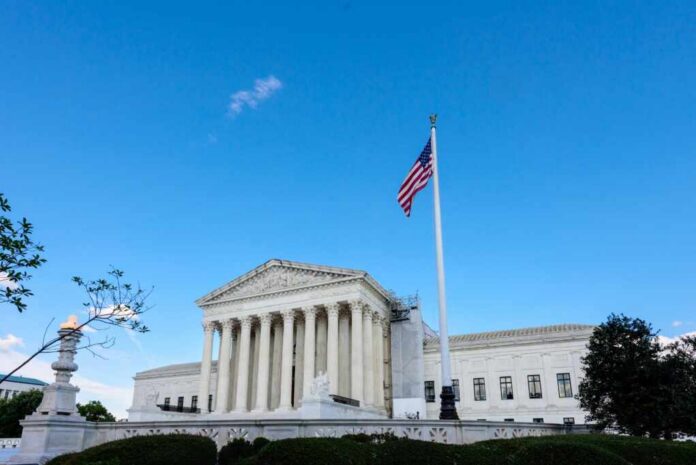
President Trump’s executive order stripping birthright citizenship from thousands of American babies born on U.S. soil faces its day of reckoning at the Supreme Court, as every lower court has unanimously blocked this unprecedented attempt to rewrite the Constitution through executive fiat.
Story Snapshot
- Trump’s executive order denies citizenship to babies born in the U.S. to non-permanent resident parents, affecting thousands of newborns since February 2025
- Every federal court has blocked the order as unconstitutional, citing clear 14th Amendment protections upheld for over 125 years
- Trump personally attended Supreme Court arguments on April 1, 2026, then departed as ACLU lawyers detailed the threat to American babies’ constitutional rights
- The case represents an alarming expansion of executive power that bypasses Congress to unilaterally alter citizenship law established by the Constitution
Executive Order Targets Constitutional Birthright
President Trump signed an executive order on January 20, 2025, his first day of his second term, restricting automatic citizenship for children born in the United States after February 19, 2025, to parents without permanent legal status. The order directly contradicts the 14th Amendment’s citizenship clause, which states that all persons born in the United States and subject to its jurisdiction are citizens. Within two hours of the signing, the ACLU and partner organizations filed suit to block implementation, arguing the president lacks authority to override constitutional protections through executive action alone.
Uniform Court Rejections Block Implementation
Lower federal courts across the country have unanimously issued injunctions blocking Trump’s citizenship order, with judges consistently ruling it violates both the Constitution and federal statute. The order affects an estimated four to five percent of annual U.S. births, totaling hundreds of thousands of babies yearly born to undocumented or temporary visa-holder parents. Courts found the administration’s arguments—that the 14th Amendment applies only to children of former slaves—contradict over a century of settled law, including the Supreme Court’s 1898 decision in United States v. Wong Kim Ark, which established birthright citizenship for children of non-citizens.
Supreme Court Showdown and Trump’s Departure
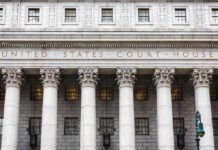
On April 1, 2026, the Supreme Court heard oral arguments in Trump v. Barbara, with President Trump personally attending the proceedings before departing as ACLU attorney Cecillia Wang argued that thousands of American babies face citizenship denial under the order. ACLU lawyers emphasized that the 14th Amendment’s plain text has protected birthright citizenship for 125 years, calling the order “flatly unconstitutional” and warning it treats millions of American-born children as second-class citizens. The administration maintains the order addresses concerns about birth tourism and anchor babies, though critics note no prior president has attempted such a unilateral rewrite of constitutional citizenship law without congressional action or constitutional amendment.
Constitutional Overreach and Conservative Concerns
This case exposes a troubling reality for constitutionalists: executive orders cannot lawfully supersede the Constitution, regardless of policy goals. Trump campaigned on ending birthright citizenship during his first term but never acted, recognizing the constitutional barriers. Now, bypassing Congress entirely, his administration claims authority to redefine who qualifies as a citizen at birth—a power the Constitution grants to the people through amendment, not to the president through decree. For conservatives who champion limited government and constitutional fidelity, this represents dangerous executive overreach that could set precedent for future presidents to unilaterally alter other constitutional rights. The Supreme Court’s ruling, expected by summer 2026, will determine whether the executive branch can rewrite founding constitutional protections or whether the separation of powers and the 14th Amendment remain sacrosanct barriers against government overreach.
Sources:
Barbara v. Donald J. Trump – ACLU
Legal Groups File Supreme Court Brief Supporting Birthright Citizenship – ACLU of Massachusetts
Trump Seeks New Birthright Citizenship Restrictions as Case Goes to Supreme Court – Scripps News
Supreme Court to Hear Birthright Citizenship Arguments – ACLU of Maine