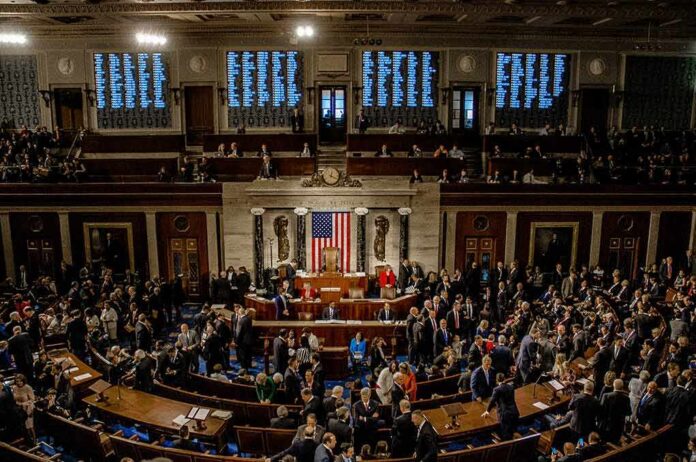
The Senate’s long-stalled Russia sanctions bill moved one big step closer to the floor just hours after Lindsey Graham’s funeral, turning a years-long fight into a rare bipartisan show of force.
Quick Take
- The Senate advanced the bill by an 86-12 procedural vote, not final passage.
- The measure targets Russian leaders, banks, energy projects, and the shadow fleet.
- It also gives President Trump tariff authority over major buyers of Russian oil and gas.
- Lawmakers added Iran sanctions, which widened the coalition but also the scope.
What the Senate Actually Did
Senators voted 86-12 to begin moving the bill forward, which means the chamber cleared a procedural hurdle rather than finishing the job. The vote came after months of talks and followed a funeral for Senator Graham, who had pushed the measure for years. Ukrainian President Volodymyr Zelenskyy watched from the Capitol as the Senate moved ahead, underscoring how closely the bill is tied to the war in Ukraine.
That detail matters because the public debate often talks as if the sanctions were already locked in. They were not. The Senate action opened the door to final passage later in the week, but more steps still stood between the bill and becoming law. Even so, the vote showed how much support had built around a package that had stalled for a long time in Congress.
What the Bill Would Target
The package goes well beyond symbolic condemnation of Moscow. Reported provisions would hit Russian officials, oligarchs, banks, financial institutions, energy projects, and the so-called shadow fleet used to move oil around existing sanctions. Reuters and the Associated Press said the bill would also allow tariffs of up to 100 percent on major buyers of Russian energy, including countries such as India, Japan, and some European Union states.
Congressional records show Graham has been at the center of this effort since at least 2025. Senate records for S.1241 list him as sponsor and describe penalties tied to Russian refusal to negotiate peace, violations of a peace deal, or another invasion of Ukraine. That record gives the story a firm legislative base and shows the current fight is built on an older sanctions push, not a sudden political stunt.
Why the Timing Mattered
The timing gave the vote an unusually heavy symbolic charge. Reuters, The New York Times, and Politico all framed the action as taking place in Graham’s memory and alongside Zelenskyy’s Capitol Hill visit. That made the bill look like both a policy move and a tribute, which helped build momentum. It also risked crowding out harder questions about enforcement, waivers, and how much pressure the tariffs could really put on Russia’s war economy.
✅ BREAKING- THE VOTE IS IN!
The Lindsey Graham russia and Iran Sanctions Act of 2026 has passed OVERWHELMINGLY 86-11 in the @SenateFloor .
The #Ukrainian community is grateful for all 86 senators who voted in favor of this measure.
✳️ Now, onto the House! pic.twitter.com/2MYWOPGehS
— UNIS (@UNISdirect) August 7, 2026
The White House’s reported support also shaped the debate. Politico said Trump had “greenlit” the bill earlier in the year, and later reports said lawmakers reached a deal with administration backing. That kind of alignment can speed action in Congress, but it can also narrow scrutiny. When both parties and the White House want the same headline, fewer people ask whether the fine print is strong enough to matter in the real world.
What to Watch Next
The biggest unanswered question is how the sanctions and tariff powers would be used if the bill becomes law. The reporting says the president would have room to waive some restrictions and set tariff levels, while some countries would get exceptions if they are cutting dependence on Russian gas. That flexibility may help secure votes and allies, but it also means the final impact will depend on executive judgment, not just congressional language.
That is where the broader frustration on both left and right comes into focus. Supporters see a long overdue move against a war economy that has survived too many weak responses. Skeptics see another sweeping Washington package that sounds tough but leaves the hardest work to later. For many Americans, that gap between political theater and real enforcement is exactly why trust in government keeps falling.
Sources:
facebook.com, axios.com, nytimes.com, cnbc.com, politico.com, reuters.com, congress.gov, apnews.com, thehill.com, youtube.com