America’s government is now paying a major energy company to walk away from offshore wind and double down on fossil fuels, raising fresh questions about who Washington really works for.
Story Snapshot
- German energy giant RWE struck a $1.22 billion deal with the Trump administration to cancel three U.S. offshore wind leases and invest instead in gas projects.
- The Interior Department will refund RWE’s lease costs while steering the company toward liquefied natural gas exports and gas-fired power plants in the United States.
- RWE says there is “no path forward” to permit its U.S. offshore wind projects under current rules, highlighting how political decisions can shut down long-planned clean energy projects.
- The deal follows similar government buyouts with other firms, feeding public anger that federal policy favors powerful corporations and fossil fuels over ordinary Americans’ long-term interests.
RWE Walks Away From U.S. Offshore Wind In Billion-Dollar Deal
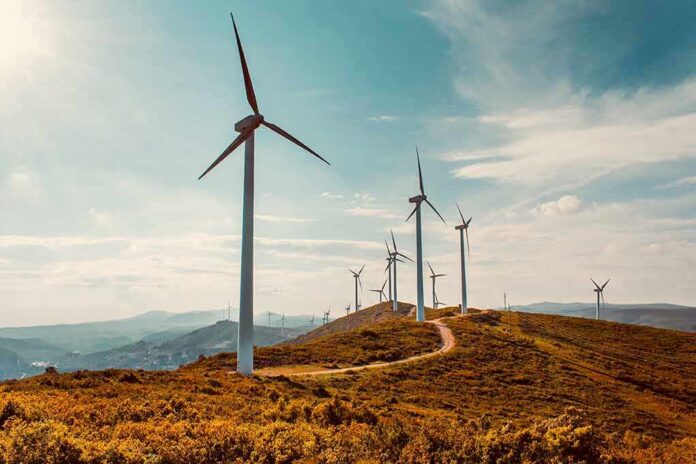
German energy company RWE announced that it is abandoning all its U.S. offshore wind projects after reaching a $1.22 billion settlement with the Trump administration. The deal covers three offshore wind leases off New York, California, and Louisiana, areas the company once promoted as key to America’s clean energy future. RWE said the leases had “no path forward” for permits “for the foreseeable future,” despite years of planning and more than $1 billion already spent securing and early-stage development.
Under the agreement, the federal government will effectively refund RWE’s lease costs and related investments, and RWE will redirect the money into fossil fuel projects favored by the administration. The company plans to spend about $900 million to buy a 16 percent stake in a liquefied natural gas export terminal in Louisiana and another $300 million on a pipeline of natural gas “peaker” plants that fire up to meet high electricity demand. RWE will keep building offshore wind in Europe, but it is now out of the U.S. market.
How Trump’s Offshore Wind Freeze Set The Stage
The RWE deal did not come out of nowhere; it follows a clear policy shift in Washington. On President Trump’s first day of his second term, the White House issued a memorandum that temporarily withdrew all areas on the outer continental shelf from new offshore wind leasing and ordered a broad review of federal wind permitting. In December 2025, the Department of the Interior paused leases for five large East Coast wind projects, citing classified national security concerns tied to radar interference, even though those issues had already been studied in earlier reviews.
Since then, the Trump administration has turned to a new tool: paying companies to quit offshore wind. Deals with TotalEnergies and Ocean Winds refunded close to $2 billion in lease payments in exchange for pledges to invest the same sums in oil, gas, or liquefied natural gas infrastructure in places like Texas and the Gulf of Mexico. Former Interior Department officials and legal analysts warn these buyouts have “no basis under U.S. law” and set a precedent that could be abused whenever powerful interests want to reverse earlier decisions. RWE is now the latest major developer to take the offer.
Shared Public Frustration With A System That Picks Winners
Many Americans, across the political spectrum, see this kind of deal as proof that the federal government serves elites first and ordinary people last. Conservatives who have long opposed “green” mandates may welcome less pressure on wind, yet they also worry that Washington keeps using tax dollars and legal loopholes to pick corporate winners instead of cutting energy costs and fixing the grid. Liberals who support renewable energy see the administration paying companies not to build projects that could lower emissions, create union jobs, and reduce dependence on foreign fuel.
RWE’s statement frames its exit as a business choice in the face of “commercial and regulatory unviability,” saying it must focus on projects that can move forward with certainty. At the same time, more than 50 advocacy groups urged RWE earlier this year not to take a fossil fuel buyout, arguing that the company would be “capitulating” to a hostile policy rather than fighting for its long-term offshore wind plans. The result looks similar either way: years of work, and billions of dollars, now shift from clean energy to liquefied natural gas and gas plants because the government changed direction.
What This Means For Energy Policy And Trust In Government
For regular Americans trying to pay their bills and plan for the future, this story raises simple but hard questions about trust. The same federal government that once promoted offshore wind auctions as a way to boost jobs, cut pollution, and help coastal states is now spending billions to unwind those deals and lock in more fossil fuel infrastructure. That kind of whiplash makes it harder for any energy company to plan long-term projects, and it deepens the sense that policy is driven by insider deals rather than clear, stable goals.
Supporters of President Trump argue that the new approach protects national security and avoids high costs or grid risks from rushed offshore wind buildouts. Critics counter that radar concerns can be fixed and that the real effect is to stall a growing industry and keep America tied to fossil fuels during a time of climate and economic stress. What is not in dispute is the pattern: the government is now paying companies like RWE to walk away from offshore wind and invest in gas instead, leaving many citizens convinced that, once again, Washington is serving powerful interests over the public good.
Sources:
insiderpaper.com, reuters.com, offshorewind.biz, enerdata.net, industrialinfo.com, energywatch.com, enkiai.com, eenews.net, whitehouse.gov, pbs.org, doi.gov, utilitydive.com, savingseafood.org, whitecase.com, spglobal.com, latimes.com, wbur.org, lcv.org