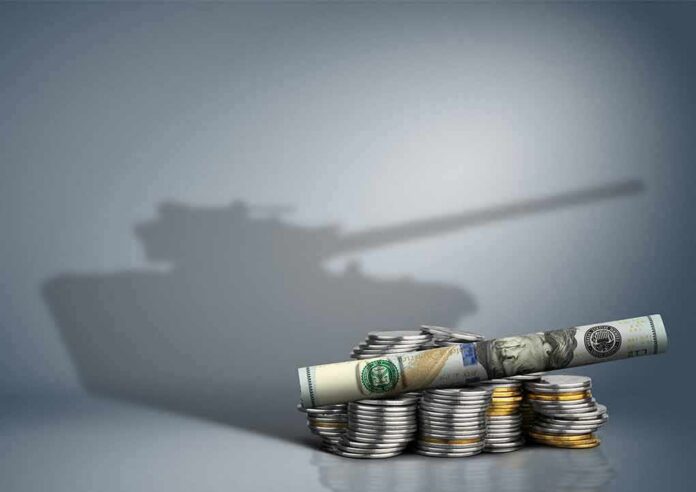
By directly targeting Cuba’s military minister and the network that buys its weapons, Washington is quietly turning financial sanctions into a new kind of pressure on foreign armies.
Story Snapshot
- The United States has sanctioned Cuba’s armed forces minister and key military procurement offices for alleged foreign weapons deals.
- New rules aim to choke off Cuban arms purchases from countries seen as rivals, including China and Russia.
- The sanctions fit President Trump’s wider strategy of “maximum pressure” on Cuba’s communist regime and its military-run economy.
- The move raises fresh questions about how far Washington will go in using financial tools instead of direct military action.
Who Was Sanctioned And Why It Matters
The United States State Department says it is sanctioning five Cuban entities and several senior military officials because they support “subversive, anti-American activities” and threaten U.S. national security. The main target is the Ministry of the Revolutionary Armed Forces of Cuba, often called MINFAR, which oversees the island’s military. A separate report describes new sanctions on Armed Forces Minister General Álvaro López Miera, seven other officials, and five state-owned entities for their alleged role in foreign military cooperation and arms procurement. These steps treat Cuba’s senior military leadership not just as soldiers, but as part of a global network that can be cut off from money and trade.
A French outlet summarizing the State Department statement quotes U.S. officials saying the actions focus on “state-owned entities, military enterprises, and Ministry of the Revolutionary Armed Forces officials involved in foreign military cooperation and the procurement of military equipment intended for the Cuban regime.” That framing goes beyond human-rights concerns and paints Cuba’s military as an active shopper in global weapons markets. For many Americans, this connects to a long-held fear that hostile regimes and their armies work with foreign powers behind closed doors, while Washington’s own leaders seem slow to protect U.S. interests.
How The Procurement Network Is Alleged To Work
Reporting from Cuban and regional media says the latest designations under President Trump’s Executive Order 14404 target “the network that manages the purchase of foreign arms for the Ministry of the Revolutionary Armed Forces.” The officials named include the head of the Foreign Relations Directorate, the chief of the Economic Directorate, and Cuba’s military attachés in Russia and China, along with leaders of the Military Industry Union and the state firm Tecnoimport. The five sanctioned entities are described as forming “the core of the Cuban military supply chain,” including Tecnoimport, Tecnotex, the Military Industry Union, the Yuri Gagarin Military Industrial Company that services Russian aircraft, and Duna S.A. This suggests Washington sees a tight web of offices and companies that together help Cuba find, buy, and maintain foreign weapons systems.
At the same time, the public record does not show shipping manifests, contract copies, or bank records proving specific arms deals. Most official U.S. documents instead stress repression, regime protection, and broad national security risks. In 2021, for example, the U.S. Treasury Department sanctioned López Miera and a special forces brigade “in connection with the repression of peaceful, pro-democratic protests in Cuba that began on July 11.” That earlier action under a human-rights order portrayed the Cuban defense ministry as a tool of internal control. The new measures build on that picture but shift the legal focus to foreign cooperation and weapons procurement, without yet sharing detailed evidence with the public.
Link To Trump’s Wider Cuba Strategy And Public Concerns
The Cuba moves fit into a broader “maximum pressure” strategy that President Trump and Republicans say is meant to protect U.S. national security and weaken communist elites. The State Department has already labeled the military holding company GAESA as the “primary holding company for the military’s strangle-hold on the economy,” and warned that anyone dealing with entities owned by GAESA, MINFAR, or the Ministry of the Interior risks U.S. sanctions. This connects military power to tourism, energy, and trade sectors, where ordinary Cubans work and foreign companies profit. For many Americans on both the right and left, it also echoes a familiar concern: small circles of insiders, or “elites,” control whole economies while average people struggle.
Critics abroad see something else. A Cuban diplomat has publicly called Trump’s sanctions a “pretext” for possible military action, arguing Washington is building a “fraudulent case” rather than presenting clear proof. That charge taps into doubts many Americans already have about their own government. Some conservatives worry about endless foreign entanglements justified by broad national-security claims. Many liberals fear that pressure campaigns hit regular people harder than rulers and may be aimed at regime change, not just safety. Both groups often agree on one thing: officials in Washington rarely show the full evidence behind their moves.
Human Rights, National Security, And The Evidence Gap
U.S. records make clear that Cuban military and police units have been sanctioned several times since 2021 for repressing protests and supporting the regime. State Department statements in 2026 also describe a system of “interlocking pillars” that includes state-owned companies that funnel revenue, paramilitary forces, armed civilian groups, and surveillance organizations that “repress the Cuban people.” This paints a picture of a security state where the military, intelligence services, and economic arms work together to keep the regime in power. That view resonates with Americans who see similar patterns of unaccountable power at home, even if they disagree about ideology.
🚨🇨🇺 UN experts warn of "silent Gaza" in Cuba as Trump administration announces new round of sanctions
🔹 United Nations human rights experts on Thursday condemned the US's ongoing economic and political campaign against Cuba and urged the international community to act quickly… https://t.co/587ZtXuYKp pic.twitter.com/uwbb1XZYIg
— Drop Site (@DropSiteNews) August 6, 2026
Still, when it comes to the new claim of a Cuban “military procurement network,” the public record is thin. The State Department and Treasury talk about threats, repression, and foreign cooperation, but do not release the underlying intelligence, transaction data, or contracts that would prove specific weapons deals. This lack of detail opens the door for both sides to spin the story. Supporters say sanctions are a needed defense against hostile regimes and their backers. Critics argue Washington may be using secret evidence to justify pressure, with ordinary Americans and Cubans left in the dark. In an era when many citizens feel their own government serves elites first, every opaque decision like this can deepen mistrust, even when the target is a foreign army.
Sources:
insiderpaper.com, state.gov, en.cibercuba.com, riotimesonline.com, youtube.com, apnews.com