At a jungle-themed Halloween party at Mar-a-Lago, President Trump fielded on-the-spot questions about domestic politics and foreign crises, turning a costume night into an impromptu presidential Q&A.
Story Highlights
- President Trump spoke with reporters during a Halloween party at Mar-a-Lago in Palm Beach, Florida.
- Questions touched on Haiti, Ukraine, Iran, and campaign-season politics, blending policy with pageantry.
- Video and live coverage captured the informal press exchange amid costumed guests and Secret Service.
- The setting fits a long tradition of informal “press gaggles” used by presidents to shape the news cycle.
What Happened At Mar-a-Lago
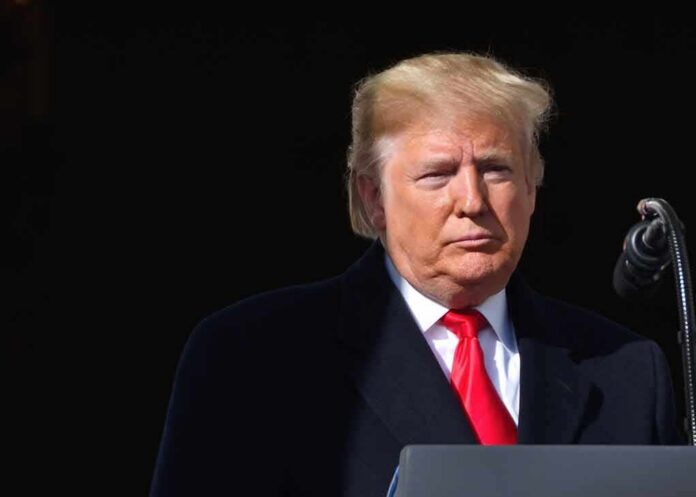
On October 31, 2026, President Trump addressed reporters during a Halloween party at his Mar-a-Lago club in Palm Beach, Florida. Reporters gathered near the ballroom as the president arrived in his usual suit and red tie, joking that he “came as Donald Trump.” Multiple outlets documented the exchange, describing a quick, on-the-record back-and-forth as music and guests moved through the venue. CNN and other outlets posted video clips from the scene later that night.
During the interaction, reporters asked about hot-button topics that dominate headlines. Questions referenced Haiti’s turmoil, the war in Ukraine, tensions with Iran, and ongoing campaign-season skirmishes. The setting was casual, but the focus was weighty. The president also commented on political storylines beyond foreign policy, including disputes inside the opposition party and coverage of his own orbit. CNN’s live feed and write-ups summarized several of his answers from the gaggle.
How The Exchange Fits Presidential Media Traditions
Presidents have long used brief, informal exchanges to drive messages and respond to fast-moving events. Communications scholars and historical accounts describe “press gaggles” as short, on-the-record chats that happen outside formal briefing rooms, often without a full transcript. These exchanges let presidents answer questions quickly while retaining control of time and setting. Analysts trace the practice across modern administrations, from early morning gaggles to hallway scrums and tarmac talks.
The Mar-a-Lago exchange aligns with that pattern. The president did not hold a podium news conference. He instead took questions in a social space where cameras, music, and costumes set a very different tone. That choice carries trade-offs. Reporters gain quick access to the president’s views, and the White House gains flexibility to frame messages for the evening’s news. Media historians note that such unscripted moments often set headlines even when they last only minutes.
Why This Matters To Voters
Americans across the political spectrum want straight answers on wars, migration crises, and prices at home. Many also suspect the federal government spends more time on theater than problem-solving. A presidential Q&A at a costume party captures both realities. On one hand, the president engaged with the press in real time. On the other, the venue underscored how politics and spectacle now blend together in our national life, sometimes overshadowing policy detail.
**Trump rolled up to his Mar-a-Lago Halloween party dressed as himself after a ten-minute costume decision and immediately took questions on North Korea finance probes, Iran negotiations, Democratic civil war, a missing Senate candidate, and a proposed DC military “arc.”**
###…
— GrumpyNews, emotionally clean news. (@GrumpyNews_) November 1, 2026
For conservatives who push for strong borders, cheaper energy, and a focus on “America First,” the quick-hit exchange shows a president asserting presence while moving fast. For liberals who worry about social supports, inequality, and the treatment of immigrants, the scene may feel like serious issues reduced to a sideshow. For the growing middle that doubts Washington altogether, the moment reinforces a shared concern: leaders and media often meet in spaces built for show, while the hard work still waits outside the ballroom.
Sources:
youtube.com, edition.cnn.com, cnn.com, news4jax.com, economictimes.indiatimes.com, govfacts.org, dw.com