Three years after Islamist terrorists slaughtered dozens of worshippers during Sunday Mass in Nigeria, a federal court has finally delivered the justice victims’ families have been waiting for — four death sentences by hanging.
Story Highlights
- Nigeria’s Federal High Court in Abuja sentenced four men to death by hanging for the June 5, 2022 massacre at St. Francis Catholic Church in Owo, which killed more than 40 worshippers.
- Justice Amaka Nwite convicted the four defendants on terrorism-related charges filed by Nigeria’s Department of State Services, finding the prosecution proved its case beyond reasonable doubt.
- The court relied on 11 witnesses, 23 exhibits, survivor testimony, a Catholic priest’s account, digital forensic reports, phone tracking data, and confessional statements.
- A fifth defendant, Momoh Otohu Abubakar, was discharged and acquitted after the court found insufficient evidence linking him to the attack.
A Massacre That Shocked the Christian World
On June 5, 2022, gunmen stormed St. Francis Catholic Church in Owo, Ondo State, during Sunday Mass and opened fire on the congregation, killing more than 40 worshippers including children. The attack was one of the deadliest assaults on Christians in Nigeria’s recent history. Reports identified the perpetrators as members of a cell linked to Al-Shabaab, the East African Islamist terror organization. The brazen attack drew international condemnation and intensified calls for accountability.
Ondo State Governor Lucky Aiyedatiwa publicly welcomed the convictions and death sentences, calling the verdict a measure of justice for the victims and their families. The ruling was broadly described by Nigerian broadcasters and legal observers as a landmark moment in the country’s effort to prosecute mass-casualty terrorism cases through civilian federal courts rather than military tribunals.
How the Prosecution Built Its Case
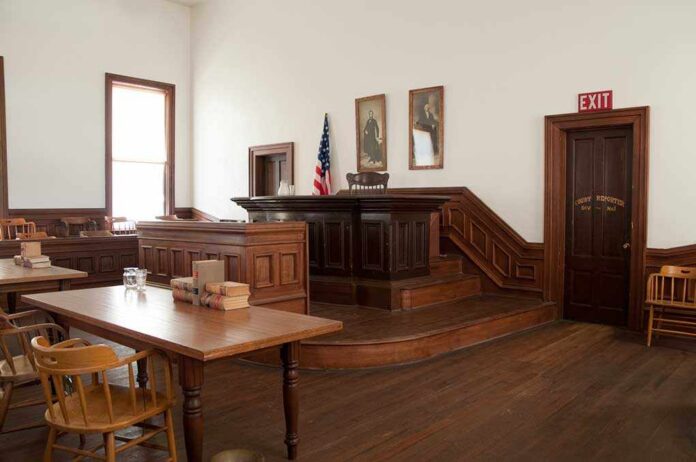
Nigeria’s Department of State Services prosecuted the case before Justice Amaka Nwite at the Federal High Court in Abuja. The prosecution presented 11 witnesses and 23 exhibits, including survivor testimony, the account of a Catholic priest who was present during the attack, digital forensic reports, cell-tower records, and phone tracking data. Confessional statements from the accused were also entered into evidence. The court found this body of evidence sufficient to establish each convicted defendant’s participation in the massacre beyond reasonable doubt.
The acquittal of one co-defendant, Momoh Otohu Abubakar, actually reinforces the credibility of the overall verdict. Rather than convicting all five defendants on a sweeping theory of collective guilt, the court evaluated the evidence against each individual and found it lacking for Abubakar. That kind of differentiated judgment signals the court applied a genuine evidentiary standard rather than simply delivering a politically convenient outcome to satisfy public outrage.
Defense Challenges and What Comes Next
Defense counsel Abdullahi Muhammad announced that his clients intend to appeal the convictions to Nigeria’s Court of Appeal. His primary public objection focused on a procedural inconsistency — arguing that the prosecution charged three defendants on the same count but later removed one, while the others remained charged. That argument targets the charging process rather than the underlying factual findings, and it does not directly rebut the witness testimony, digital forensics, or confessional evidence the court relied upon to establish guilt.
Federal High Court Sentences Four Al-Shabaab Terrorists To Death Over Owo Catholic Church Massacre 🔗 Read the full story by clicking below 👇 https://t.co/bPKWUclqLz
— Paradise News (@TheParadiseNg) June 6, 2026
The convictions and pending appeals follow a well-documented pattern in high-profile terrorism cases worldwide. Courts convict based on the trial record; defense teams then attempt to unwind those findings on appeal through challenges to confession admissibility, identification reliability, or evidentiary chain of custody. Until the appellate filings are lodged and reviewed, the four death sentences stand as the legal conclusion of a trial that presented substantial, layered evidence against the convicted men. For the families of more than 40 people slaughtered at prayer, that verdict represents a measure of accountability long overdue.
Sources:
[1] Web – 4 Islamists sentenced to death for Catholic church massacre in Nigeria
[2] YouTube – Court sentences four culprits to death by Hanging
[3] YouTube – Four men sentenced to death over 2022 Nigeria church attack
[4] YouTube – OWO CHURCH ATTACK: FOUR SENTENCED TO DEATH, ONE …
[5] Web – In Nigeria, four men sentenced to death for mass murder in a … – УНН
[6] YouTube – Public reactions trail court judgment as four sentenced to death over …
[7] YouTube – How Court Sentenced Four Defendants To Death By Hanging
[8] YouTube – Death Penalty For 4 In OWO Attack Case | WION News
[9] Web – Owo Church Massacre: Terror convicts get death sentence
[10] Web – Aiyedatiwa Welcomes Death Sentences For Owo Church Massacre …