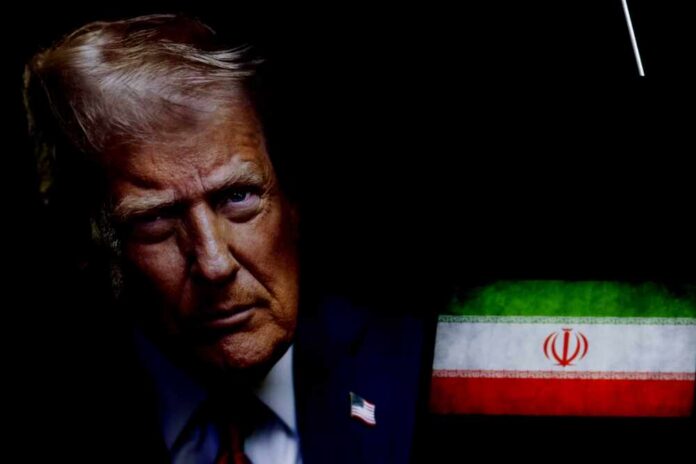
Iranian lawmakers’ reported plan to pay a cash bounty for killing President Donald Trump crosses a red line that should alarm every American.
Story Snapshot
- Iranian media and international outlets report a proposed law offering around €50 million to kill President Trump and other leaders [10].
- A circulating video report claims Iranian Parliament is preparing to vote on a reward targeting Trump, Benjamin Netanyahu, and a United States commander [2].
- Coverage shows mixed signals: some rhetoric targets Arab monarchies hosting American bases, complicating claims of a direct Trump threat [8].
- Domestic political voices are already trying to spin Trump’s deterrent posture rather than condemn Tehran’s escalations [3].
Reports of a Parliamentary Bounty Targeting U.S. and Israeli Leaders
International reporting says Iranian lawmakers are weighing a bill that would offer roughly €50 million for the killing of President Donald Trump, amid parallel threats naming Israeli Prime Minister Benjamin Netanyahu [10]. A widely shared video report further asserts that Iranian state media described a pending vote to offer rewards for killing Trump, Netanyahu, and the commander of United States Central Command, Admiral Brad Cooper [2]. These reports, if accurate, represent an explicit state-linked incitement to assassinate an American president and allied leaders.
Journal accounts attribute the push to figures in Iran’s Parliament and its security establishment, framing the move as retaliation amid ongoing regional tensions [10]. The narrative overlaps with a drumbeat of videos and talk-shows magnifying Tehran’s threats, which has amplified confusion over what is theater and what might be policy. While secondary sources vary in details, the recurring element is a money-for-murder framework connected to named foreign leaders, a step that, on its face, breaks basic international norms and escalates beyond typical saber-rattling [2].
Conflicting Rhetoric: Threats Against Arab Monarchies vs. Direct Targeting
Context from regional coverage indicates some Iranian officials simultaneously threaten Arab monarchies that host American forces, warning their palaces would not be safe in a wider war [8]. That rhetoric muddies precise attribution of a direct, personal threat against President Trump by a specific lawmaker in a single quote. However, reports about the proposed bounty bill and references to Trump and Netanyahu in print and on-air segments stand apart from generic retaliation language, suggesting the assassination-reward narrative is not merely a mistranslation dispute [10].
Because the claims arrive through a mix of Iranian outlets, international newspapers, and video segments summarizing “what Iranian media says,” readers should weigh the sourcing. Still, the Jerusalem Post account explicitly cites a vote on a reward to kill Trump and notes other leaders named in the same breath [10]. A separate video report again asserts Iranian state media described parliamentary preparations for such a vote [2]. Together, those items show more than casual bluster; they describe a concrete legislative step that would greenlight targeted killings-for-pay.
Why This Matters for U.S. Security, Alliances, and Deterrence
Assassination bounties tied to legislation would be a qualitative escalation, raising direct threats against an American president and signaling state-level approval of terrorism. Such a move would pressure United States partners, especially in the Middle East, already managing the risk of Iranian reprisals. Iran International coverage underscores that Iran-linked militias and networks can impose heavy costs, reinforcing why lawmakers’ threats cannot be dismissed as empty words in a volatile theater [8]. The practical effect is strategic coercion aimed at chilling American and allied decision-making.
At home, coverage has already shown some political voices concentrating on President Trump’s tough rhetoric rather than Tehran’s escalations [3]. That inversion distracts from the core issue: state-linked calls to pay for assassinations of foreign leaders shred diplomatic red lines and test American resolve. The proper focus is safeguarding American lives, defending the presidency from foreign threats, and preserving deterrence. Clear messaging, tightened security coordination, and pressure on Tehran’s enablers are prudent, constitutionally aligned steps while facts continue to be verified.
Separating Verified Facts from Fog-of-War Headlines
Readers should track a few distinctions. First, the reported bill and bounty figures are concrete claims tied to recognizably named leaders [10]. Second, a widely viewed video report independently repeats that Iranian state media described a coming vote on such rewards [2]. Third, broader Iranian rhetoric about punishing Arab monarchies reflects a separate line of threat signaling [8]. These threads do not fully collapse into one quotation or one lawmaker’s sole statement, but together they describe a hostile posture that warrants serious attention.
Until Tehran’s Parliament records, official gazettes, or state channels publish unambiguous legislative text, some uncertainty remains about timing and scope. That uncertainty should not delay calibrated protective measures for United States officials and partners, nor distract from holding Iran accountable in diplomatic forums. The Trump administration’s responsibility is to deter aggression, protect Americans, and rally allies. Congress and the media should focus on the threat’s substance, not on scoring points about tone, while intelligence confirms the exact contours of Iran’s next move [3].
Sources:
[2] YouTube – Iranian Lawmakers to Offer Reward for Killing US, Israeli Leaders
[3] Web – Congress is absent as Trump threatens Iranians ‘will die’ – POLITICO
[8] Web – Iran warned Trump any strike would cost US 3000-4000 dead …
[10] Web – Iran to vote on bill offering €50 million reward for killing Donald …