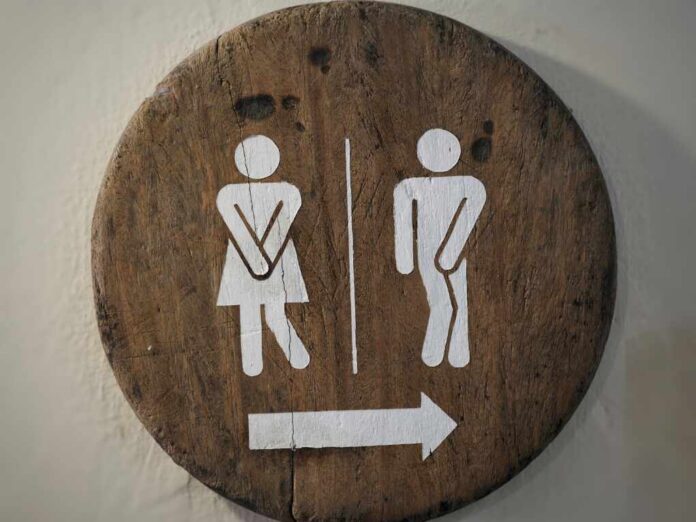
Britain’s top equality watchdog has finally said what common sense parents have known all along: public bathrooms and changing rooms must be based on biological sex, not self-declared identity.
Story Snapshot
- The United Kingdom Supreme Court confirmed that, for equality law, “sex” means biological sex recorded at birth.[5]
- The Equality and Human Rights Commission (EHRC) draft Code now explains when single-sex toilets and changing rooms are lawful on that basis.[1][2]
- New guidance says services can lawfully exclude trans-identified males from female spaces where proportionate, while still protecting them under gender reassignment rules.[2][3]
- Critics warn that real-world enforcement will be messy and that providers must still avoid blanket bans and consider workable alternatives.[2][3]
Supreme Court Ruling Reanchors Law In Biological Reality
The United Kingdom Supreme Court ruled in April 2025 that the word “sex” in the Equality Act means biological sex only, not gender identity or paperwork changes.[5] The Equality and Human Rights Commission explains that, under this judgment, a person’s legal sex for Equality Act purposes is the sex recorded at birth, and even a Gender Recognition Certificate does not alter that in this statute.[5] That clarification shut down years of activist-driven attempts to blur legal categories that protect women and girls.
The British government has now required the Equality and Human Rights Commission to update its official Code of Practice so every school, hospital, council and leisure center understands how to apply this ruling.[1][3] A government announcement says the draft Code’s sections on sex and gender reassignment were rewritten after the Supreme Court decision, specifically to reflect that sex in the Act means biological sex while confirming that people who identify as transgender still have protection under the characteristic of gender reassignment.[1] This sets the legal baseline: feelings do not rewrite biology.
New Code Explains When Single-Sex Facilities Are Lawful
The government’s own equality impact assessment explains that the updated Code gives detailed guidance on when separate or single-sex spaces are lawful and sometimes necessary.[2] It states that the changes “accurately reflect the law” after the For Women Scotland case and are meant to help providers decide whether sex-based rules meet the legal proportionality test.[2] That includes real-world examples, such as toilets, changing rooms, hospital wards, and domestic-violence refuges, where privacy, dignity, and safety are at stake.[2]
The equality impact assessment is explicit that Chapter 13 of the Code now explains when it is lawful to exclude a transgender person from services aligned with their acquired gender, including refuges, hospital wards, and changing rooms, based on biological sex.[2] At the same time, the document stresses that providers should consider alternatives and mitigations, saying it is “unlikely to be proportionate” to leave a transgender person with no service at all.[2] In other words, the law recognizes sex-based spaces but still requires a fair, case-by-case balance rather than cruel blanket exclusion.
Supporters See Protection For Women; Activists See New Battlefield
The British government describes the updated Code as “clear, workable guidance” designed to let organizations take a pragmatic approach to serving and protecting the public.[1] For many women’s groups, that means long overdue clarity that female-only bathrooms, changing areas and refuges can legally be kept for biological women, without officials constantly looking over their shoulder for discrimination claims. Those advocates argue that sex-specific spaces were always meant to shield women’s privacy and safeguard them in vulnerable situations.[2][5]
Trans advocacy group TransActual, however, highlights that the law still requires any exclusion from single-sex spaces to be proportionate and the least restrictive way to achieve a legitimate aim.[3] Their guidance notes that service providers are not obliged to exclude transgender people and can lawfully continue to include them, provided they can justify their arrangements.[3] They also warn there is “no clear way” to tell whether someone seeking access is transgender, raising concerns that enforcement could end up based on subjective judgments about appearance rather than objective criteria.[3]
Complex Balancing Test Keeps Culture War Alive
The equality impact assessment itself admits the Code will force providers to juggle competing needs and may create practical tradeoffs.[2] It recognizes, for example, that turning an accessible toilet into a mixed-sex alternative could affect disabled people who rely on that facility.[2] Officials say the point of the guidance is to help providers “balance the benefits, needs and impacts across potential user groups” when deciding whether a single-sex or separate-sex rule is proportionate.[2] That language shows the law is still a balancing exercise, not a simple slogan.
UK transgender bathroom ban is the latest setback for the LGBT lobby
Single-sex toilets and change rooms in England, Wales and Scotland must exclude transgender men and women, due to a new code of practice of the Equality and Human Rights Commission.https://t.co/vlA12XMBCk— Brian Bonham (@Brian_Bonham_) May 22, 2026
For American readers used to seeing corporate boards and school districts bend the knee to gender ideology, the United Kingdom story is a reminder that the tide can shift when courts insist on biological reality and governments back it up. But it also shows how determined activists will keep fighting ground-level battles over how rules are applied. The guidance confirms that sex-based spaces are lawful, yet it leaves many decisions to local managers under a proportionality test that will almost certainly be litigated again.[2][3][5] Keeping women and girls safe will still depend on whether officials have the backbone to use the tools the law now clearly provides.
Sources:
[1] Web – Organisations receive clear, accessible guidance on how to …
[2] Web – Equality impact assessment – GOV.UK
[3] Web – Know Your Rights – TransActual
[5] Web – UK Supreme Court ruling on the meaning of sex in the Equality Act