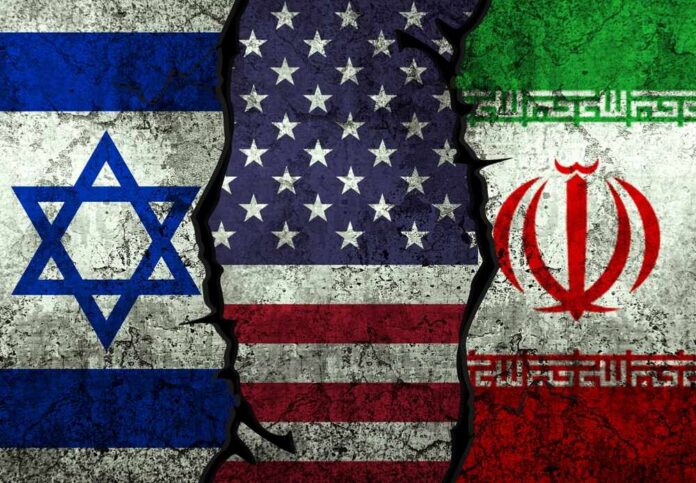
Israel’s strike timing—hours around a fresh Iran ceasefire—shows how quickly a “deal” can turn into a loophole-filled fight with rockets still flying.
Quick Take
- The IDF says it killed Hezbollah chief Naim Qassem’s secretary in a Beirut airstrike as rocket fire from Lebanon continued.
- Israel framed the operation as preemptive and argued a new Iran ceasefire did not apply to Lebanon, a key dispute shaping the next phase of the conflict.
- Lebanese reports cited more than 200 killed in the broader strikes, while Israel said those hit were combatants tied to Hezbollah’s fighting infrastructure.
- Hezbollah responded with rockets toward northern Israel, triggering sirens and reinforcing the unresolved security crisis for evacuated communities.
Strike claims collide with ceasefire headlines
The Israel Defense Forces said an airstrike in Beirut killed the secretary of Hezbollah leader Naim Qassem on Wednesday evening, as Israel expanded attacks on Hezbollah sites in Lebanon. The announcement came amid a newly announced ceasefire involving Iran, but Israeli officials said that arrangement did not cover Lebanon. Hezbollah rocket fire continued into Thursday, undercutting any impression that a broader regional pause had taken hold.
Israeli leaders publicly linked the strikes to a security goal that is easy to understand even from thousands of miles away: stop incoming rockets and enable normal life in Israel’s north. Prime Minister Benjamin Netanyahu said anyone acting against Israeli civilians would be targeted, and Defense Minister Israel Katz described Hezbollah as “stunned and confused.” Hezbollah, for its part, cast its attacks as retaliation for what it called Israeli ceasefire violations.
What Israel says it targeted—and why Hezbollah’s inner circle matters
Israel described the air campaign—reported as part of “Operation Eternal Darkness”—as hitting weapons depots, rocket launchers, and command locations tied to Hezbollah. Beyond infrastructure, Israel emphasized specific individuals. Along with the reported killing of Qassem’s secretary, Israeli reporting said a separate strike killed Maher Qassem Hamdan, described as a commander in the Hezbollah-allied Lebanese Resistance Brigades operating near the Shebaa area. Another report said a strike in Beirut killed Yousef Hashem, described as Hezbollah’s Iraq military chief.
Operationally, removing aides and commanders can disrupt communications, scheduling, and logistics that keep a militant group functioning under pressure. Strategically, Israel’s emphasis on leadership targeting signals that it views the rocket threat as more than random fire; it views it as organized, resourced, and directed. That matters because it helps explain why Israel appears willing to accept the diplomatic blowback that comes with striking Beirut while ceasefire headlines circulate elsewhere.
Rocket fire persists, and the civilian toll remains disputed
Hezbollah rocket launches toward Israel’s Galilee were reported shortly after 5 p.m. Wednesday, with additional fire overnight that triggered sirens in northern Israel. Those alerts are not just background noise. They are a reminder that tens of thousands of Israelis have faced prolonged disruption and evacuation pressures as the border fight has dragged on. For Americans watching from afar, it is a familiar pattern: civilians become leverage and propaganda in conflicts where armed factions embed capabilities among population centers.
Casualty reporting highlights how hard it is for outsiders to establish clean facts during fast-moving strikes. Lebanese reports cited more than 200 killed in the wave of attacks, while Israel characterized those killed as combatants. Without independent verification in the provided research, the true breakdown remains unclear. Still, the scale of reported casualties underscores why the conflict draws international attention even when the triggering events are framed as narrow counterterror operations.
The unresolved question: did the ceasefire mean anything for Lebanon?
The central dispute is not simply whether a strike happened, but what the word “ceasefire” is supposed to cover. Israeli and U.S.-aligned accounts described the Iran ceasefire as separate from Lebanon’s front, while Hezbollah’s messaging pointed to “violations” to justify continuing launches. That gap is where escalation thrives: each side can claim compliance in one arena while fighting aggressively in another, then blame the other side’s definitions for renewed attacks.
Israel says it killed Hezbollah commander before ceasefire began https://t.co/0FGaf72OEH
— Just the News (@JustTheNews) April 19, 2026
For conservative-leaning Americans skeptical of elite diplomacy, this episode illustrates a recurring lesson: agreements without enforceable boundaries can become talking points rather than safeguards. When armed proxies remain active and disarmament efforts stall, ceasefires can freeze only what the strongest parties choose to freeze. The research also shows a key uncertainty: the IDF has made claims about Qassem himself that were not confirmed by Hezbollah, meaning the most dramatic leadership outcome remains contested.
Sources:
IDF Says It Killed Hezbollah Chief’s Secretary as Rocket Fire from Lebanon Persists
Middle East war: Israeli strike in Beirut kills top Hezbollah commander – sources
2024 Hezbollah headquarters strike
Israel Army Claim Hezbollah Secretary-General Naim Qassem Killed