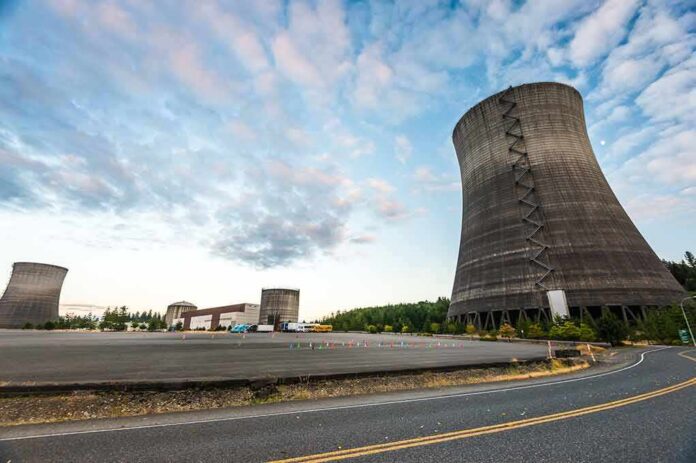
A drone struck the cooling tower of an operating reactor at Russia’s Kursk nuclear plant, the atomic watchdog said, reviving fears that war is brushing too close to nuclear risk.
Story Snapshot
- The International Atomic Energy Agency said a drone hit a cooling tower at the Kursk plant while a unit was operating.
- The plant’s operating mode did not change and no fire broke out, according to reports relaying the agency’s notice.
- International Atomic Energy Agency chief Rafael Grossi called attacks on nuclear facilities unacceptable due to safety risks.
- Prior incidents near Kursk and at Zaporizhzhia show a pattern of military activity near nuclear sites that raises accident risk.
What the International Atomic Energy Agency reported
The International Atomic Energy Agency said it was informed that a drone struck the cooling tower of a reactor unit at Russia’s Kursk Nuclear Power Plant. The agency said the unit was operating at the time. The operating mode did not change, and no fire broke out, according to coverage relaying the notice. A separate summary reached the same points, citing no change to operations and no fire after the impact. Officials did not identify the attacker in the materials cited here.
International Atomic Energy Agency Director General Rafael Grossi said any attack on a nuclear facility is unacceptable and can threaten safety and security. He urged restraint to avoid a nuclear accident. His comments followed reports on the Kursk strike and mirror his wider warnings about warfare near nuclear plants in the region. One brief caveat remains: the public statements describe what the agency was told, not a full on-site forensic report in this packet.
Why a cooling tower strike matters even without a fire
Cooling towers support heat removal from a reactor’s systems. Hitting that structure can risk secondary damage, stress on equipment, or emergency responses. The reports here say the unit’s mode stayed stable and no fire started, which lowers immediate danger. Still, the target choice highlights a trend where drones and missiles test the edges of nuclear safety. Even glancing strikes, debris, or alarms can stack risk if repeated over time or paired with grid outages.
The International Atomic Energy Agency has warned for years that military activity around nuclear sites raises the chance of an accident. The agency has said the situation at the Russian‑occupied Zaporizhzhia plant in Ukraine remains precarious, with its safety pillars weakened by the war. Those warnings frame why a single strike on a cooling tower draws fast concern, even when core safety systems appear unaffected in early reports.
A pattern of near-misses and rising stakes
Open-source reporting shows repeated drone-related events near Russian nuclear facilities since 2024. Earlier notices described drone fragments located close to sensitive areas at Kursk, and strikes or close calls around Zaporizhzhia. Each episode fuels fear that the next impact could do more than cosmetic harm. That pattern helps explain why the Kursk news moved quickly across outlets and why the nuclear watchdog spoke out again on risk and restraint.
These incidents do more than scare nearby communities. They ripple through energy markets and wartime planning. Militaries weigh the value of pressure on power systems against the taboo of touching nuclear sites. Leaders know one bad hit could force shutdowns, blackout regions, and trigger cross-border fallout debates. That prospect worries people on the left and the right who already feel large systems are brittle and elites cannot manage cascading crises.
What this means for Americans watching from afar
Americans have seen supply shocks drive prices, from fuel to food. A nuclear scare in Europe can jolt power markets, insurance costs, and investor nerves. It also tests whether international rules still protect critical sites in modern wars. When the International Atomic Energy Agency repeats that attacks on nuclear facilities are unacceptable, it is defending a basic norm that keeps the lights on and the air safe far beyond a single border.
🚨 #BreakingNews: The International Atomic Energy Agency (IAEA) reports that a drone strike hit the cooling tower of an operating reactor unit at Russia’s Kursk Nuclear Power Plant early Thursday, though the plant confirmed that operating modes remained unchanged and no fire…
— X-K (@ConflictRadarME) September 18, 2026
Here at home, many feel that government agencies react after problems spread rather than prevent them. The Kursk strike is a reminder that prevention still matters. Clear red lines around nuclear sites, better air defenses near reactors, and fast, transparent reporting can cut risk. Those steps do not require picking a side in the war. They require protecting people from avoidable danger, which should be common ground in a noisy and divided world.
Sources:
insiderpaper.com, world-nuclear.org, stimson.org, kleinezeitung.at