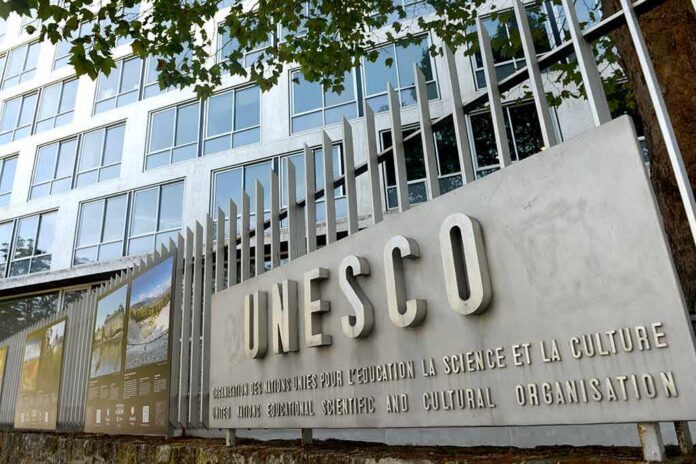
At UNESCO in Paris, Pope Leo XIV warned that artificial intelligence must serve people, not power, or it will fuel exclusion and injustice.
Story Snapshot
- UNESCO hosted Pope Leo XIV for a formal address on artificial intelligence, dignity, peace, and dialogue.
- Leo said technology, especially artificial intelligence, must not become a tool for domination, exploitation, or exclusion.
- The Pope stressed that artificial intelligence cannot answer core human questions about truth and meaning.
- Reports quote Leo urging that artificial intelligence stay at the service of the human person, not dehumanize life.
Pope’s Message: Keep Artificial Intelligence at the Service of People
Pope Leo XIV delivered a formal address at the United Nations Educational, Scientific and Cultural Organization headquarters in Paris on September 25, 2026. UNESCO framed the visit around artificial intelligence, human dignity, peace, youth, and interreligious dialogue, with a solemn address to the international community. UNESCO’s report says Leo warned that technological progress, especially artificial intelligence, must serve humanity, not become an instrument of domination, exploitation, or exclusion. That central point anchored the event’s focus on ethics and human rights.
UNESCO’s account also highlights a boundary that many technologists and faith leaders debate today. Leo said artificial intelligence can process vast data, but it cannot answer the basic human questions of truth and meaning. Euronews reported that he urged designers and leaders to keep artificial intelligence “at the service of the human person,” warning it should not become “yet another instrument of domination and injustice”. Those words fit a wider push to put people, not machines, in charge of key choices.
Dehumanization Risks and The Efficiency Trap
Contemporaneous coverage says Leo warned about a slow slide into dehumanization if societies judge people by productivity alone. Euronews reported that he cautioned that ideas and relationships could grow poorer in a process of dehumanization when efficiency becomes the main yardstick for human worth. That warning cuts across politics. Workers fear being replaced or tracked by opaque systems. Parents worry about screens shaping kids’ minds. Communities see algorithms picking winners and losers without clear reasons.
These themes echo a growing global debate about how tools reshape power. Artificial intelligence can help with work, health, and learning. It can also tighten control, widen gaps, and spread falsehoods. UNESCO’s broader program links artificial intelligence to education, information integrity, and peace, aiming to anchor design and use in human dignity. The core idea is simple: tools must fit people, not force people to fit tools. That human-first lens is now a shared reference in many forums.
Why This Matters for Everyday Life and Policy
American families see artificial intelligence in loan decisions, job screening, school software, and the news they read. When systems sort people by hidden rules, trust drops. When profit or power outruns fairness, both conservatives and liberals worry that elites write the code and regular people pay the price. Leo’s remarks speak to that concern. He called for technology that supports human agency, community bonds, and peace rather than domination or exclusion. That aligns with UNESCO’s ethics guidance that centers dignity across the artificial intelligence life cycle.
Policy choices flow from these principles. Leaders can ask clear questions: Who benefits? Who is harmed? Who gets to say no? Agencies can require human oversight for high-risk uses. Schools can keep teachers in the loop on grading tools. Hospitals can explain how software aids diagnoses. Companies can audit systems for bias and safety. None of this kills innovation. It channels it toward goals that most people share: fair chances, safe products, honest labels, and real accountability when things go wrong.
Global Setting and One Practical Caveat
UNESCO placed the Pope’s message inside a wider multilateral norm. Many governments and institutions now view artificial intelligence less as a speed race and more as a moral and social test. Leo’s address at UNESCO headquarters in Paris, during his France trip, added a high-profile voice to that frame. While the public record features official summaries and news quotes rather than a full transcript, the core themes reported across sources are consistent and clear.
Bottom Line for Readers
Pope Leo’s core claim was direct: put people first, keep control human, and refuse systems that reduce worth to output. That stance will not settle every policy fight. But it gives a simple rule that parents, workers, small business owners, and lawmakers can use. Ask whether an artificial intelligence system lifts people up or pushes them out. If it lifts, scale it. If it pushes out, stop and fix it. Freedom, dignity, and trust depend on that line.
Sources:
youtube.com, unesco.org, english.ahram.org.eg, opb.org, religionnews.com, ground.news