A Quran passage was chanted during a Catholic university’s opening Mass in Leuven as the archbishop watched from the front row, igniting a fresh fight over religious lines inside sacred rites.
Story Snapshot
- Reports say an Arabic Quran passage was chanted during KU Leuven’s opening Mass at St. Peter’s Church.
- Archbishop Luc Terlinden was reported present in the front row during the ceremony.
- Student critics say the act conflicts with Catholic worship and identity.
- Key details remain unclear, including who authorized the chant and where it fell in the liturgy.
What happened inside the Leuven opening Mass
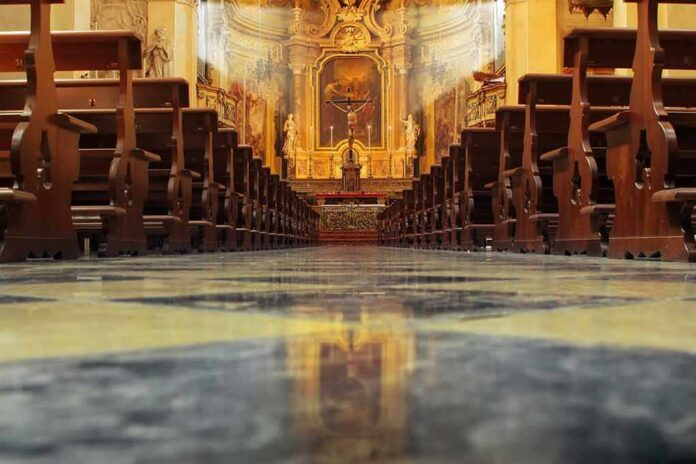
Advaticanum reported that a passage from the Quran, identified as Chapter 26 verses 69 to 70, was chanted during the opening Mass for KU Leuven’s new academic year on September 16, 2026. The ceremony took place inside St. Peter’s Church in Leuven. The outlet said a student group recorded the moment and described the Arabic text as asking, “What do you worship?” Hungarian Conservative reported the same incident and setting, calling the event rooted in the university’s Christian tradition.
Advaticanum further reported that people who attended said Archbishop Luc Terlinden and other priests sat in the front row during the service. The same outlet identified the chanted text as coming from the Quran’s Chapter 26 and said the student group KVHV-Leuven captured video of the moment. Hungarian Conservative placed the incident on the date of the academic opening and inside the formal university Mass at St. Peter’s Church.
Why the chant is drawing fire from both sides of the aisle
Student critics at KVHV-Leuven argued that bringing Islamic prayer into a Catholic Mass undercuts the faith and confuses students. Apollo News quoted their post saying the university “integrates a religion that persecutes Christians worldwide” into a Catholic service. The group also said this was not the first time such prayers were included, claiming a similar act last year as part of “interreligious dialogue.” That repetition claim remains unverified in the public record gathered so far.
The pushback connects to a broader rule in Catholic practice. Official Vatican guidance states that the prescribed biblical readings at Mass cannot be replaced by other texts. That rule makes any non-biblical or non-Christian reading inside a Mass a flash point. Critics see the chant as crossing a red line if it occurred as part of the liturgy itself. The exact placement of the chant remains unclear in current reports, which limits firm conclusions on that specific point.
What KU Leuven and church leaders have, and have not, said
Hungarian Conservative reported prior framing tied to the university that the Eucharist had been adapted to reflect KU Leuven’s mission while remaining Catholic and opening itself to other worldviews. The same report said Protestant, Anglican, and Muslim groups were allowed to deliver intercessions in past ceremonies. However, the current reporting set includes no official 2026 program, no KU Leuven statement, and no direct comment from Archbishop Terlinden confirming how or why the chant occurred this year.
"A passage from the Quran asking 'What do you worship?' was chanted during the opening Mass at Catholic KU Leuven attended by Archbishop Luc Terlinden" – https://t.co/AoW4kmsQIX
— Novus Ordo Watch (@NovusOrdoWatch) September 21, 2026
The lack of an official order of worship leaves core questions open. Reports describe an Arabic recitation during the opening Mass, but they do not show who authorized it, how it was introduced, or whether it was inside the formal liturgy or adjacent to it. Without the program or a full video with timestamps, it is hard to judge whether Catholic rules on readings were implicated or if this was framed as interreligious participation outside the prescribed parts of the Mass.
Why this matters beyond Belgium
Many readers, left and right, see a pattern: elite institutions bend rules in the name of inclusion, while leaders stay quiet when lines blur. People who value tradition see sacred texts swapped or set beside other faiths. People who value pluralism still want clear labels and consent. Both sides get frustrated when institutions do not explain what happened. This case shows how weak communication quickly fuels distrust and turns a campus Mass into a national culture debate.
What to watch next
Key next steps include release of the 2026 Mass program, a full video, and on-record answers from KU Leuven and the archdiocese. Those items would show whether the chant sat inside the readings, as a musical interlude, or in a dialogue segment. If officials confirm it replaced or paralleled a reading, expect sharper doctrinal backlash. If they show it was outside the liturgy, expect a fight over prudence and whether such gestures belong inside a Catholic service at all.
Sources:
lifesitenews.com, advaticanum.com, hungarianconservative.com, pal.be