Taiwan says U.S. arms sales policy is unchanged after the Trump–Xi summit, even as a $14 billion package remains on hold.
Story Snapshot
- Taiwan’s defense chief says no notice of any change in U.S. arms sales policy.
- Talks on individual weapons cases with Washington continue case by case.
- U.S. envoy and Taipei officials also say overall policy remains steady.
- A record $14 billion package is paused pending a White House decision.
What Taipei Said After The Summit
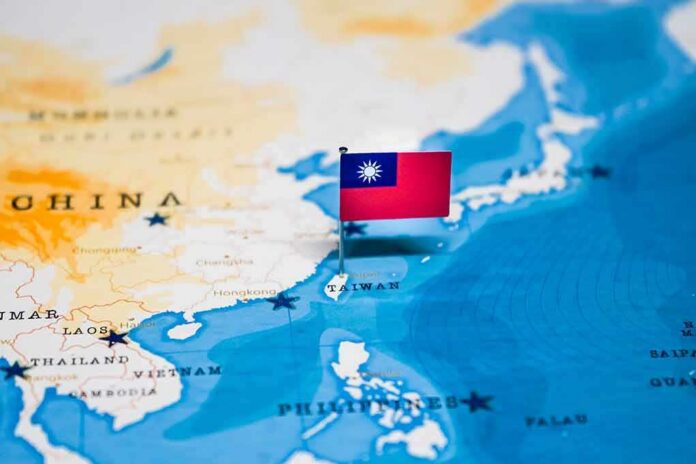
Taiwan’s Defense Minister Wellington Koo told reporters the island has received no notice from Washington about any shift in arms sales or defense cooperation after the Trump–Xi meeting. He said Taiwan remains in regular talks with the United States on each military sale, which moves forward through concrete, case-by-case steps. Koo’s message aimed to reassure Taiwan’s public and signal continuity to defense planners who track delivery timelines, training plans, and spare parts for ongoing programs.
United States officials have echoed that stance. The United States Ambassador to China, David Perdue, said President Trump has not changed Taiwan policy, including on arms sales. A senior Taiwan official separately said American counterparts have “repeatedly” confirmed that policy remains the same. These statements matter because markets, militaries, and allies all read signals. Clear words from both capitals lower the risk of misread moves that could spark military or economic shocks.
The Paused $14 Billion Package
Despite those assurances, one very large deal remains stuck. After President Trump’s earlier talks with China’s leader in Beijing, the White House paused a record $14 billion package. The Associated Press reported that the sale is on hold, even as Taiwan says it will keep pushing to complete the procurement. Analysts often warn that a pause is not the same as a cancellation. But a delay slows training and delivery, which can leave gaps in Taiwan’s near-term defense plans.
This split-screen view—steady policy but delayed hardware—fits a long pattern in U.S.–Taiwan ties. United States law, the Taiwan Relations Act, says Washington will make available defense articles for Taiwan’s self-defense. But it does not set strict timelines for what, when, or how much. That gives the White House and Congress room to pace sales as they weigh diplomacy with China, budgets, and factory capacity. As a result, policy can look steady while specific deals stall.
How Summit Diplomacy Meets Bureaucracy
Summits add heat to a slow process. President Trump has at times framed big arms deals as leverage in talks with Beijing, while later saying overall policy stays the same. Reports this year describe both ideas in play: no formal shift in policy, but a hold on the single largest package so far. Taiwan’s leaders respond by keeping close contact with the United States on each case and by stressing that their broader security ties remain intact.
Taiwan says US arms sales to island are unchanged, but a $14B package remains on hold https://t.co/oVYYuyGnVj pic.twitter.com/noFc39R3uR
— Estes Park Trail-Gazette (@EPTrailGazette) September 29, 2026
For readers on the right and left, this episode highlights a familiar concern. Big decisions can hinge on closed-door talks and complex rules few people see. Voters worry that insiders move the goalposts, while frontline troops and taxpayers live with the results. Here, both parties in Washington have long backed Taiwan’s defense. Yet a record sale is waiting on one signature. That delay may be prudent statecraft—or another sign of a system that struggles to deliver on clear goals.
What To Watch Next
Watch for three near-term signals. First, any formal notice from the White House that lifts or extends the hold on the $14 billion package. Second, smaller approvals or deliveries that keep Taiwan’s defense programs on schedule. Third, any fresh language from President Trump, the United States Ambassador, or Taiwan’s ministers that sharpens, or softens, today’s assurances. Clear, public steps would steady nerves in Taipei and reduce the odds of miscalculation in Beijing.
Sources:
washingtontimes.com, reuters.com, dw.com, thediplomat.com