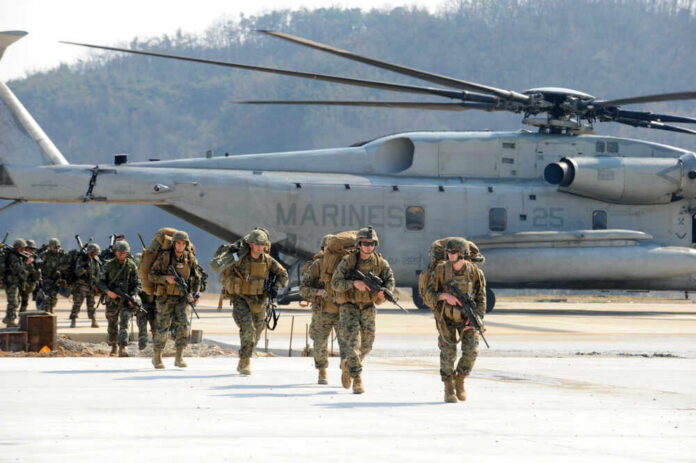
Two allied soldiers dying in a so‑called “training accident” at a heavily fortified base in Iraq is raising hard questions about risk, transparency, and why Americans are still bleeding in the Middle East decades after the war was supposed to end.
Story Snapshot
- A U.S. Army soldier and a British soldier died during a joint training exercise at Erbil Air Base in northern Iraq, officially ruled a training accident.
- Both governments confirm the deaths were non‑hostile but are releasing almost no details while investigations proceed.
- The incident highlights how Americans and Britons remain in harm’s way in Iraq long after major combat, including in “routine” training.
- Confusion and speculation online show how quickly foreign adversaries and partisan media can spin military tragedies for their own agendas.
Confirmed Facts: What We Know About the Erbil Training Deaths
United States Army officials and the United Kingdom Ministry of Defence each confirmed that one American soldier and one British soldier were killed Sunday during a joint training exercise at Erbil Air Base in northern Iraq, describing the incident as a training accident rather than a hostile attack.[1][2] Reports state the deaths occurred at the air base in the semi‑autonomous Kurdish region, where American forces have maintained a presence for years as part of ongoing security and counterterrorism cooperation.[1][2]
Statements from United States Army Central and Third Army said the training was being conducted with British Army partners and that both nations lost a soldier in the same incident.[2] Officials have not disclosed what type of training was underway, whether live ammunition or heavy equipment was involved, or any sequence of events, citing an active investigation.[2] Both governments are withholding the identities of the fallen until families are fully notified, standard practice in military casualty cases.[1][2]
Allied Responses: Official Silence and Families’ Grief
The United Kingdom Ministry of Defence confirmed “with deep regret” that a British Army service member died in a training accident in northern Iraq on Sunday, 31 May 2026, and requested a period of grace for the family before further details are released.[1] United Kingdom Defence Secretary John Healey publicly said he was deeply saddened by the death, echoing a familiar formula that offers sympathy but few specifics whenever a fatal incident occurs overseas.[1]
The United States side has followed a similar pattern, confirming the death of a United States Army soldier in the accident while declining to provide more precise details about the circumstances until investigations are complete.[2][3] United States Army Central acknowledged the joint nature of the exercise with Britain and noted that the incident remains under investigation, a phrase that often means months of internal review before any substantive public explanation appears, if it does at all.[2][3]
Why “Training Accidents” Keep Killing Troops Overseas
This tragedy fits a long‑running pattern where American and British service members die not only from enemy fire but also from non‑hostile causes such as vehicle rollovers, aircraft crashes, and botched training events, especially in overseas theaters.[4][5][6] British Iraq casualty histories show that over the years, fatalities have included both combat and non‑combat incidents, including accidents during operations and training, even after the peak of fighting ended.[4][6] United States casualty records for Iraq similarly track significant numbers of deaths from non‑hostile causes alongside those killed in action.[5]
Military experts have long warned that complex exercises using live ammunition, aircraft, armored vehicles, and real‑world bases create hazards that can be just as deadly as combat, particularly when forces train to simulate battlefield conditions.[2][6] Yet the public typically hears about these dangers only when a fatality forces a short statement from defense ministries, offering few details and leaving families and citizens to piece together what went wrong from scattered reports and occasional investigations.[2][4][6]
Misinformation, Media Spin, and the Need for Transparency
Because early official statements in incidents like Erbil are brief and heavily managed, a vacuum often opens that online commentators, foreign propaganda outlets, and partisan media rush to fill with speculation, including unfounded claims of missile strikes or secret operations.[2][3] Social media posts and some commentary channels have already tried to frame the Erbil deaths as the opening shot of a broader conflict, despite the clear public record from both governments labeling it a training accident under investigation.[1][2][3]
🇺🇸 🇬🇧 US and British Soldiers Die in Training Accident in Northern Iraq
An American soldier and a British service member lost their lives on May 31 during a joint training exercise at Erbil Air Base in Iraq's semi-autonomous Kurdish region, in what U.S. and U.K. officials have…
— Joe (@LTSmash420) June 2, 2026
For conservatives who value a strong but accountable military, two realities can be held at once: the United States and United Kingdom must train hard to keep forces ready in a dangerous world, and citizens deserve honest, timely information when service members die, especially on foreign soil. The Erbil incident underscores why families, taxpayers, and veterans have every right to demand clearer answers about why American troops remain in Iraq, what missions they are performing, and how our governments are minimizing unnecessary risks while avoiding more endless, open‑ended commitments in unstable regions.[1][2][3][4]
Sources:
[1] Web – US, UK Soldiers Die During Training Exercise Accident in Iraq
[2] Web – American soldier and British soldier die in training accident in Iraq
[3] Web – British soldier and US soldier killed during training accident in …
[4] Web – Training incident in Iraq kills US soldier, British service member
[5] YouTube – Two soldiers, one American and one British, were killed …
[6] Web – British and US soldiers die in Iraq during training exercise – The …