An active-duty Air Force major now faces criminal charges for contemptuous words about President Trump, putting rare military speech rules on a collision course with modern politics.
Story Snapshot
- The Air Force charged Maj. Jason Watson after public anti-Trump remarks tied to Iran policy and impeachment calls.
- Officials cite Article 88, a rarely used law that bans contemptuous words by commissioned officers toward top leaders.
- Watson spoke in uniform at the Capitol and repeated criticism in media interviews, drawing a military investigation.
- Defense lawyers frame the case as a free speech fight within strict military rules on political activity.
What Triggered the Charges
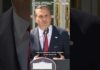
CNN reported that Maj. Jason Watson was criminally charged after a sequence of public statements and appearances criticizing President Trump, including a June interview, a July 1 protest at the U.S. Capitol while in uniform, and an August interview repeating his claims. Military.com earlier confirmed Watson’s pretrial confinement as the Air Force investigated possible violations tied to contemptuous speech and orders. Watson’s defense has said the government moved without first providing evidence or formal charges during his second detention.
Article 88 of the Uniform Code of Military Justice prohibits commissioned officers from using contemptuous words against listed civilian leaders, including the President and the Vice President. Legal scholars and practitioners describe prosecutions under Article 88 as very rare, which makes each case a test of how the military balances discipline and free speech in tense times. That rarity raises the stakes for commanders, the courts, and service members who voice political views while in uniform.
The Military’s Rationale and the Defense’s Claim
Air Force leaders point to rules that keep the armed forces politically neutral and under civilian control. They argue that public, in-uniform attacks on elected leaders undermine good order and discipline. CNN reported that the charging document ties Watson’s alleged misconduct to specific acts and remarks across several dates. Watson’s attorney counters that the officer criticized policy, not the chain of command, and that the case tests the First Amendment within military limits.
Watson told CNN that President Trump “has failed us” and accused the administration of breaking the law, framing his actions as a stand for the Constitution rather than personal contempt. His defense also suggested any separate “failure to obey” theory concerns an order about his uniform, not speech alone. The competing views show the core dispute: when does sharp political speech by an officer, especially in uniform, cross into punishable contempt under military law?
Why Article 88 Cases Are So Unusual
Federal law lays out clear, strict language for Article 88, yet the rule has been used sparingly for decades. Analysts say leaders often rely on counseling, administrative actions, or other charges before turning to a contempt count. A Navy and Marine Corps journal piece and later commentary describe Article 88 enforcement as exceptionally uncommon, which is why this case draws wide attention from both civil liberties advocates and defense professionals. The rarity also fuels public concern about selective enforcement during heated political moments.
BREAKING: Maj. Jason Watson has just been charged under the Uniform Code of Military Justice for three violations of Article 88 for “contemptuous” remarks about Trump. Yes, you heard that right.
— Leonid Probst (@ProbstLeonid) August 25, 2026
Military law gives commanders tools to preserve unity across ranks with many personal views. Past court decisions give the armed forces room to limit on-duty political activity for the sake of readiness and trust. At the same time, the public expects the government to respect basic rights. When an officer criticizes the President’s war policy on television and on the Capitol steps, the clash between those expectations becomes impossible to ignore.
What This Means for Readers
People on the right worry that open defiance in uniform erodes discipline and invites chaos. People on the left worry that punishing speech about war and government overreach chills dissent. Both sides see a system that often protects insiders while punishing outsiders. This case will test whether military justice can apply a rarely used law fairly, with clear rules for all ranks, instead of as a tool to silence views that challenge power in Washington.
What to Watch Next
Watch for a court-martial decision on the Article 88 counts, any added orders-based charges, and whether a judge narrows what “contemptuous” means for today’s media world. Look for guidance from the Air Force Judge Advocate General on political speech in and out of uniform. Finally, track whether Congress asks for briefings on Article 88’s use, which could lead to clearer standards or reforms so service members and citizens know where the lines are.
Sources:
cbsnews.com, cnn.com, military.com, morningstar.com, washingtontimes.com, instagram.com