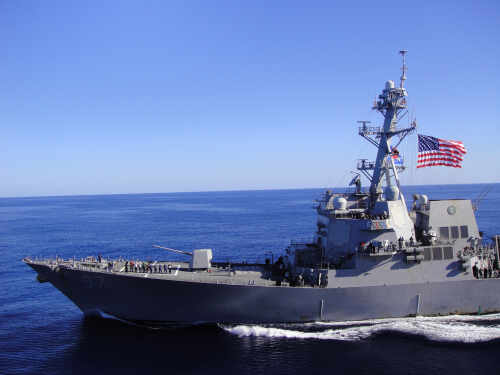
The U.S. Navy now openly plans to buy 15 nuclear “Trump-class” missile battleships, betting billions on a weapons-first fleet at a time when many Americans already fear Washington spends more on spectacle than on solving real problems.
Story Snapshot
- The Navy’s 30‑year ship plan calls for 15 Trump‑class hypersonic missile battleships, starting later this decade.
- These ships would be the largest U.S. surface combatants since World War II, built around missiles, railguns, and lasers instead of big guns.
- Supporters say they will deliver unmatched long‑range firepower and protect carriers; critics see a super‑expensive “floating target” out of step with modern warfare.
- The battleship push comes as shipyards struggle, budgets are tight, and voters across the spectrum already distrust how Washington spends defense dollars.
What the Navy Is Now Asking For
The United States Navy’s latest long‑range shipbuilding plan shows, in black and white, a new nuclear‑powered Trump‑class battleship program labeled BBG(X). The plan lays out a goal of buying 15 of these ships over 30 years, with three scheduled between fiscal years 2027 and 2031 at an estimated $43.5 billion. President Donald Trump and Navy leaders first unveiled the concept in December 2025, pitching the Trump‑class as the centerpiece of a “Golden Fleet” and “the most lethal surface combatant ever constructed.”
Official fact sheets and briefings describe a very large surface warship, roughly 30,000 to 40,000 tons, making it the biggest U.S. combat ship built since World War II other than aircraft carriers. The lead ship, USS Defiant, would carry a new guided‑missile battleship designation, BBG‑1, signaling a hybrid of old battleship prestige and modern missile firepower. This marks the first time since the 1940s that the Navy has sought to design and build a completely new battleship‑type hull, rather than reactivating older Iowa‑class ships.
Inside the “Trump-Class”: Weapons First, Armor Second
Navy releases and open‑source analyses agree that the Trump‑class is not a return to thick‑armored, 16‑inch‑gun behemoths, but a huge missile arsenal ship. Current specifications center on about 128 vertical launch cells for cruise missiles and air‑defense interceptors, plus 12 Conventional Prompt Strike hypersonic missiles that can hit targets hundreds of miles away at extreme speed. Plans also call for a nuclear‑armed sea‑launched cruise missile, restoring a controversial nuclear option to the surface fleet.
Beyond missiles, renderings show a forward‑mounted electromagnetic railgun, firing hypervelocity projectiles, along with several high‑power laser weapons for air and drone defense. Standard five‑inch guns, rolling airframe missile launchers, smaller cannons, and optical dazzler lasers round out the close‑in defenses. A large flight deck and hangar would support tilt‑rotor aircraft and helicopters, turning the ship into a command and control hub for other vessels and aircraft. Supporters say this mix of weapons could let one Trump‑class ship “quarterback” an entire task force in the Pacific.
Why Leaders Say They Want These Ships
Trump administration officials argue that China’s growing navy and long‑range missiles demand a new kind of U.S. capital ship built for missile warfare instead of gun duels. They claim the Trump‑class will deliver deep magazines of long‑range weapons, extra protection for vulnerable carriers, and a visible symbol of American power. Navy briefings also note that retiring older cruisers leaves a gap in command‑and‑control capacity that a large Trump‑class could fill.
Politically, the program ties into promises to revive U.S. manufacturing and shipyard jobs. Trump has talked about using major yards, including facilities in Philadelphia and Newport News, to build these ships and “bring back” heavy industry. That message can appeal to both conservatives and liberals who feel hollowed‑out factory towns and coastal shipyards were sacrificed to globalization, even if they disagree on broader defense policy.
Costs, Delays, and a Long History of Battleship Nostalgia
Independent analysts warn the Trump‑class may never fully materialize, or might be cut back sharply. Estimates for each ship’s price range from about $9 billion to well over $15 billion, rivaling or exceeding some aircraft carriers. A Reddit‑sourced summary of internal discussions even floated a first‑ship cost of $17 billion. The Congressional Budget Office and others note that U.S. shipyards are already behind schedule with existing destroyers and submarines, and workforce shortages are a growing problem.
Experts also point out that this is not the first time American leaders have chased a battleship comeback. Ronald Reagan reactivated Iowa‑class battleships in the 1980s, only to retire them again as missiles and aircraft proved more flexible and cheaper. More recently, the Navy tried new gun‑centric ships like the Zumwalt class, then ripped out their advanced guns to install hypersonic missiles instead. Past experience suggests big, complex capital ships often arrive late, go over budget, and struggle to find a clear role.
Is a Giant Missile Battleship What Today’s Fleet Really Needs?
Many naval strategists argue the Trump‑class clashes with the Navy’s own push toward “distributed” firepower spread across more, smaller ships. They warn that putting so much capability on a single hull makes it a high‑value target for enemy submarines, long‑range missiles, and cyber attacks. Critics from think tanks like the Cato Institute and the Center for Strategic and International Studies have called the concept “a terrible idea” and predicted a future administration will cancel it before the first ship sails.
For everyday Americans watching from both the right and the left, the Trump‑class debate touches deeper worries. Many see lawmakers and Pentagon officials chasing prestige projects while basic needs at home go unmet. A single battleship that might cost more than $10 billion can look like proof that the system serves defense contractors and political vanity first. Whether the Trump‑class ever leaves the drawing board, the fight over it will shape how much trust voters place in Washington’s promises to keep the country safe without wasting their money.
Sources:
19fortyfive.com, armyrecognition.com, youtube.com, defensescoop.com, facebook.com, navy.mil, fpri.org, news.usni.org, reddit.com, en.wikipedia.org, wsj.com, cnn.com, navsea.navy.mil