Europe’s NATO allies just crossed a line that years of speeches once only hinted at: they now have the money, the plan, and the pressure to act.
Quick Take
- NATO says all allies met or exceeded the 2 percent defense benchmark in 2025, a first since the Wales pledge was set.
- The alliance also locked in a new 5 percent spending goal for 2035, split between core defense and wider security work.
- Officials say European allies and Canada boosted defense spending by about 20 percent in 2025.
- Big questions remain about whether cash can turn into real military power fast enough.
What Changed Before the Ankara Summit
NATO leaders arrive in Ankara with a rare fact on their side: every ally has now met the old 2 percent benchmark. That matters because the alliance spent years arguing about burden sharing while many members fell short. The new baseline gives leaders a stronger case that Europe is no longer just talking about defense. It also raises the stakes, because the next fight is not about promises. It is about whether spending can produce usable forces.
The bigger shift is the 5 percent goal set at the 2025 Hague Summit. Allies agreed to aim for 5 percent of gross domestic product by 2035, with 3.5 percent for core defense and up to 1.5 percent for defense-related work such as cyber defense, infrastructure, civil readiness, and the defense industrial base. That is a major change in how NATO talks about security. It treats roads, networks, and factories as part of deterrence.
Why the Spending Surge Still Leaves Doubts
NATO and outside analysts say Europe and Canada increased defense spending sharply in 2025, with some estimates putting the rise at about 20 percent. The Atlantic Council also says Norway has, for the first time in recorded NATO history, surpassed the United States in defense spending per person. Those numbers help explain why NATO officials are sounding more confident. They show that Europe is putting real money behind its political claims.
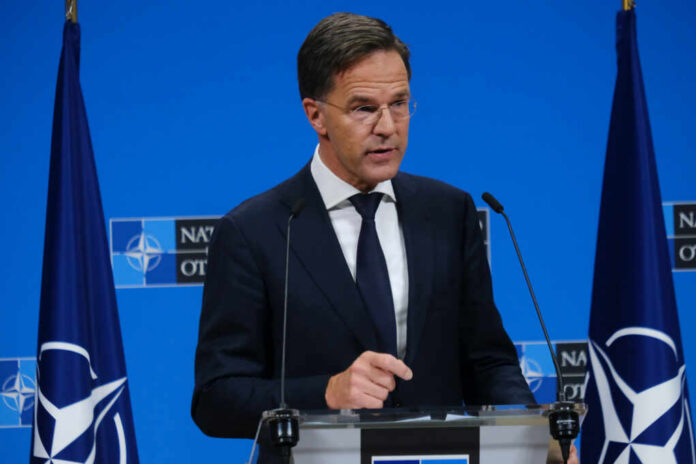
Still, more spending does not automatically mean more combat power. NATO Secretary General Mark Rutte has said defense spending is approaching absorption limits because of industrial production and recruitment problems. Analysts have also warned that capability gaps remain and that new funds may not produce new, effective capabilities fast enough. That warning cuts across party lines and national politics. Taxpayers want results, not just larger budgets, and militaries cannot buy readiness if factories and training pipelines cannot keep up.
Politics, Pressure, and the Limits of Alliance Unity
Ankara Under Lockdown for NATO Summit as $235m Makeover Sparks Anger https://t.co/UmKNKwE92S pic.twitter.com/5lsshWwqlp
— Politis to the point (@politis_point) July 4, 2026
The summit also reflects a harder political truth: the United States is pushing Europe to carry more of the load, while Europe is still dependent on American power. The Conference Board says the United States is reviewing its force posture in Europe, and that has added urgency to the shift toward greater European responsibility. That backdrop explains the harsh tone from Washington and the anxiety in European capitals. Both sides know the alliance cannot stay as it was.
President Donald Trump has added more pressure by calling NATO a “one-sided relationship” and threatening to leave. At the same time, there are signs that Washington still wants to manage the transition rather than break it. Reports before the summit said the administration approved a $700 million arms sale to Turkey, and United States officials framed Ankara as a key alliance meeting point. That mix of pressure and engagement shows the alliance is being reshaped, not simply abandoned.
Turkey sits at the center of that tension. It has NATO’s second-largest military and guards the alliance’s southeastern flank. It also hosts a summit at a moment when leaders are trying to prove that NATO can adapt without falling apart. For many voters across the West, the deeper issue is familiar: elites keep asking for more money, but they rarely explain how the system will deliver real security. Ankara will test whether NATO can answer that question with facts instead of slogans.
Sources:
realcleardefense.com, nato.int, globalaffairs.org, dailysabah.com, youtube.com, conference-board.org, facebook.com, foxnews.com, atlanticcouncil.org