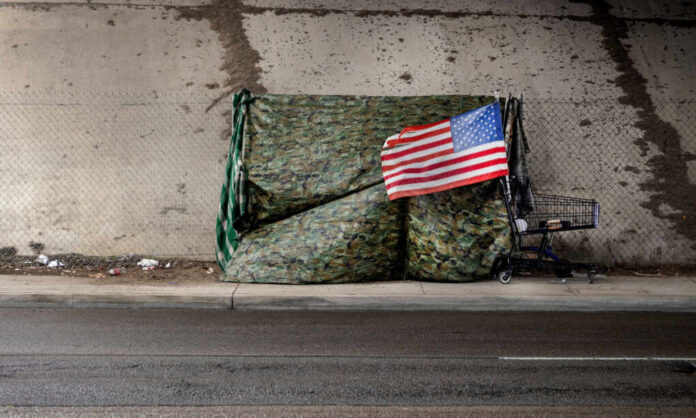
Los Angeles is spending millions on “clearing” homeless camps, yet the streets stay crowded and almost no one ends up in real housing.
Story Snapshot
- Los Angeles uses a complex anti-camping law to push homeless camps away from parks, schools, and key walkways.
- A new audit found the city spent about $3 million under this law and permanently housed only two people.
- Steve Hilton says state leaders should force police to clear illegal street camping when local officials hesitate.
- Both enforcement advocates and critics now question whether the system serves people or entrenches a failing status quo.
How Los Angeles’ Anti-Camping Law Works on the Ground
Los Angeles City Council approved its main anti-camping law, known as Section 41.18 of the municipal code, in 2021 on a 13–2 vote. The law makes it illegal to sit, sleep, camp, or store property on public sidewalks and other rights of way near “sensitive” places like parks, schools, libraries, and day care centers. Police cannot enforce it in most locations until the council votes to designate specific sites, posts metal signs, and gives people notice and outreach offers before clearing the area.
City leaders sold the measure as a “more humane” way to clear sidewalks while offering shelter first. Under this system, outreach teams are supposed to contact people in each encampment and offer some type of housing or shelter before police step in. Only after people decline those offers and the council passes a resolution can enforcement begin, often with a two-week deadline for tents and belongings to be removed. Supporters say this balances public safety with basic fairness for people on the street.
Expanding Enforcement While Camps Return
Since the law took effect, the Los Angeles City Council has steadily expanded the number of enforcement zones. In one vote, council members approved anti-camping enforcement at 58 new locations, including both sides of MacArthur Park, with only two members opposing. Earlier, the council banned encampments at 54 spots near parks, recreation centers, fire hydrants, building entrances, and schools. Metal signs marking deadlines to clear camps now stand at more than 100 locations across the city.
Despite this growth in enforcement, encampments often return shortly after sweeps. A city report ordered by the council found the policy failed at key goals, including keeping areas clear and getting people housed. Reporters who visited 25 sites covered by the law saw tents and makeshift shelters back in many places. This pattern feeds frustration from residents who see the same camps move from block to block and from homeless advocates who argue the city is criminalizing survival without solving root causes.
Costs, Housing Results, and Rising Skepticism
A recent memo from city officials shows that enforcing the anti-camping law has cost at least $3 million over three years while permanently housing only two people. Much of the money went to outreach teams, signage, and police operations tied to sweeps. For taxpayers, that math looks troubling: millions spent, encampments still widespread, and only a handful of people exiting the streets for good. Critics see this as proof that the current system mainly shifts visible poverty rather than reduces it.
These findings have rattled City Hall and deepened public doubts. Some council members now push for a formal review of the law’s effectiveness and financial impact before expanding it further. Others argue that without tough enforcement, sidewalks will remain blocked and families will feel unsafe near schools and parks. The clash reflects a deeper worry shared by many Angelenos: government programs consume large sums, but the results on the ground hardly match the promises made at press conferences.
Steve Hilton’s “Enforce the Law” Message
Against this backdrop, political commentator and candidate Steve Hilton has seized on homelessness and street camping as a core issue. In a discussion on California homelessness, Hilton insisted “it is illegal to camp on the streets” and said that if local leaders refuse to enforce the law, he would ensure enforcement from the state level as governor. His agenda includes banning public camping statewide and repealing California’s “Housing First” mandate in favor of lower-cost shelter options and stricter drug and property crime enforcement.
Hilton’s message speaks to residents who feel their neighborhoods have been sacrificed to endless process and weak rules. It also alarms advocates who say statewide bans would “disappear” unhoused people from public view without giving them a real path off the streets. In Los Angeles, where local enforcement already targets hundreds of zones near schools and parks, his push raises a key question: will more crackdowns finally restore order, or will they simply double down on a system that moves tents without delivering the American Dream of stability and opportunity?
Sources:
redstate.com, abc7.com, apnews.com, youtube.com, nypost.com, laist.com, latimes.com, cbsnews.com, kcrw.com, codelibrary.amlegal.com