Taiwan’s president told his ruling party to “oppose China’s red terror” and said Taiwan is already an independent nation under the Republic of China.
Story Snapshot
- President Lai Ching-te urged the Democratic Progressive Party to resist Beijing’s “red terror.”
- Lai said Taiwan is already independent under the Republic of China and not subordinate to China.
- Beijing continues to push its One-China line and pressure Taiwan across diplomacy, media, and security.
- The standoff fits a long cycle of rival claims that remain unsettled in international law.
Lai’s Message: Taiwan Is Already Sovereign
President Lai Ching-te told party members that Taiwan must stand firm against pressure from China and protect its democracy. Lai said Taiwan is already an independent country, formally called the Republic of China, and is not subordinate to the People’s Republic of China. He framed Beijing’s actions as “red terror,” citing authoritarian expansion, disinformation, military threats, and diplomatic squeeze. Lai has made this point before in party and national speeches, and he repeated it here to set a clear baseline.
Lai also linked the message to party unity and social resilience. He urged members to reach beyond party lines and rally the public to defend Taiwan’s system. He pointed to prior Democratic Progressive Party statements that Taiwan does not need to declare independence because it already governs itself with its own constitution, leaders, and territory. The goal, he said, is to maintain calm strength at home while showing the world that Taiwan’s democracy will not bend under outside threats.
How Beijing Frames Taiwan’s Status
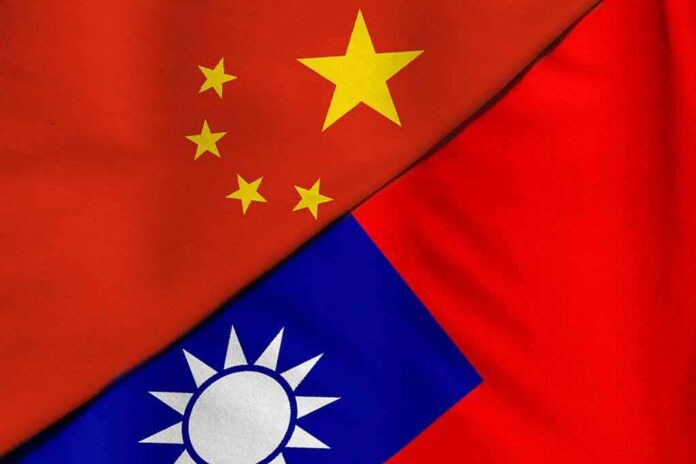
Beijing says there is only “one China,” with Taiwan as part of it, and that the People’s Republic of China is the sole legal government of China. Chinese officials repeat this stance in statements and policy papers, and they say most countries accept it in practice through their diplomatic choices. China also presses the claim in international forums and state media, insisting that no speech by Taiwan’s leaders can change what Beijing calls a “historical and legal fact”.
China’s line conflicts with how Taiwan’s leaders describe their reality. Taiwan elects its own leaders, runs its own military, controls its own borders, and writes its own laws. Democratic Progressive Party leaders like Tsai Ing-wen and Lai Ching-te have long said this means Taiwan is already an independent country and does not need a fresh declaration. That clash of frames drives tension. Each side claims principle and law. Each side warns the other not to cross red lines, which raises risks when crises flare.
A Long Cycle With No Clear Legal End
Analysts describe this as an asymmetric sovereignty dispute that has lasted since the Chinese civil war ended in 1949. Taiwan’s Democratic Progressive Party stance goes back at least to a 1999 resolution saying Taiwan is sovereign under the Republic of China name. Legal scholars note that international law does not settle the island’s final status, which leaves room for sharp political claims by both sides. That gap helps explain why the rhetoric repeats around elections and major speeches.
Taiwan must work together to protect its democracy and not become part of China, President Lai Ching-te said on Sunday, calling on members of his Democratic Progressive Party (DPP) to oppose the "red terror" coming from Beijing. Read more: https://t.co/nIKFbnYidl pic.twitter.com/Fel1ID0vc0
— NEWSMAX (@NEWSMAX) July 19, 2026
For readers in the United States, the pattern fits a broader concern: big powers set terms while regular people carry the risk. Conservatives see a threat to supply chains, energy, and deterrence if Washington signals weakness. Liberals see rising conflict costs and fear that ordinary families will pay the price. Both worry that distant elites make choices in closed rooms while the public gets vague answers and higher bills. The Taiwan file often becomes a symbol of that mistrust.
Why This Matters for Americans
Semiconductors, trade routes, and security are at stake if cross-strait tensions spike. Taiwan makes many of the world’s most advanced chips. A crisis could hit prices, jobs, and retirement accounts in the United States. The United States has long followed a “one China” policy while helping Taiwan defend itself, a balance that takes careful handling. Clear, steady policy and honest risk signals help markets plan and help families brace for shocks if they come.
Today’s speech does not change facts on the ground. It does show both sides digging in. Lai repeated that Taiwan’s democracy will not yield. Beijing repeated that unification remains its goal. The legal gray zone remains. That means the next move will likely be in the space of pressure and messaging: military drills, diplomatic snubs, disinformation drives, or trade steps. Watching those signals will show whether words stay words or turn into costly action.
Sources:
youtube.com, reuters.com, dpp.org.tw, english.president.gov.tw, pf.org.tw, en.wikipedia.org, en.people.cn, hkiaps.cuhk.edu.hk, hks.harvard.edu