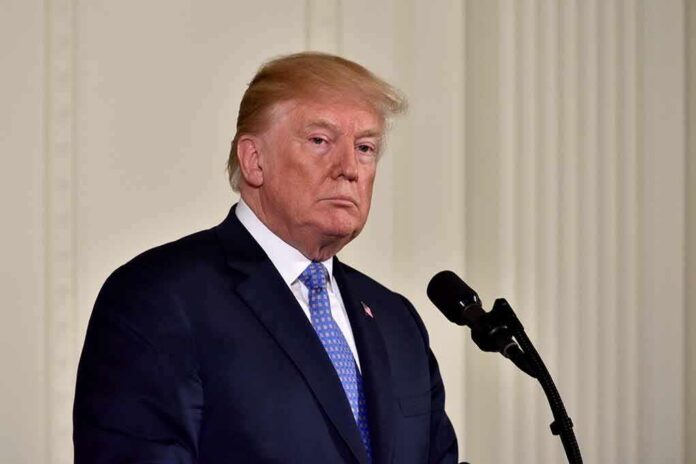
President Trump signed an executive order creating a new Military Spouse Commission to boost military readiness by supporting families.
Story Snapshot
- Trump signed Executive Order 14417 on August 3, 2026, creating the Military Spouse Commission.
- The White House released a fact sheet stating the order aims to strengthen readiness by helping spouses and families.
- Trump announced the signing and purpose in an official White House video and transcript.
- The order sets the commission’s structure, including a named chair and membership drawn from senior leaders’ spouses.
What The Executive Order Does
Executive Order 14417 establishes the President’s Military Spouse Commission to advise on policies that affect military families. The order states the group will seek ways to improve jobs, childcare, health services, and moves for spouses. The White House framed the goal as stronger families leading to stronger force readiness. The document is dated August 3, 2026, and signed “Donald J. Trump,” confirming a formal presidential action under constitutional authority.
The order sets how the commission is built and who serves. It identifies a chair and includes members who are spouses of top defense and homeland leaders. This design ties the group to the day-to-day realities of deployments, base life, and frequent moves. The official White House posting and fact sheet align on these points and present a clear charter for the new body to begin work within the executive branch.
How The Signing Was Presented
The White House recorded and posted the event as a presidential signing on August 3, 2026. The official video page carries the title “President Trump Signs an Executive Order” with that date. In a transcript excerpt from the event, Trump said, “Today I’m signing an executive order to establish the first ever presidential military spouse commission.” This public message matched the text of the order and the fact sheet released the same day.
Contemporaneous listings and livestream entries described a live Oval Office signing at the White House on the same date. These posts reinforced the timing and location that the administration highlighted. While these materials confirm the signing and remarks, they do not provide a minute-by-minute attendee log or exact time stamp for each moment of the ceremony. The core act and purpose, however, are well documented in official releases.
Why It Matters For Families And Readiness
Military life often brings long separations, frequent moves, and career hurdles for spouses. Those strains can affect a service member’s focus and choice to stay in the force. By creating a formal commission, the White House directs agencies to gather ideas and push fixes for known pain points. This can include license transfers across states, access to affordable childcare, and faster support during relocations, all aimed at keeping families stable and troops mission-ready.
The move also fits a broader pattern of governing by executive order. Presidents often use orders to set priorities and steer the executive branch without waiting for new laws. Analysts explain that executive orders carry force within the branch but are not the same as acts of Congress. Trump has leaned on this tool at a fast pace during his second term, making signings both policy steps and high-visibility signals of his agenda.
Caveats And Next Steps
The administration’s materials offer strong confirmation of the order, its date, and purpose. They are less detailed on the precise attendee list and exact timeline inside the room, which is common for ceremonial events. The practical test will come next. Agencies will need to seat members, hold meetings, and deliver specific recommendations. The public will look for near-term wins, such as reduced licensing barriers or more childcare slots near major bases.