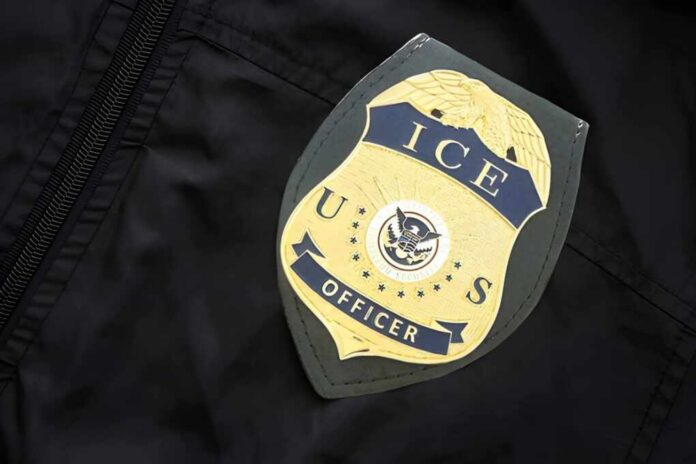
Federal officials say a street crowd tried to block an Immigration and Customs Enforcement arrest in Manhattan, and agents forced the area clear after repeated warnings.
Story Snapshot
- Homeland Security says bystanders obstructed a lawful ICE operation in Inwood, Manhattan.
- A 72-year-old woman says an agent pepper-sprayed her while she was filming and plans legal action.
- Courts recognize a right to record police, but not to block or ignore orders to move back.
- The clash shows rising street tensions around federal immigration enforcement in big cities.
What Federal Officials Reported Happened On The Street
The Department of Homeland Security said a group swarmed agents during an Immigration and Customs Enforcement operation in Inwood. The agency said people became combative, used harsh language, and refused to clear the street after warnings. Officials framed the behavior as an effort to obstruct law enforcement, which is a federal crime. The statement said officers gave ample notice and then used appropriate measures to finish the job and restore space to work.
Linda Wolff, age seventy-two, says she was filming when a masked agent sprayed her with a chemical irritant. She plans to file legal claims over the use of force. She has joined protests before and traveled to the scene after seeing posts online, according to interviews. She says she stood on the sidewalk and recorded, then got hit in the face with spray. Her account will likely be tested in court filings and any video evidence.
How The Law Treats Recording Versus Interference
Federal appeals courts have said people have a First Amendment right to record officers in public. That right is strong but not unlimited. Courts also allow time, place, and manner limits. Police and federal agents can order people to step back for safety or to avoid blocking. Crossing that line can become obstruction or refusal to obey a lawful order. Recent rulings describe this exact line between watching and getting in the way.
This is why these cases often turn on details like distance, movement, and warnings. A camera alone is legal. A camera plus refusal to move when told can lead to charges. Advocates argue the camera protects the public by showing what officers do. Agents argue they need space to detain suspects and to control a tense scene. Both claims can be true at once, and that is the daily friction on busy city blocks.
Why This Clash Resonates Nationally Right Now
New York City has seen more visible federal immigration operations this summer. Coverage describes arrests near homes, streets, and even hospitals. Activists often arrive fast after social media alerts. That draw crowds and phones into tight spaces as agents try to move vehicles or suspects. Each element raises the odds of a standoff and of force, including pepper spray, when orders to move back are ignored or missed in the noise.
Large parts of the public, right and left, see a system that does not serve them well. Many conservatives want firm immigration enforcement and safer streets. Many liberals fear overreach and unfair treatment of immigrants and bystanders. This event shows both worries. The law protects the right to record. The law also bans blocking arrests. When any side ignores the rules, regular people pay the price on the curb in real time.
Sources:
twitchy.com, ny1.com, cbsnews.com, ground.news, virginialawreview.org