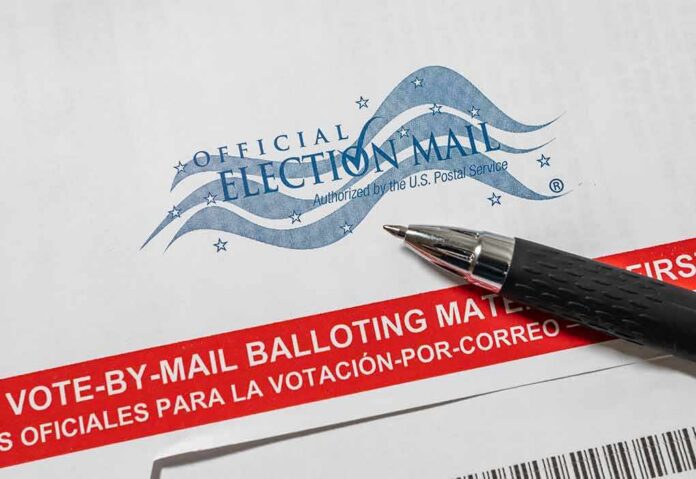
Two dozen states and Washington, D.C., just asked federal courts to stop the Postal Service from conditioning ballot delivery on turning over voter data.
Story Highlights
- Twenty-four states and D.C. filed suit to block new Postal Service mail-ballot rules
- Rules would require voter lists and unique ballot barcodes before ballots move
- Courts have issued mixed orders, creating real pre-election uncertainty
- Fight spotlights a deeper struggle over who controls the machinery of voting
What sparked the multistate lawsuit
Attorneys general from 24 states and Washington, D.C., argue that the United States Postal Service exceeded its authority with a rule tied to a March 2026 executive order by President Trump. The rule would require states to give the Postal Service lists of mail voters and use federally reviewed, uniquely barcoded ballot envelopes. Plaintiffs say that conditions mail-ballot delivery on new federal demands and intrudes on state election powers.
The Postal Service says the identifiers and data would improve ballot tracking, support law enforcement, and reduce fraud risk. The agency adds that it will not check party affiliation, open ballot envelopes, or decide who is eligible to vote under the rule if it takes effect. Reuters reported in May that the proposed standard would require states to provide voter names and ballot barcodes for federal elections.
Conflicting court orders and a tight election calendar
Judges have issued mixed rulings that leave the system in flux. A federal judge blocked an earlier iteration of the Postal Service plan, finding it violated a settlement on expedited ballot handling. The Supreme Court later allowed parts of the administration’s approach to move forward, while another order still blocks a specific provision nationwide, at least for now. An appeals court separately let the agency proceed, temporarily, with its rulemaking effort.
Another court criticized the agency for moving ahead while litigation was active, yet did not halt the final rule outright. That judge concluded the Postal Service had violated a prior order by issuing the rule but declined to block it pending further review. The bottom line is uncertainty. Some elements can advance, others remain paused, and the next hearing could change the ground rules again before ballots go out.
The rule’s core requirements and how they would work
The rule would make two big changes if fully in force. First, states would have to submit electronic lists of voters receiving mail ballots, allowing the Postal Service to track each ballot from print to return. Second, ballot envelopes would need unique barcodes and standardized formatting that the agency reviews. The Postal Service says these steps protect mail security and create a clean chain of custody without inspecting ballot contents.
Supporters see tighter tracking as common sense logistics that help find delayed ballots and flag suspicious patterns. They argue that better barcode data equips postal staff and investigators to respond faster if something goes wrong in transit. Critics respond that tying delivery to new federal databases risks delayed mail, blocked ballots, and last-minute redesigns of envelopes that local offices cannot finish before deadlines, especially in small counties with thin budgets.
Why both right and left see red flags
Conservatives worry about bloated systems, data leaks, and rules that never shrink once Washington expands them. Liberals worry about voters losing access because of new red tape and federal pressure on state rolls. Many across the spectrum share a core fear: powerful institutions keep changing the rules late in the game, while everyday voters bear the cost. Even a well-aimed security policy can fail if it creates confusion that keeps legal ballots from being counted.
This fight also tests basic civics. States run elections; the Postal Service delivers mail. Several nonpartisan analysts warn that shifting the Postal Service from neutral carrier toward gatekeeper blurs that line and invites future power grabs. They argue that when agencies with delivery jobs start conditioning service on new data pipelines, the risk is not just delay. The risk is who controls the levers of access when trust is already thin.
What to watch next and what voters can do
Courts will decide whether the new requirements stand for this cycle or wait for a full trial record. Watch for practical orders on timelines, envelope formats, and what happens in states that cannot comply fast enough. Voters can lower risk by checking registration early, requesting mail ballots as soon as allowed, and returning them well before deadlines. Those simple steps cut through the noise and help your ballot beat the clock, regardless of how these cases land.
Sources:
conservativeinstitute.org, reuters.com, upi.com, abcnews.com, brookings.edu, votingrightslab.org, about.usps.com