President Trump announced he called off a military strike on Iran scheduled for Tuesday — but his own words make clear this is a pause, not a peace deal, and the clock is still ticking.
Quick Take
- Trump publicly announced he canceled a planned military attack on Iran that had been set for Tuesday, citing appeals from Gulf allies and what he described as “serious negotiations.”
- Qatar’s Emir, Saudi Crown Prince Mohammed bin Salman, and the United Arab Emirates President all reportedly intervened to request the pause.
- Trump simultaneously warned Iran it faces annihilation if a deal is not reached, signaling the suspension is conditional and time-limited.
- A two-week window has been announced, during which the U.S. has agreed to suspend planned bombing and attacks — but military readiness remains in place.
Strike Called Off — But Not Forgotten
President Trump announced Monday that a U.S. military strike on Iran, which he said had been “scheduled for tomorrow,” was called off following direct appeals from Gulf leaders. [1] According to Trump, Qatar’s Emir Sheikh Tamim bin Hamad Al Thani, Saudi Crown Prince Mohammed bin Salman, and United Arab Emirates President Mohamed bin Zayed Al Nahyan all contacted him to request a halt. Trump subsequently posted on Truth Social that the U.S. would suspend planned bombing and attacks on Iran for two weeks. [2]
Trump also cited Iran’s cancellation of scheduled executions as a factor that, in his words, “had a big impact” on his decision not to strike. [3] Whether that gesture represented a genuine diplomatic signal from Tehran or a tactical move to buy time remains unclear. What is not in dispute is that Trump framed the pause as conditional — tied explicitly to Iran’s willingness to reach a deal — rather than as any kind of permanent stand-down.
Coercive Bargaining or Real Diplomacy?
Trump’s language surrounding the announcement left little ambiguity about the continued threat of force. He warned that Iran could “make a deal or they can get annihilated,” and that they “better get moving fast or there won’t be anything left of them.” [7] That rhetoric is consistent with a classic coercive bargaining posture — using the credible threat of military action to extract concessions at the negotiating table — rather than a genuine reversal of U.S. military intentions toward Iran.
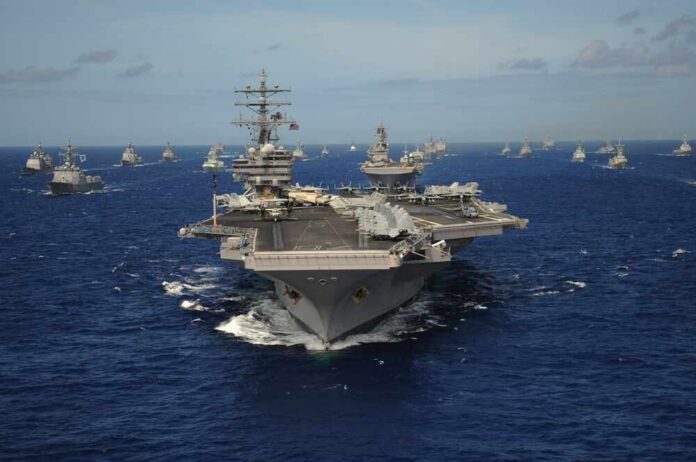
Defense Secretary Pete Hegseth and senior U.S. military commanders were reportedly ordered to maintain readiness for renewed strikes should negotiations collapse. [7] That detail is significant. It means the operational infrastructure for an attack remains in place, forces remain postured, and the two-week window functions more like a diplomatic ultimatum than a ceasefire. For Americans watching this unfold, the distinction matters: this is not the end of a crisis — it is a structured pause inside one.
A Familiar Pattern with High Stakes
The U.S.–Iran standoff has followed a recognizable cycle for decades. High-profile military threats are paired with diplomatic pauses, and the public is left to parse whether a real operational decision has been reversed or simply delayed. [5] This dynamic has recurred since the 1979 Iranian Revolution, and it intensified during Trump’s first term when tensions over tanker attacks and Iran’s nuclear program repeatedly brought the two countries to the edge of open conflict. [5]
President Trump said Monday that he's called off a U.S. attack on Iran that had been "scheduled" for Tuesday, after the United States' Gulf partners requested it to allow for continued negotiations. https://t.co/XPiDoRnvb5
— CBS News (@CBSNews) May 18, 2026
A new poll indicates Americans are already feeling the economic weight of the ongoing Iran tensions, with markets reacting sharply to each development. [10] When Trump’s pause announcement broke, roughly $500 billion was added to U.S. stock market value within 50 minutes — a signal of just how much financial uncertainty the conflict has generated. [6] Whether the two-week window produces a meaningful agreement or simply resets the countdown to the next escalation is the defining question. For now, the strike is off — but the threat is very much alive.
Sources:
[1] YouTube – Trump halts planned Iran attack after Gulf leaders intervene amid …
[2] YouTube – Trump says US to ‘suspend bombing and attack of Iran’ for two weeks
[3] Web – Trump says Iranian cancellation of executions ‘had big impact’ on …
[5] Web – Iran–United States relations during the first Trump administration
[6] Web – Trump Announces Two-Week Halt to Iran Strikes Amid Push for …
[7] Web – Trump warns of “critical period” in Iran war, threatening severe …
[10] YouTube – New poll shows Americans are feeling the costs of Iran war as …