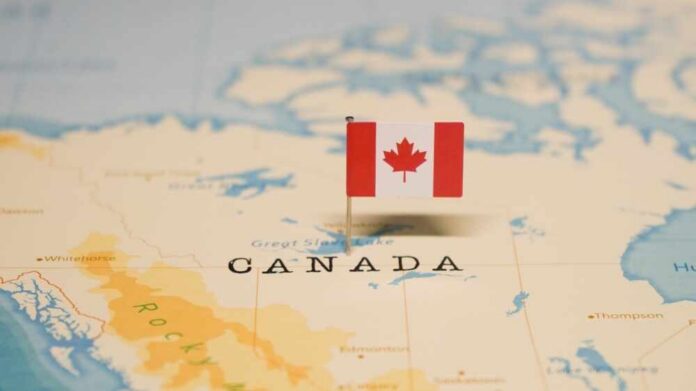
A non‑binding vote on whether Alberta should stay in Canada is raising big questions about how far frustrated provinces can push Ottawa without actually breaking up the country.
Story Snapshot
- Alberta will hold a province‑wide referendum on October 19, 2026 that includes a question about remaining in Canada.
- The referendum is authorized under Alberta’s Referendum Act and will be run by Elections Alberta as an official vote.
- Several immigration and election‑security questions on the ballot are explicitly non‑binding, highlighting the largely symbolic nature of the exercise.
- Canadian constitutional experts say a “yes” to separation cannot, by itself, legally take Alberta out of Canada.
Alberta sets a high‑stakes referendum that taps deep western frustration
Alberta Premier Danielle Smith has locked in October 19, 2026 as the date when Albertans will head to the polls for a sweeping referendum touching immigration, social programs, constitutional questions, and now the province’s place inside Canada itself.[4] Elections Alberta confirms that the vote has been formally scheduled and ordered in council, meaning it is not a protest stunt but an official process conducted under Alberta’s Referendum Act and Election Act frameworks.[4][5] For many in the West, the ballot channels decades of frustration with centralized, big‑government policy out of Ottawa.
The referendum will feature nine main questions already approved and a tenth “independence question” announced later, asking whether Alberta should remain a province or start the legal process for a binding separation vote.[2] Five questions are non‑constitutional and focus on issues grassroots conservatives care about: immigration control, limiting access to taxpayer‑funded programs, and tightening election rules.[1][4] Four others seek constitutional changes to rebalance power between Alberta and the federal government. Together, they represent a political shot across Ottawa’s bow rather than a direct legal exit door.
Immigration limits and election integrity dominate the non‑binding questions
Elections Alberta reports that one set of questions asks voters if they support giving the provincial government increased control over immigration to reduce numbers to “more sustainable levels,” prioritize economic migrants, and put Albertans first in new job opportunities.[4] Other questions propose limiting provincially funded health care, education, and social services to citizens, permanent residents, and those with Alberta‑approved status, and imposing a twelve‑month residency requirement for some non‑permanent residents before they receive social support.[4] These proposals mirror concerns conservatives have long raised about strained systems and unfair burdens on taxpayers.
The same order in council includes a question on whether proof of citizenship, such as a passport, birth certificate, or citizenship card, should be required to vote in an Alberta provincial election.[4] That measure goes directly to the heart of election security, a topic that many elites dismiss but that ordinary voters see as basic common sense. Yet Elections Alberta notes that these non‑constitutional questions are explicitly classified as non‑binding on the government.[4] Even if they pass with strong majorities, they will not automatically change the law, underscoring that the referendum is primarily a political signal rather than an immediate policy revolution.
Legal roadblocks mean a “separation” vote is more pressure tactic than exit plan
Supporters of the independence‑related question see it as a democratic way to put Ottawa on notice that Alberta is tired of being treated like a resource colony and tax base.[1][3] However, Canadian constitutional law sets a very high bar for any province that actually wants to leave. Scholars note that under the Supreme Court of Canada’s 1998 Quebec Secession Reference and the federal Clarity Act, even a clear majority on a clear separation question would only create a duty for Ottawa and Alberta to negotiate; it would not itself cause independence.[1][2] Any real breakup would still require a constitutional amendment involving Parliament and all provinces.[2][5]
Legal analysis goes further, arguing that Alberta cannot lawfully separate unilaterally under either Canadian law or international law.[2] International law recognizes a right to break away mainly for colonized or severely oppressed peoples, not for provinces inside functioning democracies.[2] Experts stress that Indigenous rights and territorial claims would also have to be addressed in any negotiation, complicating the map and making clean separation nearly impossible.[2] The result is that even a strong “leave” vote in Alberta would be a political earthquake but a legal ripple, forcing conversation rather than guaranteeing a new country.
Symbolic referendum still matters for federal‑provincial power struggles
Alberta’s Referendum Act allows the provincial cabinet to order referendums on constitutional questions and requires a referendum before the Legislative Assembly can vote on resolutions to amend the Constitution of Canada.[5] That framework gives premiers a tool to mobilize public opinion and build leverage, even when the votes are not binding. Analysts of western alienation point out that similar movements have surfaced before when Ottawa’s policies on energy, taxation, and regulation hammered Alberta’s economy and identity.[1][3] This new referendum fits that pattern: a legally constrained step but a politically loud one.
Alberta will hold a referendum on whether the province should remain in Canada or move ahead with a second binding vote on separation, marking the first significant test of the country's unity in decades.https://t.co/xgCy2qWadS
— Franky Tts (@FrankyTts) May 22, 2026
For American readers, especially those who back federalism, balanced budgets, and energy independence, Alberta’s fight will feel familiar. A resource‑rich, culturally conservative region is pushing back against a central government that has pursued aggressive climate agendas, heavy redistribution, and top‑down social policy. The October vote will not break up Canada, but it will measure just how fed up ordinary Albertans are with distant bureaucrats. The next move will depend on whether Ottawa listens—or keeps driving national unity toward the edge.
Sources:
[1] Web – A Long and Uncertain Road to Alberta Independence
[2] Web – Alberta’s separation from Canada would be illegal – Policy Options
[3] Web – Alberta separatism – Wikipedia
[4] Web – Referendum – Elections Alberta
[5] Web – Referendum Act – Open Government program